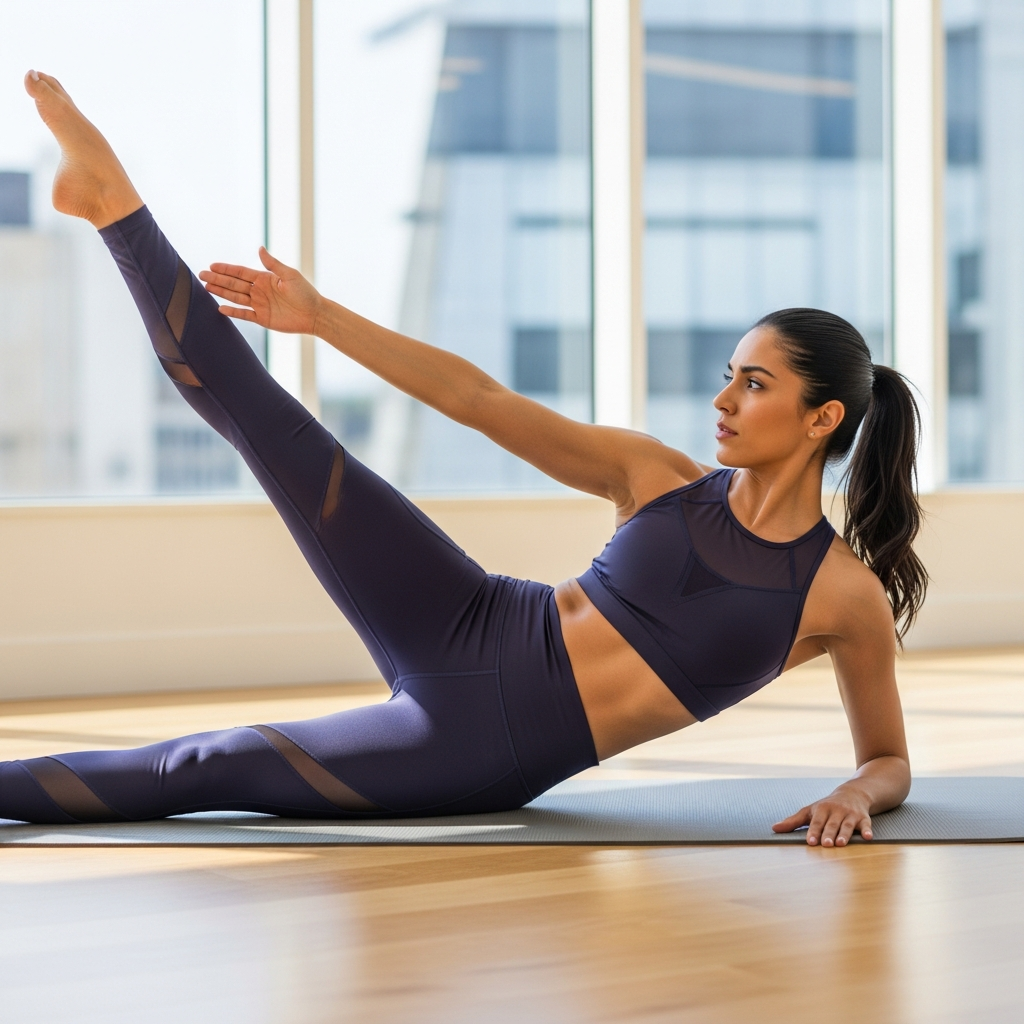
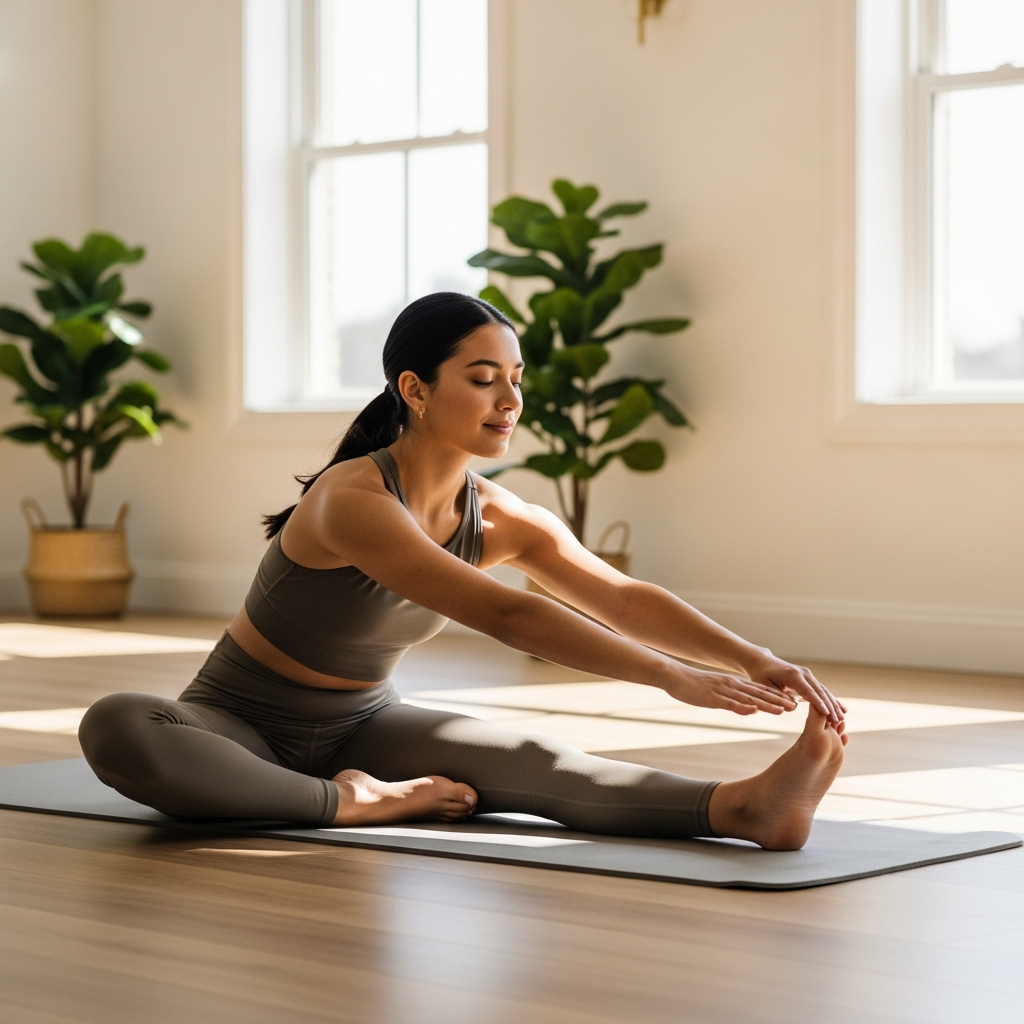
9 Benefits of Pilates for Strength and Balance in Sunnyvale
You’re rushing to catch the Caltrain, juggling your coffee and laptop bag, when you stumble slightly on that uneven sidewalk outside the Sunnyvale station. Nothing dramatic – just that little wobble that makes you think, *when did my balance get so… questionable?*
It’s funny how these moments sneak up on us. One day you’re confidently navigating those steep stairs at your apartment complex, the next you’re gripping the handrail like it’s your lifeline. Maybe you’ve noticed your back aching after those long days hunched over your desk in one of Sunnyvale’s tech offices. Or perhaps you caught a glimpse of yourself in the mirror and thought, “When did my shoulders start living permanently up by my ears?”
Here’s the thing about living in the heart of Silicon Valley – we’re constantly moving, constantly busy, but not necessarily moving *well*. We’re power-walking between meetings, sitting in cars stuck on 101, hunching over laptops in coffee shops on Murphy Avenue. Our bodies are working hard, but they’re not getting stronger. They’re just getting… tired.
That’s where something like Pilates starts to make sense. Not the intimidating, pretzel-twisting version you might imagine, but real, practical Pilates that actually helps you feel more solid in your own skin.
I get it – when you hear “Pilates,” you might picture those impossibly graceful people in expensive athleisure doing mysterious movements that look more like modern dance than exercise. Or maybe you’re thinking it’s too gentle, too easy, not “enough” compared to your usual workout routine.
But here’s what I’ve learned from working with people right here in Sunnyvale (and honestly, from my own humbling experiences with balance and strength): Pilates isn’t about becoming a contortionist or achieving some Instagram-worthy pose. It’s about building the kind of functional strength that makes everything else in your life easier.
Think about it – when was the last time you felt truly stable? Not just physically, but that deep-down confidence that your body can handle whatever you throw at it? Whether that’s carrying groceries up the stairs, playing with your kids at Las Palmas Park, or simply getting through a long day without your lower back staging a revolt.
The beauty of Pilates – and I mean this in the most practical, unglamorous way possible – is that it works on the stuff we usually ignore. Those deep stabilizing muscles that keep you upright when you’re reaching for something on a high shelf. The core strength that prevents your back from screaming when you’re lifting that heavy box. The balance that keeps you steady when you’re walking on uneven surfaces… like pretty much every sidewalk in downtown Sunnyvale.
And let’s be honest about something else: as we get older (I’m looking at you, fellow millennials who thought 35 was ancient and are now rapidly approaching it), our bodies start sending us gentle reminders that we can’t coast forever. Maybe it’s taking an extra beat to get up from the couch, or feeling less confident on hiking trails in the nearby hills, or just that general sense that you’re not as… sturdy as you used to be.
That’s not defeat talking – that’s just reality. And the good news? It’s also incredibly fixable.
What you’re about to discover are nine specific ways that Pilates can actually make your daily life better. Not in some abstract, maybe-someday sense, but in practical, notice-it-this-week ways. We’re talking about the kind of strength that helps you feel more confident in your body, the balance that keeps you from those embarrassing near-falls, and the overall sense of capability that makes everything from carrying luggage to playing weekend sports more enjoyable.
Some of these benefits might surprise you – I know they surprised me. Others might seem obvious until you realize how many people are struggling with exactly these issues right here in our community. But all of them are backed by real science and, more importantly, real results from real people who decided they were tired of feeling wobbly in their own skin.
So let’s talk about what Pilates can actually do for you…
What Exactly Is This Pilates Thing Anyway?
You’ve probably heard the word “Pilates” thrown around at the gym, maybe seen those reformer contraptions that look like medieval torture devices (they’re not, I promise), or noticed your friend suddenly developing what seems like superhuman core strength. But what actually *is* Pilates?
Think of it this way – if yoga is like a flowing river, Pilates is more like… well, imagine a master craftsman building a beautiful piece of furniture. Every movement is deliberate, precise, controlled. There’s no rushing, no bouncing, no “fake it till you make it.” Your body becomes both the wood and the tool, and your mind? That’s the craftsman calling the shots.
Joseph Pilates (yes, it’s named after a real guy) created this system back in the early 1900s. He was obsessed with the idea that our bodies and minds should work together like a well-oiled machine. Pretty revolutionary thinking for his time, honestly. He called it “Contrology” – which tells you everything about how methodical this practice really is.
The Core Truth You Need to Know
Here’s where things get interesting, and maybe a little counterintuitive. When most people think “core,” they picture six-pack abs. You know, those Instagram-worthy muscle ridges that everyone’s chasing. But your actual core? It’s more like the foundation of a house – you can’t see most of it, but without it, everything else crumbles.
Your core includes your diaphragm (yeah, that breathing muscle), your pelvic floor, your deep abdominal muscles, and all those tiny stabilizers along your spine. It’s like having an internal corset, but one that’s alive and responsive. In Pilates, we’re not just doing endless crunches – we’re teaching this whole system to work together.
I’ll be honest… this coordination doesn’t happen overnight. It’s kind of like learning to pat your head while rubbing your belly, except the stakes are higher because we’re talking about your posture, your balance, your ability to pick up groceries without throwing out your back.
Why Balance Isn’t Just About Not Falling Over
Balance is one of those things we take completely for granted until we don’t have it. You step off a curb wrong, reach for something on a high shelf, or (let’s be real) try to put on pants while standing up – suddenly you’re doing this awkward wobble dance, hoping nobody’s watching.
But balance isn’t just about staying upright. It’s about stability, coordination, and something called proprioception – which is basically your body’s GPS system. It’s how you know where you are in space without looking in a mirror. Pretty amazing when you think about it.
Pilates works on balance in layers. First, you learn to balance on stable surfaces while moving slowly and deliberately. Then – and this is where it gets fun – you start challenging that stability. Maybe you’re lying on a wobbly reformer, or standing on one leg while your arms are doing something completely different.
The Strength Factor That Surprises Everyone
Now, here’s what throws people off about Pilates strength training. You’re not going to be grunting and groaning, lifting heavy weights until your muscles scream. Instead, you might find yourself shaking like a leaf while holding what looks like a simple position.
That shaking? That’s your deep stabilizing muscles waking up and realizing they actually have to *work* for once. It’s like discovering muscles you never knew existed – because in many cases, you really haven’t been using them properly.
Traditional strength training often focuses on the big, obvious muscles – your biceps, quads, the show-off muscles. Pilates is more interested in the supporting cast, the unsung heroes that keep everything aligned and stable. Think of it as the difference between a bodybuilder and a dancer. Both are strong, but in completely different ways.
The Mind-Body Connection (Yes, It’s Real)
I know, I know – “mind-body connection” sounds like wellness buzzword bingo. But stay with me here. In Pilates, your brain has to stay engaged the entire time. You can’t just zone out and go through the motions like you might on a treadmill.
You’re constantly thinking: How’s my alignment? Where’s my breath? What muscles am I using? It’s like meditation, but instead of sitting still, you’re moving with intention. Some days, honestly, it’s mentally exhausting. But that’s exactly the point.
Start Small, But Start Smart
Here’s something most Pilates instructors won’t tell you upfront – you don’t need to master the hundred or perfect your roll-up on day one. Actually, scratch that… you really shouldn’t try to.
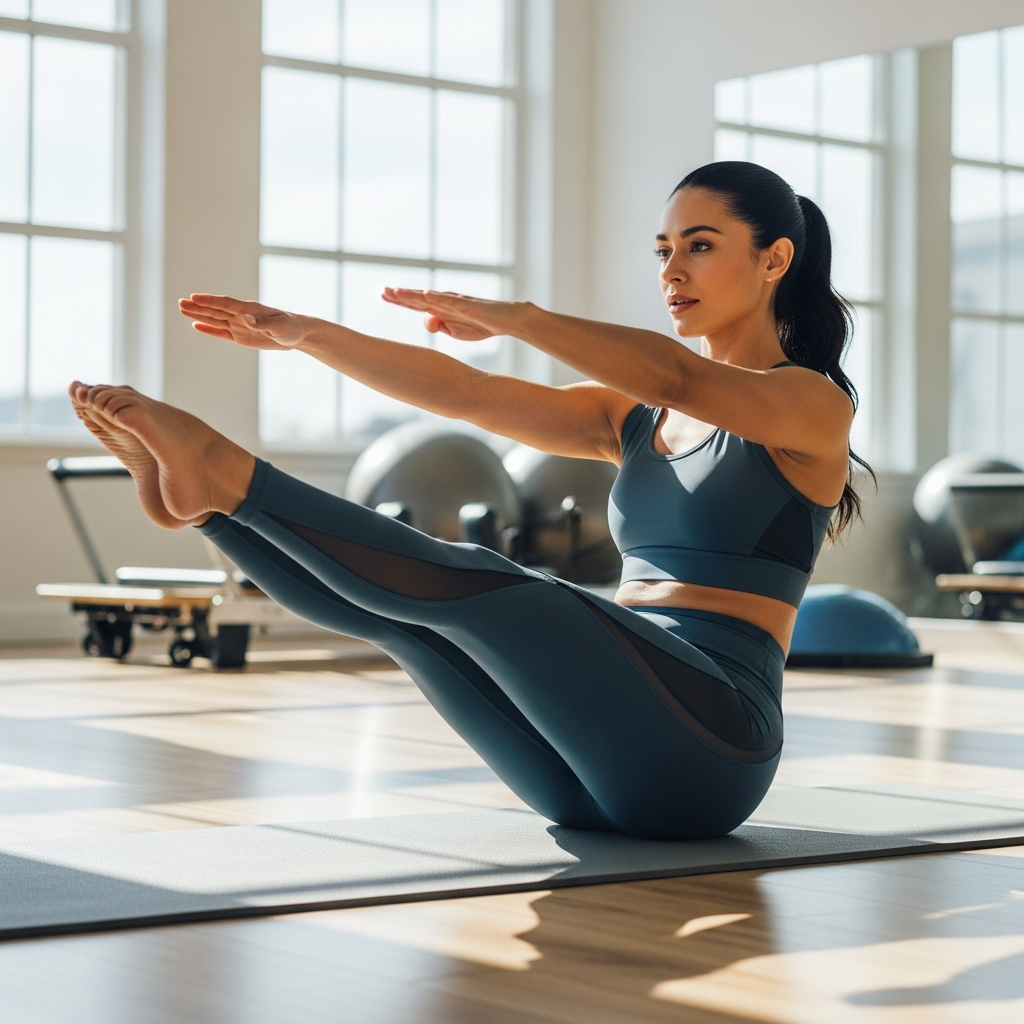
Begin with modified versions of everything. That fancy teaser everyone’s doing? Start with just lifting your head and shoulders while hugging your knees. Your core will thank you later, and you won’t end up with a sore neck that makes you want to quit after week one.
I always tell new clients to focus on three basic moves first: pelvic tilts, modified planks (knees down is totally fine), and something called the “dead bug” – which sounds weird but works wonders for teaching your brain how to coordinate opposite arm and leg movements.
Find Your Sunnyvale Sweet Spot
Living in Sunnyvale means you’ve got options – and that can be both a blessing and a curse. The fancy studios downtown? They’re gorgeous, but honestly… some of the best instruction happens in those smaller spaces tucked away in strip malls.
Look for instructors who actually watch what you’re doing, not just demonstrate from the front. A good teacher will come over and gently adjust your form – and trust me, those little tweaks make all the difference. It’s like the difference between sort of knowing how to ride a bike and actually being able to steer around corners.
If you’re budget-conscious (and who isn’t these days?), check out the community center classes first. You might be surprised at the quality, and it’s a great way to figure out if Pilates clicks for you before investing in pricier studio memberships.
The Equipment Question Everyone’s Thinking About
You’ll hear people debating mat versus reformer classes like it’s some kind of religious divide. Here’s the truth – both work, but they work differently.
Mat classes are perfect when you’re starting out because you’re working against gravity and your own body weight. It’s honest feedback – if you’re shaking during single leg circles, your core is telling you something important.
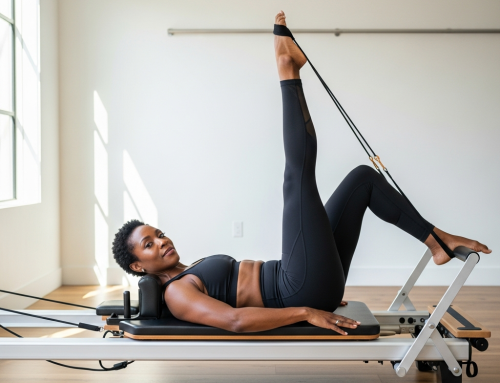
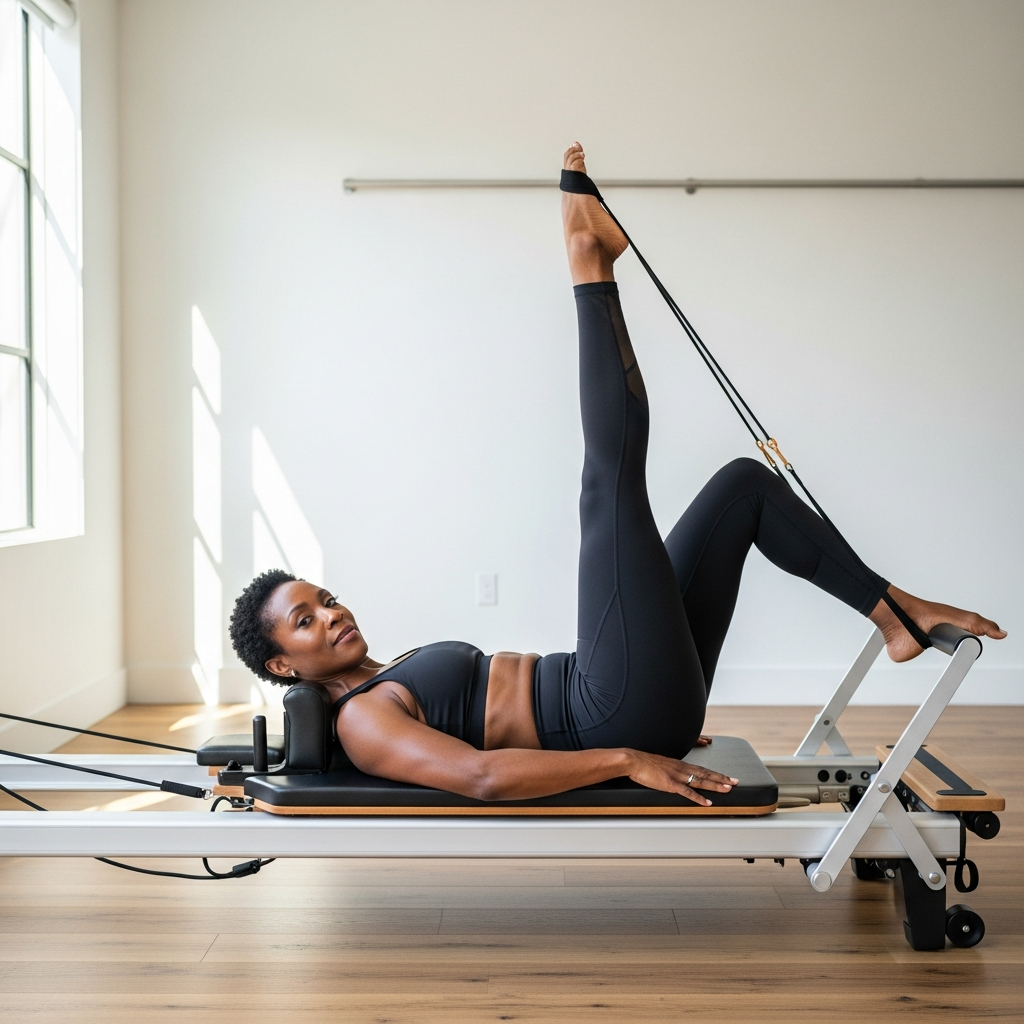
Reformer classes? They’re like having a very sophisticated workout partner. The springs provide resistance and assistance at the same time, which can help you feel movements you might struggle with on the mat. But here’s the thing – don’t get seduced by all the fancy equipment if you haven’t mastered basic body awareness first.
The Breathing Thing (Yes, It Actually Matters)
I know, I know… everyone talks about breathing like it’s some mystical art form. But here’s a practical tip that actually works: imagine you’re fogging up a mirror, but keep your mouth closed.
That gentle “ahh” breath naturally engages your deep abdominals without you having to think about “drawing your navel to your spine” or whatever other cue makes your eyes glaze over. Practice this while you’re stuck in traffic on 101 – by the time you get to class, it’ll feel natural.
Building Your Home Practice (Without Going Broke)
You don’t need a $300 mat and a collection of props that makes your living room look like a physical therapy clinic. A decent mat – nothing fancy, just something that doesn’t slip around – and maybe a small pillow is honestly all you need to get started.
YouTube has some excellent free classes, but… and this is important… wait until you’ve had some in-person instruction first. It’s way too easy to develop bad habits when you’re learning from a screen that can’t see what you’re actually doing.
When to Push and When to Back Off
Here’s something that took me years to figure out: that slight trembling in your muscles? That’s good. That sharp pain in your lower back? Not so much.
Pilates should feel challenging – like your muscles are working hard – but never painful. If something hurts, modify it or skip it entirely. There’s no Pilates police coming to arrest you for taking child’s pose in the middle of class.
And here’s a secret from someone who’s seen it all – consistency beats intensity every single time. Twenty minutes twice a week will get you further than one grueling hour-long session that leaves you too sore to move for three days.
The goal isn’t to become a Pilates poster child overnight. It’s to build strength and balance that actually shows up in your real life – when you’re carrying groceries, playing with your kids, or just getting through your day without that nagging back pain.
The Reality Check: Why Most People Quit After Two Weeks
Let’s be honest – you’re probably reading this while mentally calculating if you can squeeze Pilates into your already chaotic schedule. Maybe you’re thinking, “Sure, this sounds amazing, but I can barely find time to shower some days.”
You’re not wrong to worry. Most people who start Pilates with the best intentions end up ghosting their instructor faster than a bad Tinder date. It’s not because Pilates doesn’t work… it’s because nobody warned them about the stuff that actually trips you up.
“I Feel Like a Baby Giraffe” (And Other Coordination Catastrophes)
Here’s what nobody tells you: Pilates can make you feel incredibly uncoordinated at first. You know that exercise where you’re supposed to extend your right arm and left leg while keeping your core stable? Yeah, your brain might short-circuit trying to figure that one out.
I’ve watched perfectly capable adults – people who run companies and raise families – look completely baffled when asked to breathe into their ribs while engaging their pelvic floor. It’s like trying to pat your head and rub your belly while reciting the alphabet backward.
The solution? Give yourself permission to suck at it initially. Actually, embrace the awkwardness. Start with modified versions of everything, and I mean everything. Can’t do a full roll-up? Do a half roll-up. Can’t coordinate your breathing? Just focus on the movement first. The breathing will catch up… eventually.
The Silent Struggle: When “Gentle” Feels Brutal
Here’s a fun surprise – Pilates looks deceptively easy from the outside. People see slow, controlled movements and think it’ll be a nice, relaxing break from their usual workout routine. Then they try to hold a plank for 60 seconds while someone cheerfully reminds them to “breathe naturally” and… well, let’s just say the internal monologue gets colorful.
The thing is, Pilates works muscles you didn’t even know you had. That deep core work? It’s not just your abs – it’s layers of muscles that have probably been on vacation since you learned to drive everywhere instead of walk.
Here’s what actually helps: Start with 20-30 minute classes, not hour-long sessions. Your stabilizing muscles fatigue quickly when they’re not used to this kind of work. It’s better to do shorter sessions consistently than to burn out trying to be a hero on day one.
The Perfectionist’s Nightmare
If you’re the type of person who likes to master things quickly (hello, fellow Type A personalities), Pilates might make you want to throw a very controlled, precisely executed tantrum. Unlike lifting weights where you can see immediate progress by adding more plates, Pilates progress feels… subtle.
You might spend weeks trying to keep your shoulders from creeping up to your ears during arm exercises. Or discovering that yes, you’ve been holding tension in your jaw this entire time, and no, you can’t just magically stop.
The mindset shift that saves your sanity: Think of Pilates as a practice, not a performance. Some days your balance will be spot-on, other days you’ll wobble like a toddler. Some sessions you’ll feel strong and centered, others you’ll feel like your muscles are staging a revolt. That’s not failure – that’s being human.
The Schedule Juggling Act
Let’s talk about the elephant in the room – finding time. You know you should do Pilates 2-3 times a week, but between work deadlines, family obligations, and the general chaos of adult life, consistency feels impossible.
The honest solution: Start with once a week. Seriously. One consistent session is infinitely better than three sporadic ones followed by months of guilt. Build the habit first, then worry about frequency. And here’s a secret – even 15 minutes at home counts. Download an app, follow a YouTube video, or just do some basic core work on your living room floor.
The goal isn’t to become a Pilates instructor overnight. It’s to feel stronger and more balanced in your actual life – you know, when you’re carrying groceries up the stairs or trying not to fall over while putting on your shoes.
Progress in Pilates isn’t always dramatic, but it’s real. You’ll notice it in weird ways – like actually being able to get out of bed without groaning, or realizing you haven’t had that nagging lower back pain in weeks. That’s when you know it’s working.
What to Expect in Your First Few Weeks
Let’s be honest – you’re not going to walk out of your first Pilates class feeling like a graceful swan. More like… well, maybe a slightly confused duck who’s just discovered they have muscles they forgot existed.
Those first few sessions? They’re humbling. You’ll probably shake during exercises you thought looked “easy” on Instagram. Your core might feel like jello, and you might catch yourself holding your breath more than you’d like to admit. That’s completely normal – actually, it’s a good sign that you’re engaging muscles that have been taking a nice little vacation.
Most people start noticing subtle changes around the 3-4 week mark. Nothing dramatic – maybe you’ll realize you’re not gripping the stair railing quite so tightly, or that getting up from your desk chair feels a bit smoother. The real improvements in strength and balance typically show up after 6-8 weeks of consistent practice (and by consistent, I mean 2-3 times per week, not whenever Mercury isn’t in retrograde).
Setting Yourself Up for Success
Here’s the thing about Pilates – it’s sneaky effective, but only if you show up regularly. Think of it like learning a new language… you can’t just binge Spanish podcasts for six hours once a month and expect to be fluent.
Start with 2 classes per week if you’re new to exercise, or 3 if you’re already active. Your body needs time to adapt, and frankly, your brain needs time to figure out what the instructor means when they say “engage your powerhouse” (spoiler: it’s your core, but Pilates people love their special vocabulary).
Don’t worry if you can’t keep up with everything at first. Half the class will be spent figuring out which way is “neutral spine” anyway. Focus on the basics – breathing, alignment, and moving with control rather than speed. The Instagram-worthy advanced moves will come later.
When Progress Feels Slow (Because It Will)
Around week 3 or 4, you might hit what I call the “is this actually working?” phase. You’re sore in weird places, you’re still wobbly during single-leg exercises, and that person next to you seems to have figured out how to make everything look effortless.
Here’s a reality check – that effortless-looking person has probably been doing Pilates for years. And those weird sore spots? They’re exactly where you want to feel it. Pilates has this magical ability to find the lazy muscles you didn’t know you had and wake them up with a gentle but firm “time to get to work.”
Progress in Pilates isn’t always linear. Some weeks you’ll feel stronger, others you might feel like you’ve forgotten everything. This is especially true if you’re dealing with hormonal changes, stress, or just life in general. Your body isn’t a machine – it’s allowed to have off days.
Building Your Pilates Routine in Sunnyvale
You’re lucky to live in an area with plenty of options. Whether you prefer the intimacy of small studio classes or the convenience of larger fitness centers, there’s something for everyone here.
Consider mixing formats as you get more comfortable. Maybe start with mat classes to learn the fundamentals, then try equipment sessions when you want to challenge yourself differently. Some people love the precision of reformer work, others prefer the simplicity of mat exercises they can practice at home.
And yes, practicing at home counts – even if it’s just 10 minutes of breathing and basic movements on your living room floor. Actually, those mini-sessions between classes often make the biggest difference in how quickly you progress.
The Long Game
After about three months of regular practice, you’ll likely notice changes that go beyond just feeling stronger. Better posture becomes more automatic. You might find yourself naturally engaging your core when you lift groceries, or maintaining better balance when you’re walking on uneven surfaces.
But here’s what I really want you to remember – Pilates isn’t a quick fix, and that’s exactly why it works so well. It’s building something sustainable, something that becomes part of how you move through the world. Six months from now, you won’t just be stronger… you’ll move with more confidence, more awareness, and hopefully a lot less of that nagging back pain that brought you here in the first place.
You know what strikes me most about Pilates? It’s not flashy. There aren’t any dramatic before-and-after photos of people deadlifting twice their body weight or crushing 10Ks. But that’s exactly what makes it so powerful – especially here in Sunnyvale, where we’re all juggling demanding careers, family responsibilities, and… well, life.
The beauty of Pilates lies in those subtle shifts. One day you’ll notice you’re not holding onto the handrail going downstairs. A few weeks later, you realize your lower back doesn’t ache after sitting through another long Zoom meeting. Maybe you catch yourself standing taller at the grocery store, or you pick up your toddler without that familiar wince.
These aren’t earth-shattering moments, but they’re life-changing ones. And honestly? That’s what real wellness looks like – not the Instagram highlight reel, but the quiet confidence that comes from feeling strong and balanced in your own body.
I’ve seen it happen countless times with our clients. Sarah, who started with us last year, recently told me she played an entire soccer game with her kids without feeling like she needed a three-day recovery period. Mark discovered he could work in his garden for hours without his usual back pain flaring up. These aren’t elite athletes – they’re people just like you, who decided they deserved to feel better in their bodies.
Starting Your Own Practice
The thing about starting any new fitness routine is that it can feel overwhelming. Trust me, I get it. You’re already stretched thin, and adding one more thing to your plate feels impossible. But here’s what I’ve learned – and what our Sunnyvale community has taught me – is that taking care of your body isn’t selfish. It’s necessary.
You don’t need perfect balance or impressive strength to begin. Actually, that’s kind of missing the point. Pilates meets you where you are, whether that’s dealing with chronic pain, recovering from an injury, or simply wanting to feel more stable on your feet.
We’re Here When You’re Ready
Look, I’m not going to pretend that deciding to prioritize your health is always easy. Sometimes it takes a wake-up call – a fall, persistent pain, or just feeling tired of feeling tired. Sometimes it’s a quieter realization that you want to age gracefully, staying active for your kids or grandkids.
Whatever brought you here, whatever you’re dealing with, you don’t have to figure it out alone. Our team understands the unique challenges of living in the Bay Area – the stress, the long commutes, the pressure to do everything perfectly. We’ve helped hundreds of people in Sunnyvale discover that feeling strong and balanced isn’t a luxury… it’s absolutely achievable.
If any of this resonates with you, we’d love to chat. No pressure, no hard sell – just a genuine conversation about where you are and where you’d like to be. Because honestly? You deserve to feel confident in your body, and we’d be honored to help you get there.