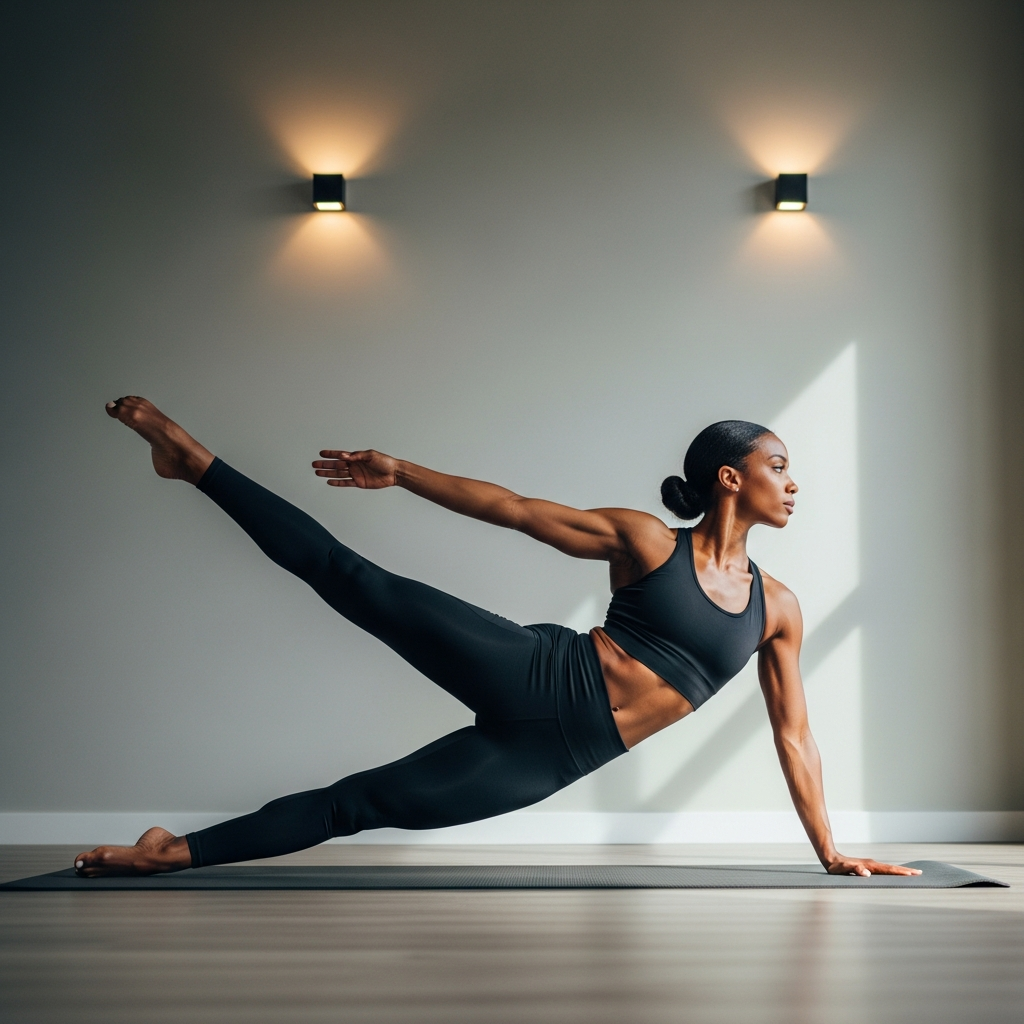
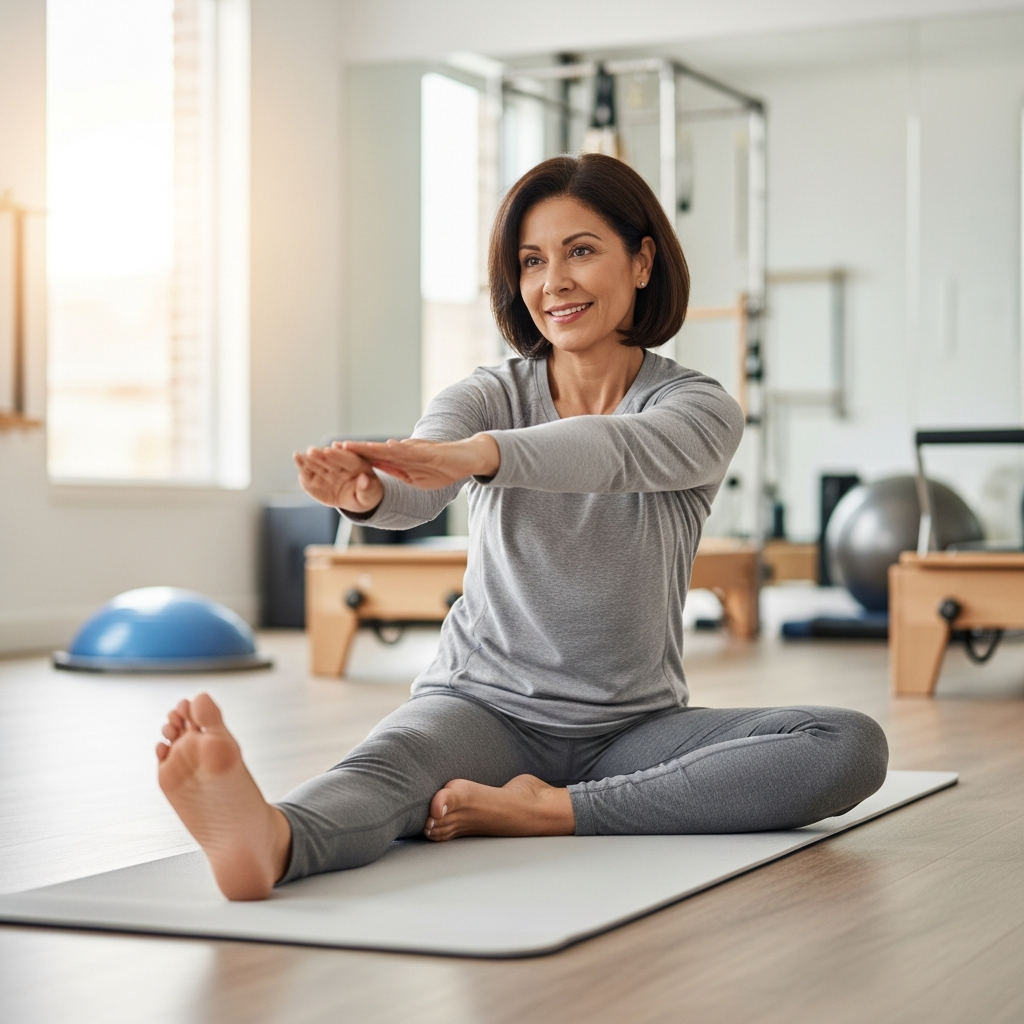
How Mat Pilates Helps Grand Prairie Residents Stay Active Without Strain
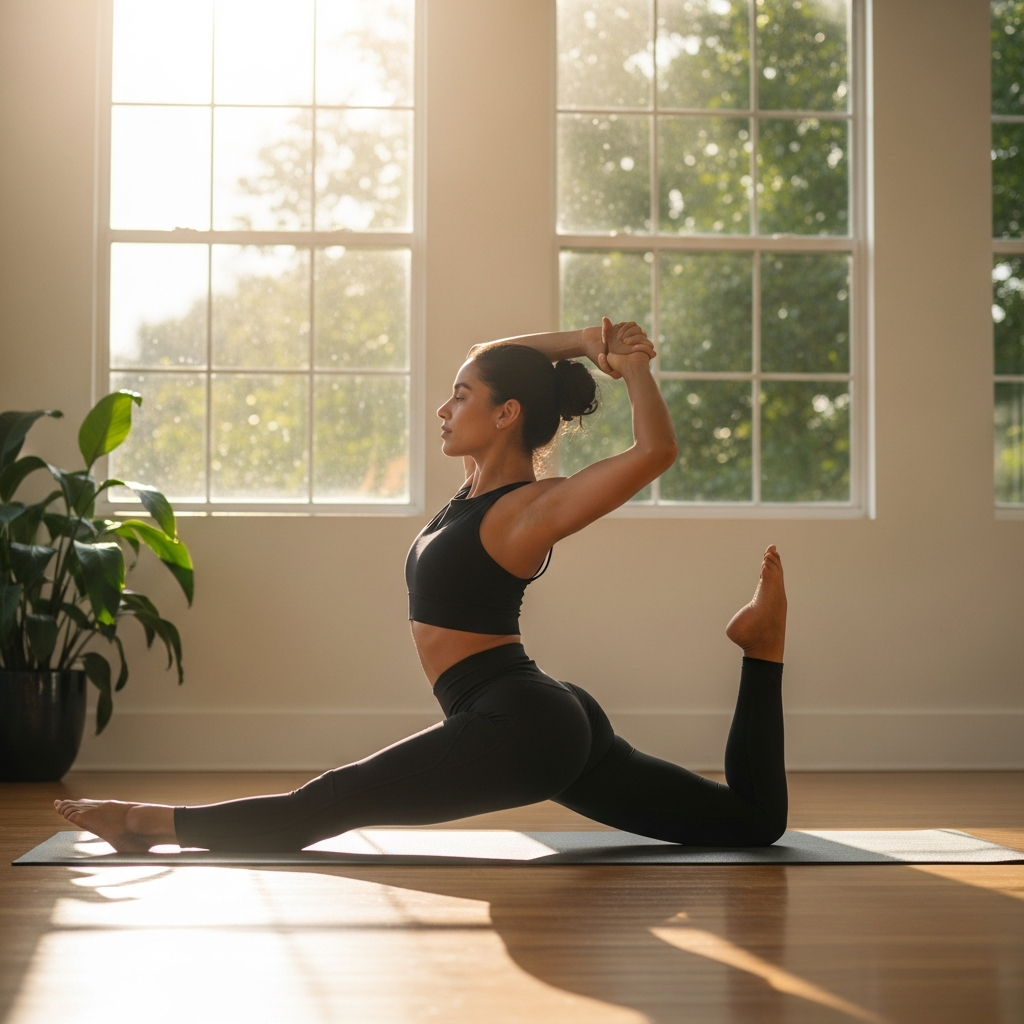
You’re standing in your kitchen on a Tuesday morning, reaching up to grab your favorite coffee mug from the top shelf, when it hits you – that sharp twinge in your lower back. Again. You freeze for a second, wondering if this is just another reminder that you’re “getting older” or if there’s something you can actually do about it.
Sound familiar? If you’re nodding along, you’re definitely not alone here in Grand Prairie.
Here’s the thing… we’ve all been sold this story that staying active means choosing between two extremes. On one side, there’s the “no pain, no gain” crowd – those intense gym sessions that leave you limping for days (and honestly, who has time for that?). On the other side? Well, there’s the couch. And while Netflix has its merits, your body wasn’t designed to live there.
But what if I told you there’s this sweet spot in between? A way to get stronger, more flexible, and genuinely feel better in your own skin – without the strain, without the intimidation, without feeling like you need to be a fitness guru to even walk through the door.
That’s where Mat Pilates comes in.
Now, before you roll your eyes and think “great, another exercise trend,” hear me out. Pilates isn’t some flashy new thing that’ll disappear next month. It’s been around for nearly a century, quietly helping people move better, feel stronger, and yes – even stand a little taller when they catch their reflection in the mirror.
The beauty of Mat Pilates? It meets you exactly where you are. Whether you’re a weekend warrior nursing a cranky shoulder, a busy parent whose back protests every time you pick up your toddler, or someone who’s been avoiding exercise because, honestly, it usually makes things worse… Mat Pilates has this amazing ability to work *with* your body instead of against it.
And for us Grand Prairie folks – you know how we are. We want something practical, something that doesn’t require fancy equipment or a second mortgage to afford. Mat Pilates fits that bill perfectly. All you need is, well, a mat. (Though let’s be honest, even a towel works in a pinch.)
What makes this particularly relevant for our community is that we’re dealing with real life here. Long commutes that leave our hips tight. Desk jobs that turn our shoulders into permanent question marks. The stress of juggling work, family, and trying to maintain some semblance of a social life. Traditional workouts often add to that stress rather than relieving it.
But here’s what we’ve discovered working with hundreds of Grand Prairie residents: when you give your body the right kind of movement – controlled, mindful, strengthening from the inside out – something shifts. That nagging back pain starts to ease. You find yourself naturally sitting up straighter during those endless Zoom calls. Carrying groceries doesn’t feel like a workout anymore… it just feels normal.
In this article, we’re going to walk through exactly how Mat Pilates can become your secret weapon for staying active without the strain. We’ll talk about what makes it different from other forms of exercise (spoiler: it’s not about perfect abs, despite what Instagram might tell you). You’ll learn specific ways it addresses the movement patterns we’ve all developed – some helpful, some not so much – and how it can actually make your daily life easier.
We’ll also tackle the practical stuff. Like where to start if you’ve never done Pilates before, how to know if you’re doing it right, and what to expect in those first few weeks. Because let’s face it – starting something new can feel overwhelming, and the last thing you need is another reason to stress about your health.
Most importantly, we’ll explore how Mat Pilates fits into real Grand Prairie life. Not the glossy, perfectly-scheduled life we see on social media, but the actual, sometimes messy, always busy life you’re living right now.
Because staying active shouldn’t be another item on your overwhelming to-do list. It should be the thing that makes everything else feel a little bit easier.
What Exactly Is Mat Pilates Anyway?
Let’s be honest – when most people hear “Pilates,” they picture those intimidating medieval-looking machines with springs and pulleys. You know, the contraptions that look like they belong in a physical therapy clinic or… well, maybe somewhere you don’t want to think about.
But mat Pilates? That’s the approachable cousin. Think of it this way: if machine Pilates is like learning to drive in a Formula One car, mat Pilates is like starting with your reliable Honda Civic. You’re learning the same fundamental skills – control, precision, breathing – but without all the bells and whistles that might overwhelm you.
Mat Pilates uses just your body weight and gravity as resistance. Sometimes you’ll grab a small ball or resistance band, but mostly it’s just you, a mat, and whatever strength you’ve got. Which, by the way, is probably more than you think.
The Secret Sauce: Control Over Intensity
Here’s where mat Pilates gets really clever – and honestly, kind of counterintuitive if you’re used to traditional workouts. Most exercise programs push you to do more, go harder, sweat buckets. Mat Pilates whispers, “How about we do less… but do it perfectly?”
It’s like the difference between speed-reading and savoring a really good book. Sure, you could rush through the movements, but you’d miss the whole point. Every movement in mat Pilates is designed to be controlled, deliberate, and – this is key – only as intense as your body can handle while maintaining perfect form.
Think about it: when you’re doing a traditional crunch, you might bang out 50 reps while your neck strains and your lower back screams. In mat Pilates, you might do 8 slow, controlled movements that work your entire core system without any of that strain. Your muscles are working harder, but your joints? They’re actually saying “thank you.”
Why Your Joints Will Send You Thank-You Cards
This is where mat Pilates really shines, especially if you’ve been feeling like your body’s been through a few too many rodeos. Traditional high-impact exercise can feel like you’re constantly negotiating with your knees: “Please just get me through this workout, and I promise I’ll ice you later.”
Mat Pilates takes a completely different approach. Instead of pounding your joints, it’s more like… well, imagine your body is a finely tuned instrument that’s been stored in an attic for a while. You wouldn’t immediately start banging on the keys, right? You’d gently tune it, oil the mechanisms, get everything working smoothly again.
The movements focus on eccentric contractions – which is fancy talk for controlling your muscles as they lengthen, not just as they shorten. It’s like the difference between dropping a heavy box and carefully lowering it. Same muscle engagement, completely different impact on your body.
The Breathing Thing (And Why It’s Not Just Woo-Woo)
Okay, I’ll admit it – when I first heard about Pilates breathing techniques, I rolled my eyes so hard I’m surprised they didn’t fall out. “Breathe with intention”? Come on.
But here’s what I didn’t understand: proper breathing in mat Pilates isn’t about chakras or finding your inner zen (though if that happens, bonus). It’s actually a sneaky way to engage your deep core muscles without even thinking about it.
When you exhale slowly and deliberately during a movement, you’re automatically activating your transverse abdominis – basically your body’s natural weight belt. It’s like having a built-in back brace that kicks in every time you breathe correctly. Pretty clever, actually.
Plus – and this might be the best part – focusing on your breath naturally slows you down and keeps you present. You can’t zone out and suddenly realize you’ve been straining your neck for the past ten minutes. Your breath becomes this gentle alarm system that says, “Hey, pay attention to what you’re doing.”
It’s Not About Being Perfect (Thank Goodness)
Here’s something refreshing: mat Pilates doesn’t expect you to be a pretzel. If you can only lift your head an inch off the mat today, that’s exactly what you should do. The whole system is built around working within your current range of motion and gradually, gently expanding it.
It’s honestly liberating once you get used to it…
Start Small – Your First Week Strategy
Look, I get it. You’re probably thinking you need to jump into hour-long classes right away, but here’s what I tell everyone at the clinic: start with just 15 minutes, three times a week. That’s it.
Find a quiet corner in your living room – doesn’t need to be fancy. All you really need is a yoga mat (or honestly, a thick towel works too). Begin with basic movements like pelvic tilts and gentle spinal rolls. These aren’t glamorous, but they’re teaching your body the foundation of everything else you’ll do.
Actually, let me share something most people don’t realize… your core isn’t just your abs. It’s this whole cylinder of muscles wrapping around your torso, and mat Pilates wakes them all up gradually. When you start small, you’re not shocking your system – you’re having a conversation with it.
The “Traffic Light” Breathing Technique
This one’s a game-changer, especially for folks dealing with chronic pain or coming back from injury. I learned this from watching clients struggle with when to push and when to back off.
Green light breathing: Easy, natural breaths during setup and simple movements. You should be able to chat with someone next to you.
Yellow light breathing: Slightly deeper, more focused breathing during moderate challenges. You might pause between words if talking, but you’re still in control.
Red light breathing: Stop. If you’re holding your breath or gasping, you’ve pushed too hard. This is your body’s way of saying “Hey, let’s dial it back.”
The beauty of mat Pilates? You can shift between these zones within the same exercise. Maybe you start a plank in green, move to yellow as you hold it, and that’s perfectly fine. No need to hit red unless you’re specifically training for something athletic.
Modify Everything (Yes, Everything)
Here’s what the fitness industry doesn’t want you to know – every exercise can and should be modified. I’ve seen too many people give up on Pilates because they thought they had to nail the “perfect” form right away.
Can’t do a full plank? Drop to your knees. Knees bothering you? Lean against a wall. Having a rough day with your back? Do everything seated in a chair. The movement patterns matter more than looking like the instructor.
One of my favorite modifications for Grand Prairie folks (since so many work desk jobs): the “office worker’s hundred.” Instead of lying on your back with legs up, sit in a chair and pump your arms while focusing on that deep abdominal breathing. Gets the blood flowing and your core firing without any strain on your neck or back.
The “Pain vs. Discomfort” Check-In
This is crucial, and it’s something we really emphasize at our clinic. There’s good discomfort – that “whoa, I’m working muscles I forgot I had” feeling. Then there’s pain, which is your body waving a red flag.
Good discomfort feels like… you know that slight burn when you’re carrying groceries up the stairs? Challenging but manageable. It fades quickly when you stop.
Pain, on the other hand, is sharp, shooting, or that deep ache that makes you wince. It might stick around after you’re done moving. That’s your cue to back off immediately.
I always tell people to imagine they’re checking in with their body like you’d check in with a good friend. “Hey knees, how are we doing? Lower back, you feeling okay?” Sounds silly, but it works.
Creating Your Home Setup (Without Breaking the Bank)
You don’t need a Pinterest-perfect studio space. I’ve had clients do Pilates effectively in tiny apartments, shared living rooms, even hotel rooms when traveling.
Essential items: A mat (seriously, invest in a decent one – your joints will thank you), maybe a pillow for head support, and a towel for grip. That’s it to start.
Nice-to-haves that actually make a difference: resistance bands (the fabric kind are gentler than rubber), a small ball (even a kid’s playground ball works), and blocks or thick books for support when you need to bring the floor closer to you.
Pro tip from someone who’s helped hundreds of people stick with exercise routines: set up your space the night before. When it’s already laid out, you’re way more likely to actually use it. Remove as much friction as possible between deciding to move and actually moving.
Remember, the goal isn’t perfection – it’s consistency and feeling better in your own body.
“I Don’t Have Time for Another Thing”
Let’s be real – you’re already juggling work, family, and about seventeen other responsibilities. Adding one more thing feels impossible, and honestly? That’s completely valid. The whole “just wake up an hour earlier” advice makes me want to roll my eyes too.
Here’s what actually works: think micro-sessions. Even ten minutes of Mat Pilates can shift your entire day. I know, I know… it sounds like one of those “just think positive” suggestions, but hear me out. You can do a quick core sequence while your coffee brews or squeeze in some gentle stretches before bed. It’s not about perfection – it’s about consistency, even if that consistency is imperfect.
And here’s something nobody talks about… you don’t need to do a full hour-long session to see benefits. Those 15-20 minute YouTube videos? They count. That quick stretch session during your lunch break? Also counts. We’ve got this all-or-nothing mentality that’s honestly working against us.
The Intimidation Factor (It’s Real)
Walking into any fitness space when you haven’t been active can feel like everyone’s watching you fumble through movements. With Mat Pilates, there’s this added layer of… well, it looks so graceful when other people do it, doesn’t it? Meanwhile, you’re over there trying to figure out what a “neutral spine” even means.
The truth? Everyone started somewhere, and that “somewhere” usually involved a lot of confusion about whether you’re doing it right. Start with beginner videos at home – seriously, your living room doesn’t judge. Once you build some confidence with basic movements (and trust me, there are only about six fundamental patterns you need to master), then consider joining a class.
Also – and this might sound obvious but it wasn’t to me initially – Pilates instructors actually want you to ask questions. They’d rather you speak up than struggle silently. Most will offer modifications that make movements accessible, regardless of your starting fitness level.
When Your Body Doesn’t Cooperate
This one hits close to home for many Grand Prairie folks dealing with joint issues, past injuries, or chronic pain. You want to be active, but traditional exercise feels like punishment rather than progress. Mat Pilates can be incredibly gentle… but only if you listen to your body instead of pushing through discomfort.
The key difference? Learning to distinguish between “good challenge” and “warning signal.” That slight tremor in your muscles during a plank hold? That’s your body working. Sharp pain in your lower back? That’s your body asking you to stop, reassess, and modify.
Here’s what’s helped people I know: start ridiculously easy. If a movement calls for holding a position for 30 seconds, try 10 seconds. If it suggests 10 repetitions, do 5. You’re building a foundation, not training for the Olympics.
And honestly… some days your “workout” might just be gentle stretching and breathing exercises. That’s not failure – that’s listening to what you need.
The Plateau Problem
After a few weeks, you might hit that frustrating wall where everything feels too easy, but stepping up to intermediate moves feels impossible. It’s like being stuck between floors in an elevator – uncomfortable and confusing.
This is where most people either quit or push too hard and get injured. Instead, think about deepening what you already know. That basic bridge you’ve mastered? Try holding it longer, or add tiny pulses. Those leg circles that felt challenging last month? Slow them down dramatically – you’ll discover muscles you didn’t know existed.
Progressive overload in Pilates isn’t always about harder moves. Sometimes it’s about more precise movement, better breath control, or increased range of motion. Actually… those subtle progressions often create more lasting strength than jumping to flashy advanced exercises.
Making It Stick When Motivation Fades
Let’s talk about week three or four, when the novelty wears off and real life reasserts itself. Your motivation has packed its bags and left town, and you’re wondering why you thought this was a good idea.
This is where having a backup plan saves you. Maybe your ideal is four sessions per week, but your realistic minimum is one. Honor that minimum – it keeps the habit alive during tough periods. You can always build back up when life settles down.
Consider pairing Pilates with something you already enjoy. Love your morning coffee? Do some gentle movements while it brews. Enjoy evening TV? Perfect time for floor exercises. The goal isn’t to love every minute – it’s to create sustainable patterns that work with your actual life, not some idealized version of it.
What to Expect When You Start Mat Pilates
Here’s the thing nobody tells you about starting Pilates – you’re going to feel muscles you forgot existed. That weird ache between your shoulder blades? The slight soreness in your deep abdominal muscles? Totally normal. Your body’s basically saying “oh, so we’re actually using these muscles now!”
Most people notice small changes pretty quickly – maybe better posture after a week or two, or finding it easier to get out of bed without that morning stiffness. But real strength gains? Those take time. We’re talking 6-8 weeks of consistent practice before you’ll feel genuinely stronger, and about 3 months before others start noticing the difference in how you move.
I know that might sound like forever when you’re dealing with back pain right now… but think of it this way. You didn’t develop those tight hips or weak core muscles overnight, so they’re not going to transform overnight either.
Your First Few Classes (And Why You Shouldn’t Panic)
That first class is going to feel like learning a new language. The instructor will say things like “engage your powerhouse” and “breathe into your back ribs” – and you’ll be thinking, “what powerhouse? I thought we were doing exercise, not running a factory!”
Don’t worry about getting everything perfect. Seriously. I’ve seen people get so focused on doing every movement exactly right that they forget to breathe. The breathing is actually more important than nail-perfect form in those early sessions.
You might leave feeling a bit… well, uncoordinated. That’s your brain forming new neural pathways. It’s like when you first learned to drive – remember how exhausting it was just to coordinate the steering wheel and pedals? Same thing here, except instead of traffic laws, you’re learning how to move your body with intention.
Building Your Practice Realistically
Here’s where I’m going to be your voice of reason – don’t jump into five classes a week thinking you’ll get results faster. Your body needs time to recover and adapt. Two to three sessions per week is the sweet spot for most people starting out.
And please, please don’t compare yourself to the person next to you who’s flowing through movements like they were born on a mat. They’ve probably been practicing for years. You’re comparing your chapter one to their chapter fifteen.
Some weeks you’ll feel amazing – strong, balanced, like you could take on the world. Other weeks? You might feel tight, unfocused, or just… off. That’s not you failing at Pilates. That’s life. Stress, sleep, hormones, what you had for lunch – it all affects how your body responds.
When to Level Up (And When Not To)
You’ll know you’re ready for more challenging variations when the current exercises start feeling… well, not exactly easy, but manageable. When you can hold a plank for a full minute without your form falling apart, or when you can do the hundred without feeling like your abs are staging a revolt.
But here’s the catch – just because you *can* do something doesn’t mean you should immediately jump to the hardest version. I’ve seen too many people rush into advanced moves and end up with tweaked backs or strained shoulders.
Actually, that reminds me of something one of our longtime members said: “I spent my first year trying to be the best in class. Now I spend my time trying to be the best I can be that day.” Smart woman.
Making It Stick Long-Term
The real magic happens when Pilates stops being something you *have* to do and becomes something you *want* to do. For some people, that shift happens in a few weeks. For others, it takes months. There’s no right timeline.
What helps it stick? Finding an instructor whose teaching style clicks with you, going to classes at times that actually work with your schedule (not the times you think you *should* be able to make), and celebrating small wins along the way.
You know what else helps? Having realistic expectations. You’re not going to transform into a Pilates goddess overnight. You’re not going to eliminate every ache and pain. But you might find yourself standing taller at your desk, sleeping better, or feeling more confident in your body.
And honestly? In a world that’s constantly demanding we go faster, do more, be better… there’s something pretty revolutionary about taking an hour to just focus on how your body moves and feels. That’s worth something all by itself.
You know what? Sometimes the best fitness solutions are the ones that feel like they’re not trying to break you. That’s what makes mat Pilates so perfect for folks here in Grand Prairie – it’s exercise that actually feels good while you’re doing it.
I’ve watched too many people get caught up in the “no pain, no gain” mentality, pushing through workouts that leave them sore for days (and not in a good way). But here’s the thing about Pilates… it’s teaching your body to move the way it was designed to move. Those controlled movements, that focus on your breath, the way everything connects from your core outward – it’s like giving your body a gentle reminder of what strength really feels like.
And honestly? The mental benefits might be even better than the physical ones. When you’re focused on precise movements and breathing patterns, your mind doesn’t have much room for all the other stuff swirling around up there. It’s meditative without feeling forced – more like moving meditation than traditional exercise.
What I love most is how sustainable it is. You’re not going to burn out on Pilates the way you might with high-intensity workouts that leave you dreading your next session. Instead, you’ll probably find yourself looking forward to that hour where you get to slow down, tune in, and strengthen your body from the inside out.
The beauty of starting with mat work is that you can literally begin anywhere – your living room, a local studio, even outside if the weather’s nice. No fancy equipment required, just you and a mat. Though I’ll say this… there’s something special about doing Pilates in a group setting. The shared energy, the gentle encouragement from others on their own wellness paths – it makes the whole experience richer.
For those of you dealing with past injuries or chronic pain, Pilates offers something that’s hard to find elsewhere: a way to get stronger without aggravating what’s already bothering you. The low-impact nature means you can work around limitations while still challenging yourself appropriately.
And let’s be real about weight loss for a minute – while Pilates might not torch calories like a spin class, it’s building the foundation that makes everything else possible. Better posture, improved core strength, increased flexibility… these aren’t just nice-to-haves. They’re the building blocks of a body that can stay active for years to come.
Look, wellness isn’t supposed to feel like punishment. It’s supposed to enhance your life, not dominate it. If you’ve been struggling to find something that fits – something that works with your schedule, your body, your goals – maybe it’s time to give yourself permission to try something gentler.
We’re here when you’re ready to explore what that might look like for you. Not to push or pressure, but to support whatever direction feels right. Sometimes all it takes is one conversation to shift how you think about movement and wellness. Give us a call when you’re curious about taking that next step – we’d love to chat about how this could work for your specific situation. After all, the best exercise program is the one you’ll actually stick with.