What Sets a Great Pilates Studio Apart in Mesquite?
You’ve probably done it before. Stood outside a new fitness studio, hand on the door handle, that little flutter of nervous excitement in your stomach – wondering if this is going to be *the place* or just another disappointment you’ll ghost after three awkward sessions.
Maybe you’ve already been through a few of those. The studio where the instructor never learned your name. The one where the equipment looked like it hadn’t been serviced since 2009. The one where you felt totally lost in a class full of people who seemed to already know some secret you weren’t in on. You left feeling worse about yourself than when you walked in, which is pretty much the opposite of the whole point.
Finding a great Pilates studio – truly great, not just “it has reformers and a parking lot” great – is one of those things that sounds simple until you’re actually trying to do it.
And here in Mesquite, you’ve got options. Which is wonderful, genuinely. But options mean decisions, and decisions mean you could end up wasting money, wasting time, or worse – wasting months of actual effort on an experience that wasn’t serving your body the way it should’ve been. That matters. Especially when you’re coming to Pilates for real reasons. Back pain that’s been nagging you for years. A body that’s been through pregnancy, or injury, or just the relentless accumulation of desk-job tension. Weight loss goals that other approaches haven’t quite cracked. Or maybe you just want to feel strong and capable in your own skin again – which, honestly, is reason enough.
Pilates isn’t like joining a gym where you can mostly figure things out on your own. The method has depth to it. The technique is specific. When it’s taught well, it genuinely changes how your body moves and feels. When it’s taught poorly… well, you might work hard for months and wonder why nothing seems to be shifting.
So this actually matters a lot more than choosing between two coffee shops on the same block.
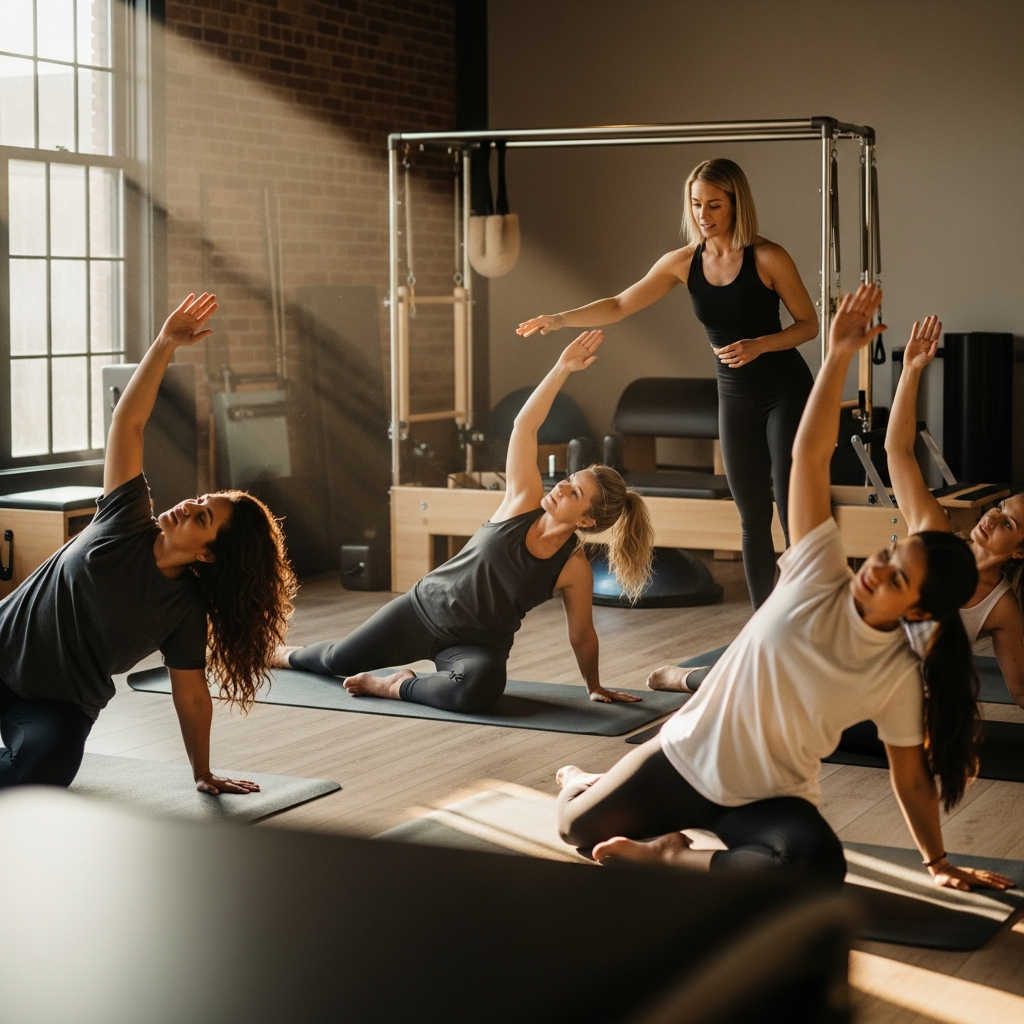
Here’s the thing most people don’t realize when they start researching studios: the differences between a mediocre Pilates studio and an exceptional one aren’t always visible in the photos on Instagram. The gorgeous reformer lineup, the exposed brick wall, the soft lighting – none of that tells you whether the instructor is going to notice that you’re compensating with your hip flexors because of an old ankle injury. None of it tells you whether the class sizes are small enough for you to actually get coached, or whether you’re just another body in the room moving through the motions.
The things that make a studio genuinely worth your time? They’re subtler than that. They show up in the first conversation you have with someone on staff. In how a class is structured for beginners versus more experienced clients. In whether the instructors ask about your health history before you ever set foot on a reformer. In the culture of the place – whether it feels competitive or supportive, whether people look comfortable or vaguely stressed out.
What we’re going to walk through together here is essentially a cheat sheet for making this decision with confidence. We’ll talk about instructor credentials and what they actually mean (because “certified” can mean wildly different things, it turns out). We’ll get into class sizes, equipment quality, and how a studio handles modifications for people with injuries or specific health goals. We’ll look at what the intake process should look like at a good studio versus a great one.
We’ll also talk about something that doesn’t get mentioned enough – how a great Pilates studio in the context of a wellness or weight loss goal actually functions as a *partner* in your health, not just a place you pay to exercise. There’s a difference, and once you see it, you can’t unsee it.
By the time you’re done reading, you’ll know exactly what to look for, what questions to ask, and honestly – what red flags to politely walk away from. No more standing at the door wondering. You’ll know before you even get there whether a studio is worth your time and energy.
And in a city like Mesquite, where you deserve access to genuinely good care for your body? That knowledge is everything.
It’s Not Just About the Reformers
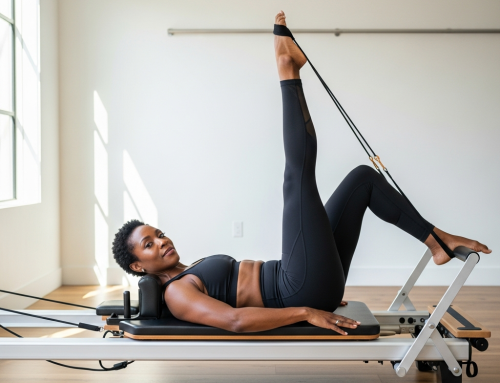
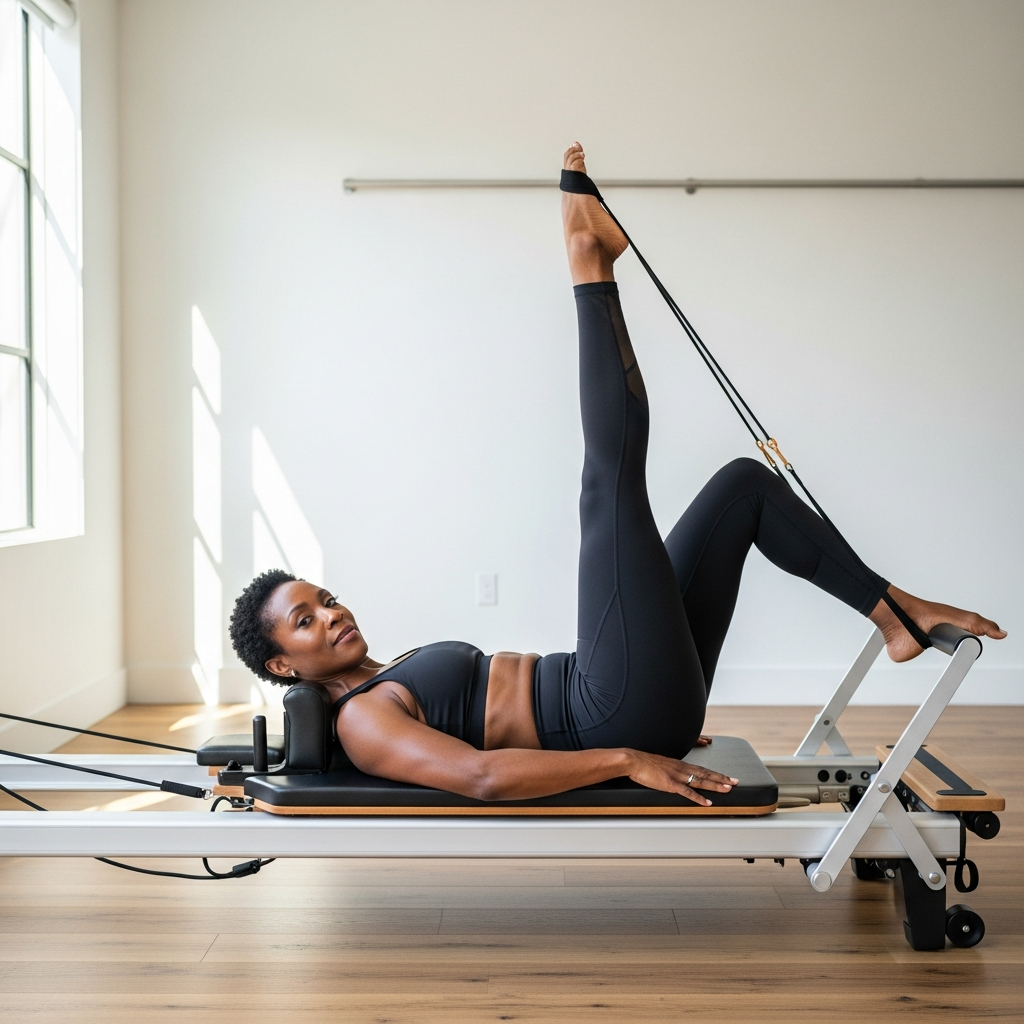
Here’s something that surprises a lot of people when they first start looking into Pilates studios – the equipment is actually the least important thing. I know, I know. You’ve seen those sleek reformer machines on Instagram and thought “that’s what I want,” and honestly, that’s completely understandable. They look impressive. But a gorgeous reformer in the wrong hands is just… expensive furniture.
What actually makes Pilates work – and what separates a studio that changes your body from one that just takes your money – comes down to a handful of principles that are worth understanding before you sign anything.
The Method Has a Foundation (And It Matters Here)
Joseph Pilates developed his method almost a century ago, and the core ideas haven’t changed much. The work is built around what he called the “powerhouse” – essentially your deep core muscles, the ones you can’t really see in a mirror but absolutely feel when they’re working. Think of it like the foundation of a house. Nobody admires a foundation. Nobody takes photos of it. But without a solid one, everything above it eventually cracks.
In Mesquite’s growing fitness scene, a lot of studios use the Pilates name but teach something that’s… adjacent to the method, let’s say. Pilates-inspired. Pilates-adjacent. Which is fine for some goals! But if you’re coming to Pilates specifically for rehabilitation, core restoration after pregnancy, or managing a chronic back issue, the distinction matters enormously.
What “Qualified” Actually Means (This Part Gets Confusing)
Okay, fair warning – instructor credentials are genuinely confusing in the Pilates world, and you’re not wrong to feel a little lost here.
Unlike physical therapy or nursing, Pilates instruction isn’t regulated by the state. That means technically anyone can call themselves a Pilates instructor after a weekend workshop. On the other end of the spectrum, you have instructors who’ve completed 450+ hours of comprehensive training through programs accredited by the Pilates Method Alliance. That’s a huge difference – roughly the difference between someone who watched a few cooking videos and an actual trained chef.
Look for instructors who’ve completed comprehensive certification, not just mat or equipment-specific training. And don’t be shy about asking. A great studio will be proud to tell you.
Small Classes Are a Feature, Not a Bug
This is counterintuitive if you’re used to big fitness chains where packed classes feel like a sign of popularity. In Pilates, smaller is almost always better – and here’s why.
Pilates is deeply individual. The same exercise can be therapeutic for one body and genuinely harmful for another, depending on alignment, injury history, and where someone is in their training. When an instructor is watching 20 people at once, they simply cannot catch the small compensations that quietly build into bigger problems over time. It’s like trying to proofread 20 documents simultaneously – things slip through.
A studio that caps classes at 6-8 people isn’t being exclusive. They’re being responsible.
The Mind-Body Thing Is Real (Even If It Sounds a Little Woo)
I’ll be honest – when I first heard the phrase “mind-body connection” I mentally filed it next to crystals and vague wellness promises. But in the context of Pilates, it’s describing something genuinely physiological.
The method requires you to consciously direct movement rather than just going through the motions. You’re not mindlessly pumping through reps. You’re learning to recruit specific muscles in a specific sequence, which means your nervous system is actively involved in a way it isn’t during, say, a treadmill session. This is exactly why Pilates shows up so often in physical therapy and post-surgical recovery – the neurological re-patterning is real and measurable.
A great studio in Mesquite will teach this intentionality from day one, even in beginner classes. A less rigorous one will let you muscle through exercises without ever really understanding what you’re supposed to be feeling.
The Space Tells You Something Too
Not everything is invisible. The physical environment of a studio communicates priorities pretty clearly – cleanliness of equipment, how much space exists between machines, whether the lighting allows an instructor to actually see what you’re doing. These aren’t aesthetic preferences. They’re functional details that affect both safety and the quality of instruction you’ll receive.
A good studio feels purposeful. You can usually sense within about five minutes whether a space was designed around teaching or around looking good for social media.
Ask These Questions Before You Book a Single Class
Most people walk into a studio, glance around, decide it looks clean enough, and sign up. Then they’re three months in and wondering why they’re not seeing results. Don’t be that person. Before you hand over your credit card, ask the instructor how they assess new clients. A great studio will have an actual intake process – movement screening, posture assessment, maybe a conversation about your injury history. If they just hand you a waiver and point you toward a mat… that’s a red flag.
Also ask about instructor certifications. There’s a big difference between a weekend certification and a comprehensive program through BASI, Stott, or the Pilates Method Alliance. You’re not being snobby by asking – you’re being smart. Any instructor worth their salt will be happy to tell you.
Look at the Equipment, But Look Closer
A studio can have beautiful reformers and still be mediocre. What you’re actually checking for is whether the equipment is maintained and varied. Springs should move smoothly, straps shouldn’t be frayed, and the carriage shouldn’t clunk and grind like an old shopping cart. Beyond condition though – look at the variety. A well-equipped studio in Mesquite should have reformers, a Cadillac or tower unit, a Wunda chair, and barrels. If it’s all reformers and nothing else, you’re going to hit a ceiling with your progress faster than you’d expect.
Oh, and studio size matters more than people realize. You want enough space that instructors can actually walk around and adjust your form. If the reformers are crammed in shoulder to shoulder? That’s a problem, especially if you’re dealing with any kind of injury or you’re brand new.
Watch One Class Before You Take One
Seriously – just ask if you can observe. Most good studios will say yes without hesitation. Shady or overcrowded ones will give you the runaround. When you’re watching, you’re not just looking at the equipment or the vibe. Watch how the instructor moves through the room. Are they cueing verbally *and* offering physical adjustments? Are they actually watching their students, or are they kind of… just standing there looking inspiring? You’ll know the difference.
Pay attention to how they handle someone who’s struggling with an exercise. A great instructor modifies without making it weird – no big announcements, no sighing, just a quiet adjustment and an encouraging word. That’s the kind of teaching that actually helps people get better.
Class Size Is a Non-Negotiable for Real Results
This one trips people up because bigger classes feel more fun and social – and honestly, that’s fine for some fitness goals. But Pilates is a precision practice. If you’re in a class of fifteen people with one instructor, they cannot watch your lumbar spine. They can’t notice that you’re gripping your hip flexors instead of engaging your core. And that means you might be reinforcing bad movement patterns every single class, which is basically the opposite of what you came for.
In Mesquite, look for studios where group reformer classes cap out around eight people. Smaller, ideally. Semi-private (two to four clients) is even better when you’re starting out or working around an injury.
Trust Your Gut About the Culture
This sounds fuzzy but it’s real. Walk in and notice whether the staff acknowledges you immediately, whether current clients seem comfortable asking questions, whether there’s a general sense of… ease. Some studios have a weird competitive undertone that makes everything feel like an audition. Others feel genuinely welcoming. You want the latter, especially if you’re coming back from an injury or you’re new to this kind of movement work.
Ask about their cancellation policy too – not because you plan to be flaky, but because how a studio handles that conversation tells you a lot about how they treat clients in general. Rigid, punitive policies can signal a studio that sees you as revenue rather than a person.
Start With an Intro Package, Not a Year Contract
Nearly every good studio in the Mesquite area offers some kind of introductory package – usually a few sessions at a reduced rate. Take it. Use those sessions to evaluate everything above with real firsthand experience. Never commit to a long-term contract until you’ve actually worked with the instructors multiple times. A confident, well-run studio will be happy to earn your loyalty before asking for it.
When Life Gets in the Way of Consistency
Let’s be real for a second. You signed up, you’re excited, you’ve got your grip socks – and then somewhere around week three, things get complicated. Work gets busy. The kids get sick. You miss one class, then two, and suddenly that momentum you built feels like it’s gone. This happens to almost everyone, and honestly? Knowing it’s coming makes it easier to handle.
The solution isn’t willpower. Willpower is notoriously unreliable – ask anyone who’s ever white-knuckled through something. What actually works is removing friction. Talk to the studio’s front desk about booking your classes a full week in advance instead of day-by-day. Treat those slots like doctor’s appointments you can’t cancel. Some studios in Mesquite even offer accountability check-ins or small group formats where other members notice when you’re gone. That gentle social pressure? Surprisingly effective.
The “I’m Not Doing It Right” Spiral
Pilates has a learning curve. A real one. Unlike hopping on a treadmill, where you’re pretty much immediately doing the thing, Pilates asks your brain and body to coordinate in ways they’ve probably never tried. You’re thinking about your breath, your neutral spine, your shoulder blades… while also trying not to fall off a reformer. It’s a lot.
A lot of beginners quietly suffer through this feeling of incompetence rather than asking for help. They smile, they nod, and they go home wondering if they’re beyond help. They’re not. Nobody is. But the fix requires actually saying something – telling your instructor “I don’t feel this in the right place” or “I’m confused about the breathing pattern.” A good instructor at a quality studio will course-correct without making you feel embarrassed. If they make you feel embarrassed? That’s information about the studio, not about you.
Give yourself a genuine eight-session runway before you assess whether you’re “getting it.” The first few classes are just orientation.
The Soreness Surprise
Nobody warns you quite enough about this. Pilates works muscles that have been essentially sleeping – deep core stabilizers, the muscles along your spine, tiny hip rotators you didn’t know existed. After your first couple of sessions, you might find yourself sore in places that feel oddly specific. Like… why does the inside of my shoulder blade hurt?
This is normal. This is actually good, in the sense that your body is responding and adapting. But it can be discouraging if you’re not expecting it, because it can make the next class harder to motivate yourself to attend.
Hydration and light walking help more than people expect. A hot shower the night after class. Not pushing into your maximum effort in the first two weeks – seriously, pace yourself even when you feel capable. The studio staff should be telling you this upfront, and if they’re not, ask.
Navigating the Schedule When Yours Is Unpredictable
Mesquite is a working community. People have shifts, commutes, kids’ schedules that change without notice, and bosses who don’t care about your Pilates class. A rigid studio schedule is genuinely a barrier for a lot of people, and it’s okay to name that.
Look for studios that offer a mix of morning, evening, and weekend options – ideally with enough class variety that missing your usual Tuesday slot doesn’t derail your whole week. Some studios are also increasingly offering hybrid options, where you can take certain sessions virtually when life genuinely won’t cooperate. It’s not the same as being in the room, but it’s infinitely better than skipping entirely.
The Plateau Moment
Around the two or three month mark, something funny happens. Pilates starts feeling… easier. Which sounds like a win, and partially it is. But it can also mean you’ve adapted to a certain level and stopped progressing. The work starts to feel like going through the motions.
This is when the quality of your studio really matters. Great instructors notice this happening before you do. They’ll introduce new apparatus, increase resistance, or modify your exercises to reintroduce that productive challenge. If nobody is ever pushing you forward, nudging you toward the next level – it might be worth having a direct conversation about your goals, or exploring whether a different class format would serve you better.
The plateau isn’t failure. It’s just a signal that you’re ready for more.
What to Expect in Your First Few Weeks
Here’s the honest truth that most fitness studios won’t tell you: the first couple of weeks might feel a little awkward. Maybe even frustrating. You’re learning how to breathe in a specific way, cue muscles you’ve probably never consciously thought about, and move your body in patterns that feel completely foreign. That’s normal. That’s actually the point.
Pilates has a steeper learning curve than, say, hopping on a treadmill. Your instructor is asking your brain and body to build new connections – and that takes time. Don’t measure your early sessions against what the person on the mat next to you is doing. They’ve been at this for months, maybe years.
Most people start noticing something in weeks two through four. Not dramatic physical changes, but something quieter – they’re sleeping a little better, their posture feels different when they’re sitting at their desk, or they catch themselves breathing more intentionally during a stressful moment. Small stuff. But meaningful stuff.
The “When Will I See Results?” Question
Everyone wants to know this. And honestly, you deserve a straight answer rather than vague inspiration.
For most people coming into Pilates – especially through a medically-guided program – here’s a realistic general picture
Weeks 1-3: You’re mostly just learning. Building the foundation. You might feel sore in muscles you forgot you had (hello, deep core). This phase isn’t glamorous, but it’s genuinely important.
Weeks 4-8: This is where things start clicking. Movement patterns become a little more intuitive, you can focus less on “what am I supposed to do?” and more on how you’re doing it. Some people notice improved stability or reduced discomfort in areas that used to bother them.
Months 3-6: More visible, tangible changes for most people. Strength, flexibility, body composition shifts – these take time to develop, and that’s just physiology being honest with you. Anyone promising dramatic results in two weeks is, well… not being your friend.
That said – everyone’s different. Where you’re starting from, how consistently you attend, what else is going on in your health picture – it all matters. Your clinic team should be talking to you about *your* realistic timeline, not a generic one-size-fits-all promise.
Making the Most of Your Sessions
A few things that genuinely make a difference, speaking from what works for real people
Show up even when you don’t feel like it. Especially then, actually. Consistency beats intensity in Pilates every single time. Three steady sessions a week for three months will do more for you than going hard for two weeks and burning out.
Communicate with your instructor. If something hurts – not the productive “I’m working muscles” sensation, but actual pain – say so. Immediately. A good instructor will never make you feel embarrassed for speaking up, and modifications aren’t a sign of weakness. They’re just smart training.
And don’t underestimate what happens *outside* the studio. Sleep, hydration, how you’re managing stress – all of it feeds into your progress. Your medical team can help you look at the whole picture, which is honestly one of the biggest advantages of working through a clinic setting rather than going it alone.
Your Next Practical Steps
So if you’re sitting here thinking this might be right for you, the path forward is pretty simple.
Start with a conversation. Most reputable studios in Mesquite will offer an initial consultation – use it. Ask questions. Ask about instructor credentials, class sizes, how they handle modifications for people at your specific starting point. Notice how they talk to you. Do they listen? Do they make you feel like a number or a person?
If you’re working with a medical weight loss program, ask how the Pilates component integrates with your other care. Who communicates with whom? How is your progress tracked? These aren’t nitpicky questions – they’re exactly the right ones.
Then, assuming it feels like a fit? Commit to at least six weeks before you judge whether it’s working. Give your body and brain enough time to actually adapt before you decide anything.
Pilates isn’t magic. It won’t fix everything overnight, and any studio worth its salt will tell you exactly that. But for the right person, with the right support, it can be one of those things you look back on and think – yeah, that actually changed something for me.
Finding the right studio – the one that actually feels right – isn’t always a straightforward process. You might visit a few places, feel a little underwhelmed, and wonder if you’re being too picky. You’re not. The details matter. The way an instructor notices when you’re compensating for an old shoulder injury, the way the front desk staff remembers your name, the way you leave a class feeling both challenged and genuinely good about yourself… those things aren’t small. They’re the whole point.
Mesquite has some genuinely wonderful options if you know what you’re looking for. And now you do.
You Deserve More Than a Generic Fitness Experience
Here’s something worth sitting with for a moment: Pilates, done well, is deeply personal. It’s not like hopping on a treadmill and zoning out to a podcast (not that there’s anything wrong with that sometimes). It asks something of you – your attention, your breath, your willingness to slow down and actually connect with how your body is moving. A great studio honors that. It meets that effort with equal care.
The studios that stand out aren’t necessarily the ones with the fanciest equipment or the most Instagram-worthy aesthetic. They’re the ones where the instructors are genuinely invested in your progress, where the community feels welcoming rather than cliquey, and where the programming is thoughtful enough to grow with you – whether you’re recovering from something, building strength for the first time, or deepening a practice you’ve had for years.
Trust What You Feel When You Walk In
There’s a kind of gut-check that happens when you visit a space for the first time. Does it feel calm? Does the instructor make eye contact? Do you feel like a person or a transaction? Those instincts are worth trusting.
A truly great studio also isn’t afraid to talk honestly about what they offer – and what they don’t. They’ll tell you if a different format might serve you better. They’ll modify without making you feel singled out. They’ll celebrate your small wins, because they understand that the small wins are actually the big ones.
Actually, that’s probably the simplest way to put it: you should leave each session feeling more like yourself, not less.
A Gentle Nudge (From Someone Who Gets It)
If you’ve been thinking about trying Pilates, or you’ve tried it before and felt like something was missing, or you’re coming back after time away from movement – this is your quiet little nudge to take the next step. You don’t have to have it all figured out before you reach out. The best studios are used to questions, and they *like* them.
Our team is here for exactly that kind of conversation. Whether you’re curious about what to expect, not sure which class format fits your life right now, or just want to talk through your goals before committing to anything – we’re genuinely happy to help. No pressure, no hard sell. Just real guidance from people who care about getting this right for you.
Reach out whenever you’re ready. There’s no perfect moment – but if you’re reading this, you’re probably closer to ready than you think.