7 Reasons Pilates Is a Smart Low-Impact Workout in Cedar Hill
Picture this: You wake up on a Tuesday morning, your knees already doing that thing where they make a little announcement every time you stand up, and you think – okay, today’s the day I actually do something about my fitness. But then you start scrolling through options and suddenly you’re overwhelmed. High-intensity boot camps that look genuinely terrifying. Running programs that assume you already run. Gym memberships where you’ll need a second membership just to figure out how to use the equipment.
Sound familiar? Yeah. We’ve been there too.
Here’s the thing about Cedar Hill – it’s a community full of people who *want* to be active, who want to feel strong and capable in their bodies, but who also have real lives. Real jobs, real kids, real knees, real lower backs that have opinions about certain movements. You’re not looking for punishment disguised as exercise. You’re looking for something that actually works *with* your body instead of against it.
That’s exactly where Pilates comes in.
And before you picture leotards and pretzel-shaped flexibility – can we just set that aside for a moment? Because that image has done Pilates a serious disservice over the years. What we’re actually talking about is one of the most intelligently designed movement systems out there, originally developed by Joseph Pilates (a man who rehabilitated injured athletes and dancers, which tells you something right there) and refined over decades into something that genuinely changes how people feel in their everyday lives.
Why Cedar Hill Residents Are Paying Attention
There’s been a noticeable shift happening locally. More people are stepping away from the “no pain, no gain” mentality – not because they’re giving up, but because they’ve gotten smarter. They’ve learned the hard way that workouts which wreck your body on Wednesday make it really hard to show up again on Friday. Consistency matters more than intensity. And Pilates is, at its core, a consistency-friendly practice.
Whether you’re dealing with a nagging injury, managing your weight, recovering from something, or just starting your fitness story from scratch… Pilates meets you where you are. That’s not marketing language. That’s just how it works.
Actually, that reminds me – some of the most dedicated Pilates practitioners you’ll ever meet are people who came to it reluctantly, after something else stopped working for them. Former runners with stress fractures. People post-surgery. Busy parents who needed something they could actually stick to. They show up expecting to be underwhelmed and then, somewhere around week three or four, something clicks.
What You’re About to Discover
In this article, we’re laying out seven specific reasons why Pilates makes so much sense as a low-impact workout – particularly if you’re in Cedar Hill and thinking seriously about your long-term health. We’ll talk about what it actually does for your body (and why the benefits go deeper than you might expect), how it fits into a broader weight management approach, and why low-impact absolutely does not mean low-results.
We’ll get into the core strength piece – because your core is doing so much more than you realize, and Pilates addresses it in ways that regular gym work often misses entirely. We’ll talk flexibility, posture, stress, joint health… the whole picture.
But here’s what we really want you to walk away with: the understanding that choosing something sustainable and smart for your body isn’t settling. It’s actually the move that gets you where you want to go. The people who are still exercising consistently at 50, 60, 70? They figured this out. They stopped chasing the most brutal option and started chasing the most effective one.
Cedar Hill has a lot going for it – good community, beautiful outdoor spaces, and increasingly, some great options for people who take their wellness seriously without wanting to make it their second job.
So whether you’ve been curious about Pilates for a while and just haven’t pulled the trigger, or you’re genuinely starting from zero and wondering what the right first step looks like… this one’s for you. Seven reasons. Real talk. No fluff.
Let’s get into it.
What Pilates Actually Is (And Isn’t)
Okay, so before we get into why Pilates works so well for people here in Cedar Hill, it’s worth clearing up a few things – because there’s a lot of confusion around this particular workout. And honestly? Some of it is the fitness industry’s fault for making it sound either too fancy or too simple.
Pilates is a system of exercises developed in the early 20th century by Joseph Pilates, a German-born fitness enthusiast who originally called his method “Contrology.” The name didn’t stick, obviously. The idea did. His core philosophy – and yes, pun very much intended – was that controlled, precise movement originating from a stable center could transform how your body functions. Not just how it looks. How it *works*.
Think of it like this. Most traditional workouts are like turning up the volume on whatever your body is already doing. Pilates is more like retuning the instrument first.
The Core Concept (And Why “Core” Doesn’t Mean What You Think)
Here’s where it gets a little counterintuitive. When most people hear “core,” they immediately picture crunches, six-pack abs, maybe some planks. Pilates teachers will actually cringe a little at that. The “core” in Pilates refers to what Joseph called the “powerhouse” – a deep cylinder of muscle that includes your lower back, pelvic floor, hips, and deep abdominals working together. Not just the front of your stomach.
It’s the difference between the showy outer wall of a building and the actual load-bearing structure inside it. One looks impressive. The other keeps everything from collapsing.
When you strengthen that deep support system, something interesting happens. Your joints don’t have to work as hard. Your posture shifts. The aches that you’d just… accepted as part of life? They start making sense, and sometimes they start fading.
Low-Impact Doesn’t Mean Low-Effort
This is the misconception that probably needs the most attention. People sometimes assume “low-impact” is a polite way of saying “easy” or “for people who can’t do real exercise.” That’s just not true – and if you’ve ever done a full Pilates session and wondered why your legs are shaking during something that looks, from the outside, pretty calm, you already know this.
Low-impact simply means your joints aren’t absorbing the repeated shock that comes with running, jumping, or heavy lifting. Your feet stay grounded, your movements are controlled, and there’s no moment where gravity is trying to slam your knees into the floor. Actually, that’s exactly what makes it so valuable for people managing joint pain, recovering from injury, or working around the kinds of physical limitations that tend to accumulate over time.
The effort is very real. It’s just… different. More internal. More intentional.
Mat vs. Reformer – A Quick Primer
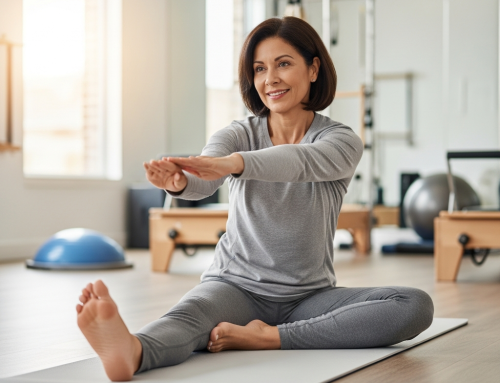
You’ll hear both terms in Cedar Hill studios, so it’s worth knowing the difference. Mat Pilates is exactly what it sounds like – exercises performed on a mat, using your own bodyweight as resistance. Accessible, affordable, and genuinely challenging when done correctly.
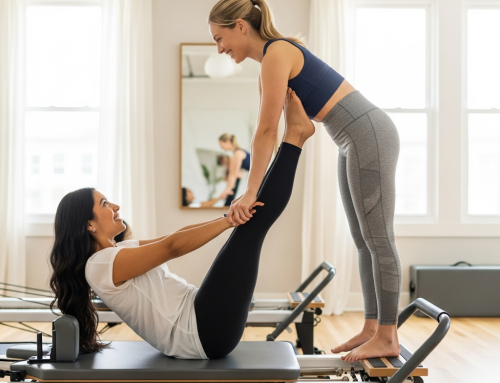
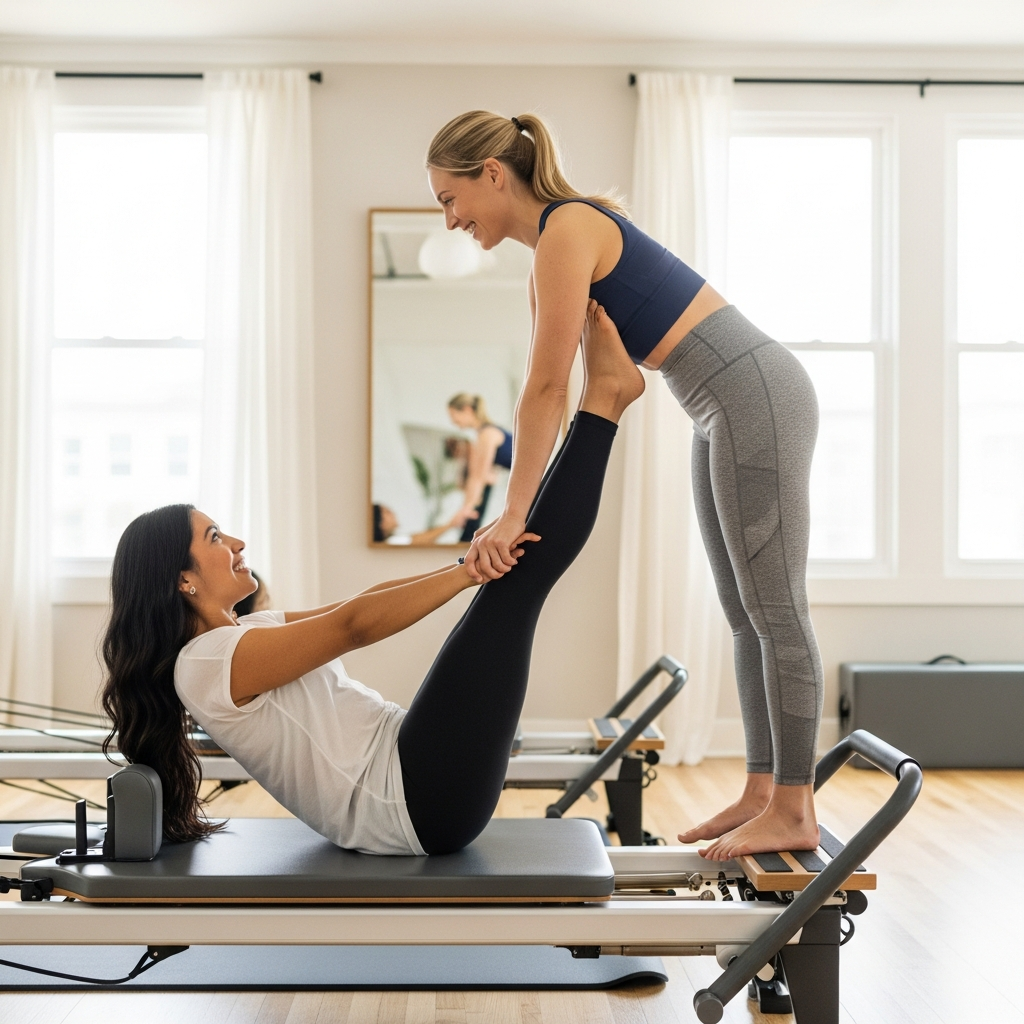
The Reformer is a piece of equipment – a sliding carriage on a frame with a system of springs and straps – that adds adjustable resistance and supports a much wider range of motion. It looks a little intimidating at first, like something you’d find in a very calm, well-lit medieval dungeon. But it’s actually incredibly versatile. The spring system can make movements *easier* for beginners or people with limitations, which is the opposite of what most people expect.
Both approaches are built on the same principles. Neither is inherently better. It just depends on what your body needs.
The Mind-Body Connection Thing Is Real
Look, the phrase “mind-body connection” gets thrown around so much it’s started to lose meaning. But in the context of Pilates, it describes something genuinely useful – the practice of paying close attention to *how* you’re moving rather than just grinding through repetitions. Every exercise has a specific breathing pattern, a mental focus point, an intention behind it.
That’s not mystical. It’s practical. It means you’re training your nervous system alongside your muscles, building movement patterns that actually carry over into your daily life. How you carry groceries. How you sit at your desk. How you get up off the floor without thinking “ugh.”
That kind of functional strength is harder to quantify than a number on a scale – but for a lot of people, it’s what they notice first.
How to Actually Get Started (Without Overwhelming Yourself)
Here’s the thing most fitness advice gets wrong – they tell you *what* to do but skip the part about *how* to make it stick in real life. So let’s talk logistics, because starting Pilates in Cedar Hill is genuinely more accessible than you might think.
First, decide between a reformer class and a mat class. They’re related but feel pretty different. Mat Pilates is more portable – you can do it anywhere, it’s usually cheaper, and it’s a fantastic entry point. Reformer Pilates uses that spring-resistance machine you’ve probably seen in photos, and honestly? It gives your muscles feedback that’s hard to replicate otherwise. If your budget allows, try at least one reformer session early on. Many people find it clicks something into place about how the movements are supposed to feel.
Find the Right Class Size Before Anything Else
This is the tip people don’t talk about enough. A packed group class with 20 people means the instructor has about 30 seconds to notice if you’re compensating with your lower back instead of engaging your core. That’s how small misalignments become nagging injuries over months.
Look for studios that cap reformer sessions at 8-10 people, or better yet, book one private session when you’re starting out. Yes, it costs more. But one good private session can save you six months of doing things slightly wrong – and in a low-impact workout, technique is genuinely everything. Think of it like getting directions before a road trip instead of figuring out you went the wrong way an hour in.
Cedar Hill has options at different price points, so don’t assume it’s out of reach before you look.
What to Tell Your Instructor on Day One
Be upfront about your body’s history. Not just current pain – old injuries matter too. That ankle sprain from years ago, the shoulder that got stiff after a car accident, a C-section scar that affects your core engagement (this one is vastly underappreciated, by the way). A good Pilates instructor will modify movements for all of these things, but only if they know.
Also mention if you have osteoporosis or have been told your bone density is a concern. Some classic Pilates spinal flexion moves – the ones where you curl forward – aren’t appropriate for everyone, and a qualified instructor should already know this. If they don’t ask or don’t modify, that’s useful information about whether you’re in the right place.
The Frequency Sweet Spot
Two to three sessions per week is where most people see real change. One session a week maintains awareness but doesn’t build it. Four or five sessions when you’re just starting out tends to leave people sore and frustrated.
Actually, this reminds me of something worth saying – soreness after Pilates is usually different from soreness after a bootcamp class. It’s deeper, sometimes delayed, often in muscles you genuinely forgot you had. The first time you feel your deep hip rotators protest going up stairs, that’s not a bad sign. That’s your body going “oh, those exist.”
Give yourself six weeks before you assess whether it’s working. Not six sessions – six weeks. The early weeks are largely neurological; your brain is learning new movement patterns. The visible and functional changes come after that foundation is laid.
A Practical Weekly Structure
If you’re using Pilates as part of a broader plan – which, if you’re working with a medical weight loss clinic, you probably are – here’s a framework that works well
– Two Pilates sessions as your primary strength and stability work – Two to three walks (Cedar Hill’s trails and parks make this easy – Lake Joe Pool area is genuinely lovely for this) – One rest or light stretching day
This keeps your total movement volume high without overtaxing a body that might already be adjusting to dietary changes, medication, or both. Recovery matters more than most people want to hear.
A Few Things Worth Knowing Before Your First Class
Wear fitted clothing – not tight, just fitted. Loose shorts have a way of becoming a problem during certain movements, and you’ll want to focus on the exercise, not logistics. Pilates is typically done barefoot or in grip socks, which most studios sell if you don’t have them.
Show up five minutes early, not right on time. That buffer lets you chat with the instructor, mention any concerns, and settle in before class starts. It makes the whole experience feel less like a test and more like… what it actually is. Movement that’s meant to support you.
The Learning Curve Is Real (And That’s Okay)
Let’s be honest about something most fitness studios won’t tell you upfront: Pilates has a steeper learning curve than it looks. You watch someone on a reformer moving through a series of exercises and think, “That looks peaceful, almost meditative.” Then you actually get on the machine and can’t figure out which way to push, which muscles to engage, or why your legs are shaking doing something that looks so effortless.
This catches a lot of people off guard. Especially if you’re coming from a gym background where most machines have diagrams bolted to the side.
The solution isn’t to tough it out in group classes until something clicks. Start with private or semi-private sessions. Yes, they cost more. But two or three private sessions with an instructor who can actually watch your body and give you real-time cues will save you months of frustration – and potentially prevent you from reinforcing bad habits that become harder to break later.
When “Low-Impact” Still Feels Hard
People sometimes assume low-impact means low-intensity. It doesn’t. Not even close. Pilates will find muscles you genuinely forgot existed, and it will make them work in ways that feel almost unfair.
The deep core muscles – your transverse abdominis, your pelvic floor, the small stabilizers around your spine – these aren’t used to being the center of attention. Most of us have spent years compensating for their weakness with bigger, louder muscle groups. So when Pilates asks them to step up? There’s going to be some burning, some shaking, some quiet disbelief.
The good news is that this intensity is actually productive. It’s not the kind of soreness that comes from damage – it’s the kind that comes from activation. That said, if something feels sharp or pinching rather than burning and effortful, stop. Tell your instructor. There’s a real difference between “this is hard” and “something is wrong.”
Consistency Is Where Most People Struggle
Here’s the thing nobody wants to hear: Pilates twice a month isn’t really Pilates. The method is cumulative. Your nervous system needs repetition to learn new movement patterns, and those deep stabilizing muscles need regular work to actually change. Sporadic sessions feel good in the moment but don’t build the foundation you’re looking for.
Life in Cedar Hill is busy – work, kids, traffic on 67, all of it. Carving out time two or three times a week feels impossible for a lot of people.
A realistic solution? Start with one class per week and add complementary movement at home. Your instructor can give you three or four simple exercises that take ten minutes. That’s not a big ask. Ten minutes, no equipment, done before your coffee gets cold. That bridge between studio sessions is often what separates people who see results from people who plateau.
Body Image and the Mirror Situation
This one doesn’t get talked about enough. Pilates studios have mirrors. Pilates involves movement that can feel awkward and exposed, especially when you’re new, especially if you have complicated feelings about your body – which, let’s be real, is most of us.
Watching yourself struggle through an exercise you can’t quite coordinate yet isn’t always fun. It can bring up a lot.
What helps is reframing what you’re actually looking at. The mirror in Pilates isn’t there to judge your body – it’s a feedback tool to check alignment. Try to look for specific things (are your shoulders level? is your spine neutral?) rather than doing a full-body critique. That’s a different kind of looking. It takes practice, but it genuinely shifts the experience.
Finding the Right Instructor for Your Specific Situation
Not all Pilates instruction is equal, and this matters more than people realize. If you’re managing a lower back issue or working with the metabolic shifts that come with medical weight loss, you need an instructor who has experience with those specific situations – not just someone who’s great at coaching elite athletes or dancers.
Ask direct questions before you commit. Have they worked with clients managing weight? Do they have experience modifying for injuries or chronic conditions? A good instructor won’t be offended by these questions. An instructor worth your time will actually be glad you asked.
The fit between student and teacher in Pilates is genuinely important. If someone isn’t clicking with you after a few sessions, try someone else. That’s not quitting – that’s being smart about your own needs.
What to Actually Expect When You Start
Let’s be honest with each other for a second. If you’ve been reading about Pilates and you’re feeling genuinely excited – that’s great. But before you sign up for your first class at a Cedar Hill studio, it’s worth having a real conversation about timelines, because the fitness world has a serious overselling problem.
Pilates is not a transformation machine. It’s a practice. And like most things worth doing, it rewards patience more than intensity.
The first few sessions? They might feel a little humbling. You’ll probably discover muscles you forgot you had – or honestly, muscles you didn’t know existed. That hip flexor fatigue after a series of leg circles isn’t weakness. It’s your body waking up to movements it’s never had to coordinate before. Soreness in the first week is normal. Feeling slightly confused about what your instructor is asking your pelvis to do? Also completely normal.
The Realistic Timeline
Here’s roughly what most people experience, though your experience will vary depending on your starting point, your consistency, and about a dozen other factors that nobody can fully predict.
Weeks one through three are mostly about learning the language. Pilates has its own vocabulary – neutral spine, imprinting, scapular stabilization – and getting comfortable with that takes time. Don’t expect to feel graceful yet. Focus on showing up.
Around weeks four through six, something usually shifts. The movements start to feel less foreign. You might notice you’re sitting differently at your desk, or that you caught yourself engaging your core while lifting groceries. These small moments? They’re actually the point. They’re signs that your neuromuscular patterns are changing – that your brain and body are starting to communicate better.
By the two to three month mark, most consistent practitioners start noticing more meaningful changes. Better posture. Reduced back tension. Improved balance. Some people notice their clothes fit differently, not because Pilates is a major calorie burner on its own, but because improved muscle tone and posture genuinely change how your body carries itself.
What you probably won’t see in three months: dramatic weight loss from Pilates alone. That’s not a knock on the practice – it’s just the truth. If weight management is part of your goal (which, given where you’re reading this, it might be), Pilates works best as one piece of a larger plan that includes nutrition and possibly other movement.
How Often Should You Go?
Two to three sessions per week is the sweet spot for most beginners. Enough frequency to build real familiarity with the movements, but not so much that you’re burning out before you’ve had a chance to fall in love with it. One session a week can still be beneficial – don’t let perfect be the enemy of good – but progress will be slower.
Cedar Hill has a handful of solid studio options, including both group reformer classes and mat-based formats. If you’re dealing with a specific injury or condition, a few private sessions first can be genuinely worth the extra cost. Having an instructor watch *your* movement patterns and give you personalized cues is different from following along in a packed class.
Pairing Pilates with Your Bigger Health Goals
If you’re working with a medical weight loss program – or considering it – this is where things can get really interesting. Pilates complements that kind of structured support beautifully, especially for people who’ve been told to avoid high-impact exercise due to joint pain, excess weight, or metabolic conditions.
Actually, that’s worth sitting with for a moment. A lot of people come to lower-impact options like Pilates because other exercise felt impossible or painful. That’s not a consolation prize. That’s a smart, sustainable starting point. Getting your body moving safely, building a foundation of strength and body awareness… that matters. It can make everything else easier over time.
The goal isn’t to rush to some imaginary finish line. It’s to build habits that your body can actually maintain.
Your Next Practical Step
If you’re curious, the lowest-risk way to start is simple: look for a beginner-friendly intro class at a local Cedar Hill studio, ideally one that offers some kind of introductory rate. Go once. See how your body responds. Talk to the instructor afterward about your specific situation and goals.
You don’t have to commit to anything beyond that first class. But chances are, you’ll want to come back.
Seven reasons is honestly just the beginning. When you start exploring what Pilates can do for your body – especially when you’re pairing it with a thoughtful approach to your overall health – you realize pretty quickly that it’s one of those rare things that actually delivers on its promises. No hype, no impossible expectations. Just real, sustainable movement that meets you where you are.
And that matters so much here in Cedar Hill. We’re not talking about some trendy workout that blew in from a coastal city and might disappear in two years. Pilates has been around for over a century, and it’s stuck around for a reason. It works for the person recovering from a knee injury. It works for the busy parent who needs something gentle but effective. It works for the athlete who wants better core stability without punishing their joints. That kind of versatility is genuinely rare.
What we love most – and this is something we see play out over and over again – is how Pilates tends to change the way people *think* about exercise. It shifts the conversation from “how much can I suffer through?” to “how can I move better?” That’s a meaningful mental shift. Because let’s be honest, a lot of us have a complicated relationship with working out. We associate it with punishment, with grinding through something we hate, with soreness that leaves us dreading the next session. Pilates has this quiet way of dismantling all of that.
Of course, movement is just one piece of the puzzle. If you’re working toward weight loss or trying to manage a health condition, you already know that exercise alone – even really good exercise – rarely tells the whole story. Nutrition, sleep, stress, hormonal health… it all weaves together in ways that can feel overwhelming to sort out on your own. That’s actually where having some professional support in your corner can make a real difference.
If you’ve been curious about how to build a more complete approach to your health – one that honors where your body is right now while helping you work toward where you want to be – we’d genuinely love to talk. Not in a salesy, pressure-filled way. Just a real conversation. Our team at the clinic works with people at all kinds of starting points, and we’re pretty good at helping figure out what’s actually going on and what might actually help.
You don’t have to have everything figured out before you reach out. Most people don’t. They just know something isn’t working, or they feel like they’ve been trying hard without seeing results that match their effort. That frustration is real, and it deserves a real response – not a generic plan that ignores who you actually are.
So whether Pilates ends up being your primary movement practice, a complement to something else you’re doing, or just one piece of a bigger wellness picture you’re still sketching out… you’re asking the right questions. You’re paying attention to your body. That already puts you ahead.
Reach out whenever you’re ready – there’s no perfect moment, and there’s no pressure. We’re here for the questions, the uncertainty, and the “I don’t even know where to start” conversations. Those are actually some of our favorites.