10 Questions People Ask Before Starting Pilates in Grand Prairie
You’re standing in the parking lot of a fitness studio, hands on the steering wheel, engine still running. You’ve driven past this place a dozen times. Maybe you finally looked it up online at 11pm last week when your back was killing you and you couldn’t sleep. Maybe a friend mentioned it and you nodded politely while secretly thinking *that’s not really for me.* And now you’re here, but you haven’t actually gone inside yet.
Sound familiar?
There’s something about Pilates that makes people hesitate in a way that, say, signing up for a gym membership doesn’t. Maybe it’s the name – it sounds vaguely European and mysterious. Maybe you’ve seen photos of people in studios doing things that look either incredibly graceful or slightly impossible, and you’re not sure which category you’d fall into. Or maybe you’ve just got a list of questions swirling around in your head that you feel a little embarrassed to ask out loud.
Here’s the thing. Those questions? Completely normal. Every single person who walks through the door of a Pilates studio had them first.
And if you’re in Grand Prairie specifically – maybe you’ve been scrolling through options, trying to figure out what’s even available nearby and whether any of it actually makes sense for where you are right now, physically, health-wise, life-wise – then you deserve real, honest answers. Not the kind of glossy marketing fluff that makes everything sound like a spa day. Actual information you can use.
Why Pilates Questions Are Different From Regular Fitness Questions
Most fitness questions are pretty practical. How many days a week? How much does it cost? What do I wear? Pilates questions tend to go a little deeper than that – because people considering Pilates are often coming from a specific place. Maybe you’re recovering from an injury. Maybe your doctor mentioned core strengthening and this came up. Maybe you’ve tried the gym route multiple times and it hasn’t stuck, and you’re wondering if something lower-impact might actually work better for your body.
That’s real. That’s the actual starting point for a lot of people.
And honestly, Pilates has this reputation that’s a little… complicated. Some people think it’s too gentle to do anything meaningful. Others think it’s some elite thing for dancers and athletes with perfect posture who already know what they’re doing. Neither of those things is accurate – but those impressions stick around, and they create genuine confusion.
There’s also the weight loss angle, which matters to a lot of people reading this. If you’re working with a medical weight loss clinic or thinking about it, you want to know how Pilates fits into that picture. Does it burn enough calories? Can you do it if you’re carrying extra weight right now? Will it actually complement what you’re already doing, or is it kind of beside the point?
These are fair questions. Good questions, actually.
What You’ll Walk Away With
This article is going to work through the ten questions we hear most often from people right before they take the plunge and try their first Pilates class in Grand Prairie. Things like whether you need any prior experience (you don’t, but let’s talk about what that actually means in practice), what to realistically expect in terms of results, how it works for people at different fitness levels and body types, and whether the reformer machine is as intimidating as it looks.
Spoiler: it’s not. But again – let’s talk about it properly.
We’ll also get into some stuff that doesn’t get covered enough, like how Pilates affects your metabolism over time, what the difference is between mat and reformer classes, and how to pick the right studio so you’re not just guessing.
By the time you’re done reading, you’ll have enough information to make an actual decision – not just a hopeful one, but a grounded, informed one. The kind where you feel ready to walk through that studio door instead of sitting in the parking lot with the engine running.
And if you’re already inside, metaphorically speaking, just curious and doing your research from the comfort of your couch? Even better. Let’s get into it.
What Pilates Actually Is (And What It Isn’t)
Here’s where things get a little fuzzy for most people – and honestly, that’s understandable. Pilates has been around since the 1920s, developed by a guy named Joseph Pilates who originally called it “Contrology.” Which, fair enough, sounds like a made-up word from a sci-fi movie. But the core idea was pretty straightforward: controlled, intentional movement that trains your body to work as one connected system rather than a collection of separate parts doing their own thing.
Think of it like the difference between a well-rehearsed band versus five musicians who’ve never met. Your muscles can technically all “work” without ever really coordinating. Pilates teaches them to play together.
What it isn’t? A yoga knockoff, a light stretching class you do while half-asleep, or something exclusively for dancers and flexible people. That last one especially – we hear it constantly, and it’s just not true. If anything, Pilates is *particularly* useful for people who aren’t flexible, because it builds the strength and mobility that create flexibility over time.
The Core Thing Everyone Misunderstands
When people hear “Pilates focuses on your core,” most of them picture crunches. Six-pack work. That burn you feel after fifty sit-ups. But that’s… actually the opposite of what’s happening here.
The “core” in Pilates isn’t just your abs. It’s more like a canister – your deep abdominal muscles wrapping around the front, your back muscles along the spine, your diaphragm on top, and your pelvic floor on the bottom. The whole container, essentially. Joseph Pilates called this your “powerhouse,” which is a slightly dramatic name but honestly not wrong.
When that system works properly, it’s like having a really solid foundation under a house. Everything built on top of it – your movements, your posture, the way you carry yourself through a Tuesday afternoon – becomes more stable and less effortful. When it doesn’t work? Well, that’s often where chronic back pain, poor posture, and that general feeling of physical exhaustion come from.
Mat vs. Reformer – The Question Nobody Explains Well
At some point in your research, you’ve probably encountered the word “reformer” and either gotten excited or completely confused. Possibly both.
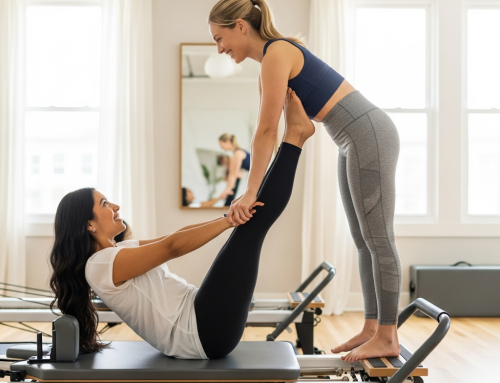
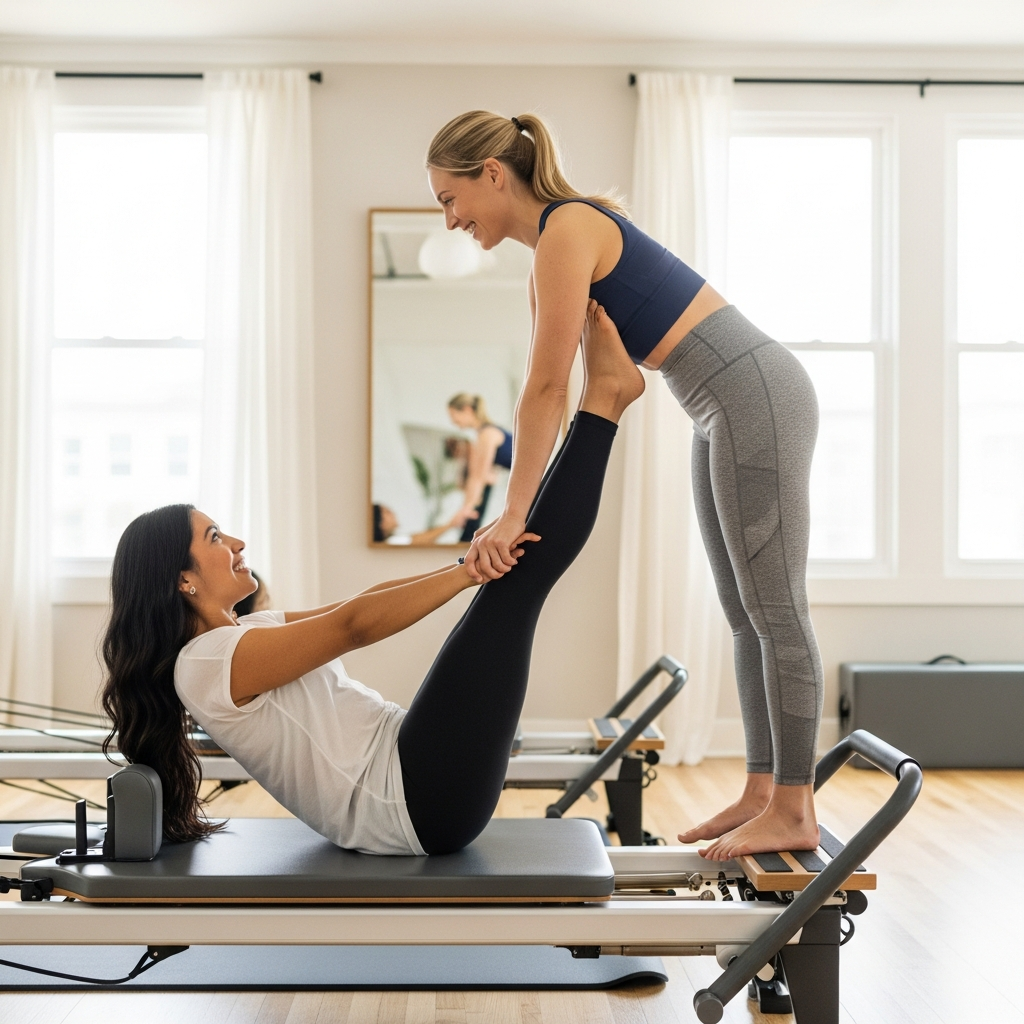
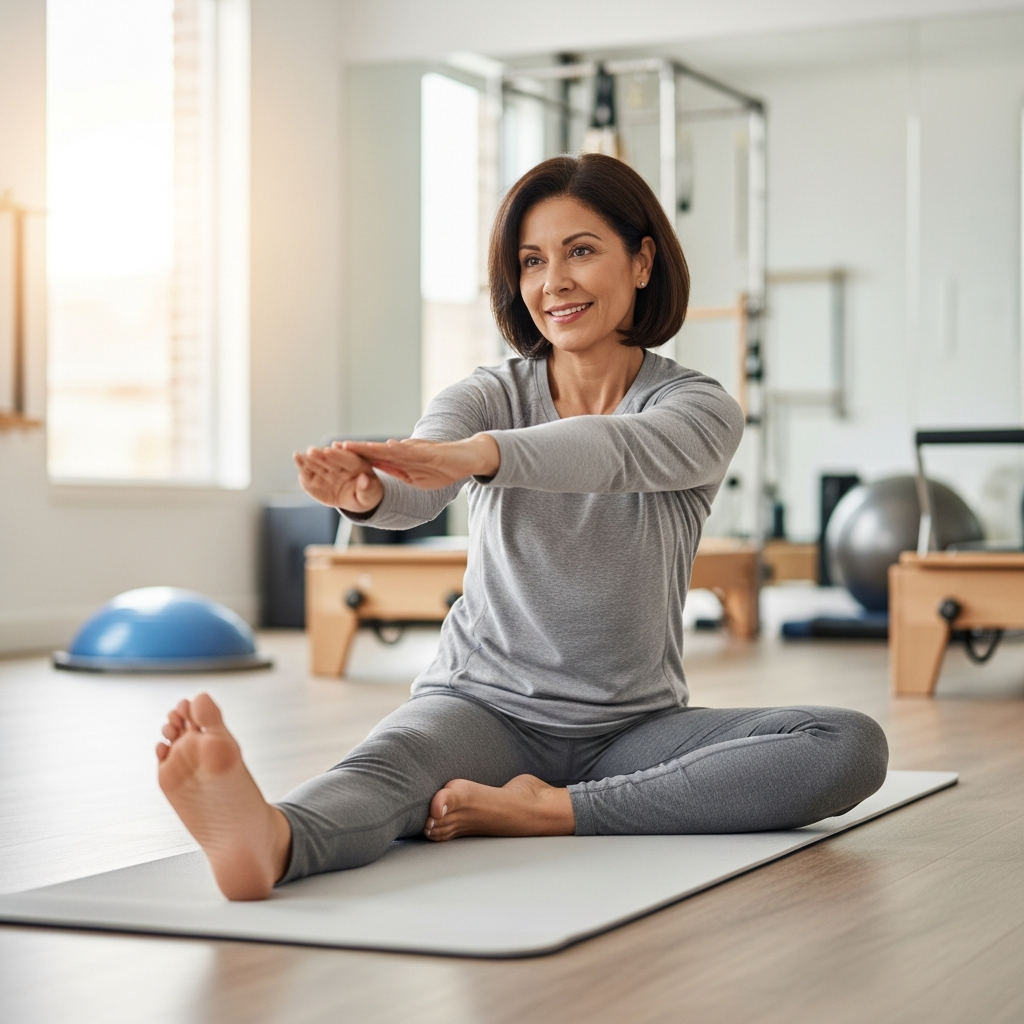
The reformer is that sliding carriage machine that looks a bit like a medieval torture device until you understand what it does. Springs create resistance – or assistance, depending on the exercise – so your body has to work against that tension while maintaining control. It’s surprisingly versatile, and the spring system actually makes some exercises *easier* for beginners because the resistance helps guide your movement.
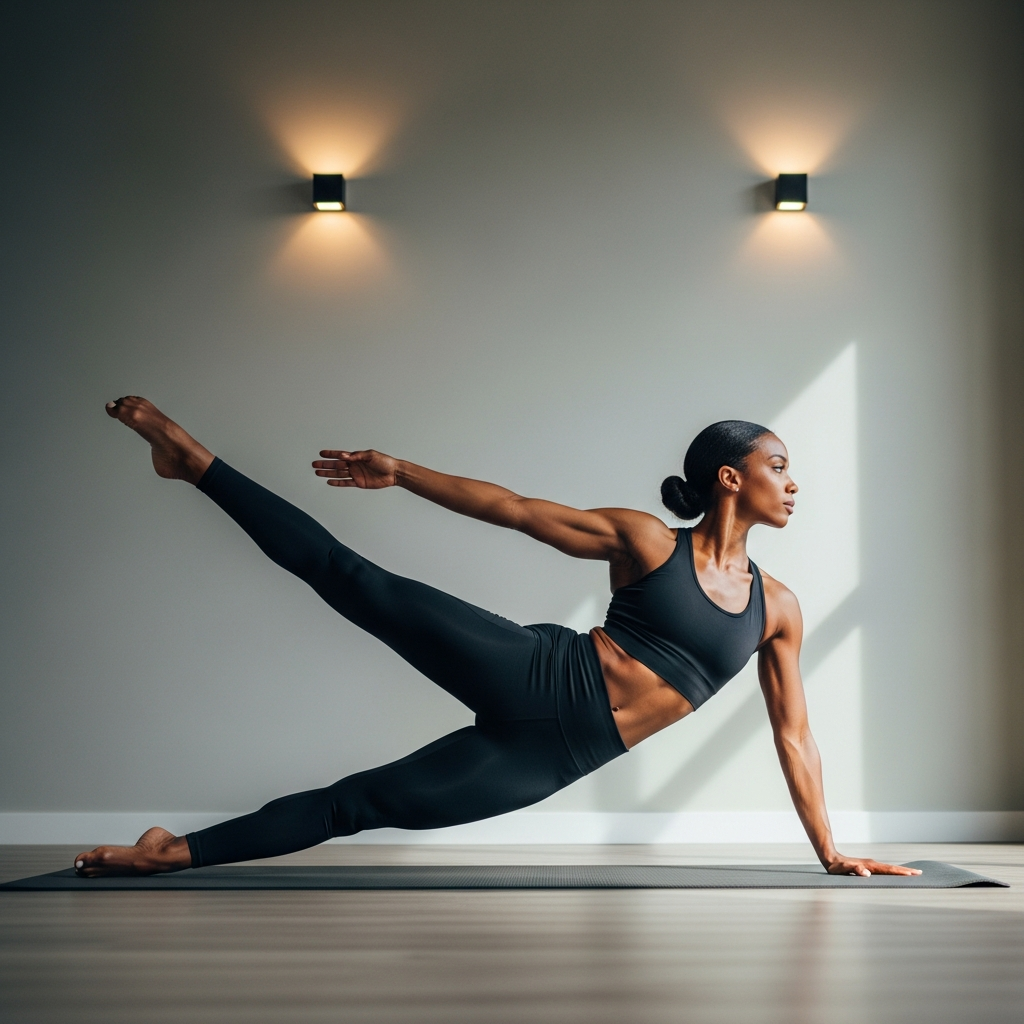
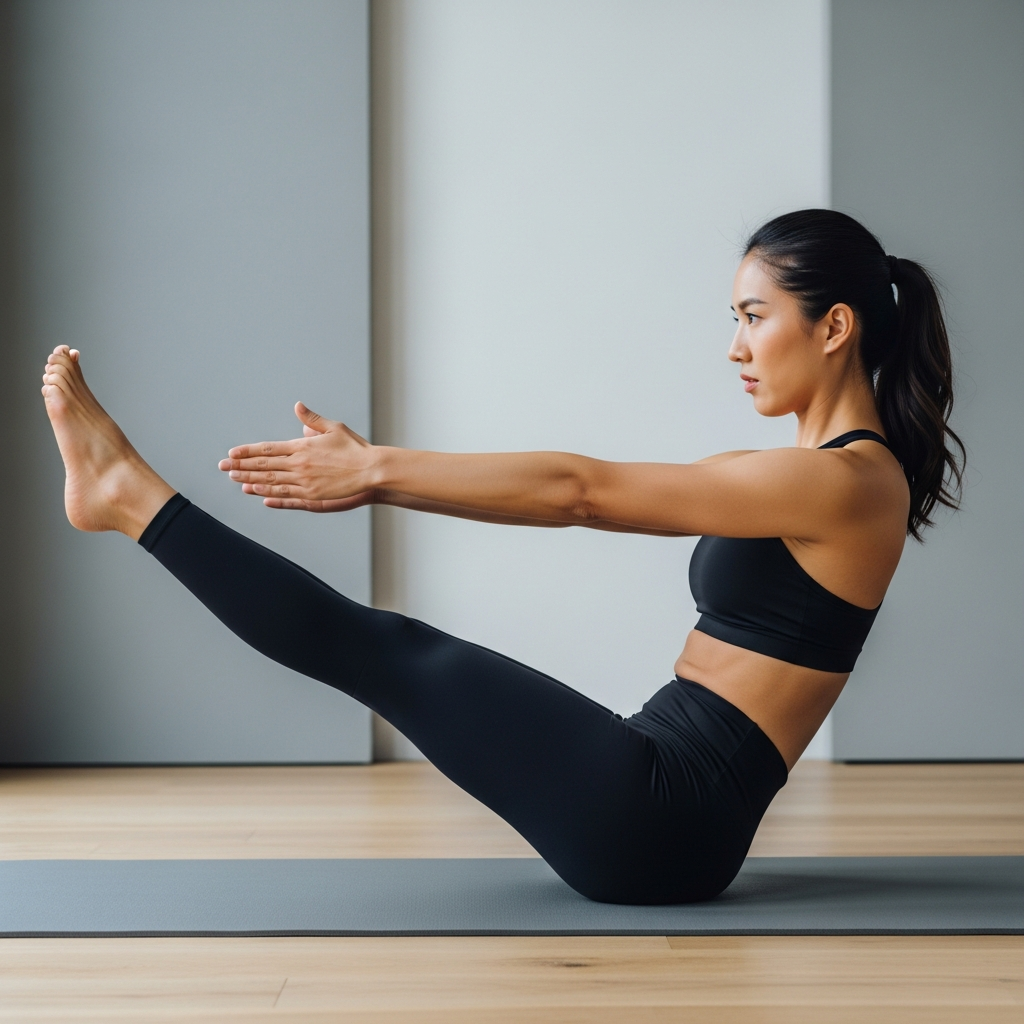
Mat Pilates is exactly what it sounds like. You, a mat, your bodyweight, and gravity. Simpler equipment but not necessarily simpler to do – some mat exercises are genuinely harder than their reformer equivalents because you don’t have that spring feedback helping you out.
Neither one is better. They’re different tools. Many people do both, depending on what they’re working on that day.
Why It Feels Different From Other Exercise
This one’s counterintuitive, and worth sitting with for a second. Pilates isn’t about going harder, pushing further, or grinding through fatigue. Most traditional exercise operates on the principle that more intensity equals more results. Pilates kind of flips that assumption.
The goal is precision over volume. Ten perfectly executed repetitions will do more for you than thirty sloppy ones. You’re essentially training your nervous system as much as your muscles – teaching your body new movement patterns, new ways of recruiting muscle groups that might have gone quiet from years of desk work or repetitive motion.
That’s also why people sometimes leave a Pilates class feeling worked but not wrecked. And then wake up the next morning surprisingly sore in places they forgot existed. If you’ve ever done a session and thought “that wasn’t so hard” only to feel it deeply in your hip flexors two days later… you get it.
A Quick Note on the Grand Prairie Angle
What’s available to you locally matters more than people realize. Grand Prairie has a solid mix of studio options – from more traditional classical Pilates spaces to contemporary studios that blend in rehabilitation-focused work. If you’re starting this for health or weight-related reasons specifically, that distinction can actually shape which studio fits your goals. We’ll get into that more specifically as we work through these questions.
What to Actually Look for in a Grand Prairie Studio
Before you book anything, do a little recon. Not all Pilates studios are the same – and honestly, the difference between a great experience and a disappointing one usually comes down to the instructor, not the equipment.
Look for studios that offer a free or discounted intro class. Most reputable places in the Grand Prairie area do this, and it tells you something right away about their confidence in what they’re offering. If they won’t let you try before you commit to a package… that’s worth noting.
When you visit (or even just browse their website), check whether instructors are certified through BASI, Peak Pilates, or Balanced Body. These aren’t random acronyms – they’re the gold standard certifications that require serious training hours. A weekend workshop certificate is a very different thing, even if it sounds impressive on a flyer.
The Clothing Question (Because Everyone Wonders But Nobody Asks)
Wear fitted clothing. That’s it – that’s the secret. Loose t-shirts and baggy sweatpants make it nearly impossible for an instructor to see whether your alignment is off, and alignment is basically everything in Pilates. Think yoga-style leggings, a fitted tank or athletic top. Grip socks are worth buying if the studio doesn’t provide them – they run about $10-15 and make reformer work significantly safer.
Don’t show up in your bulkiest sneakers, either. Most mat and reformer classes are done barefoot or in those grip socks. Your feet actually do a lot of the work, and feeling the surface matters more than you’d expect.
Timing Your First Session Smarter
Here’s something instructors won’t necessarily advertise: don’t schedule your first Pilates class right before something important. You will likely feel muscles you forgot you had – not in a sharp, injury way, but in that deep, satisfying soreness that shows up 24 to 48 hours later. Schedule it before a rest day if you can.
Also, eat something light beforehand. Two to three hours before is ideal. Pilates involves a lot of core engagement and breath work, and doing that on a completely empty stomach feels rough. A full stomach is worse, though – this isn’t the class where you want to regret that big lunch.
How to Pace Yourself (Without Feeling Like You’re Behind)
Pilates has this funny learning curve where the basics look simple but feel surprisingly challenging. Don’t let that throw you. In your first few sessions, your instructor might give you a modified version of exercises – take the modification. This isn’t a consolation prize. It’s actually how you build the foundation that makes everything else work properly.
A really common mistake is trying to match what the person on the next reformer is doing. They’ve probably been coming for months. Focus on what your instructor is telling your body to do, not what you think you should look like doing it.
Give yourself about four to six sessions before you make any real judgment about whether Pilates is working for you. The first two are mostly about learning the language – the breathwork, the cues, the equipment. By session four or five, things start clicking in a way that’s genuinely satisfying.
Talking to Your Instructor Before Class
This one matters more than people realize. Before your first session, tell your instructor about any injuries, surgeries, or chronic pain – even things that feel old or “mostly healed.” A good Pilates instructor in Grand Prairie will modify exercises around a cranky knee or a history of lower back issues. They can’t help you if they don’t know.
Actually, this is one place where Pilates has a real advantage over, say, a group fitness class. There’s usually enough instructor attention – especially in smaller studio settings – to actually customize your experience. Use that. Don’t suffer quietly through an exercise that’s causing the wrong kind of discomfort.
Making It Stick
Two sessions a week is the sweet spot for most beginners. One session often isn’t quite enough to build momentum, and three or more can feel overwhelming when you’re still learning the basics. Pair it with whatever movement you already enjoy – walking, swimming, even casual cycling – and you’ll feel the benefits amplify pretty quickly.
Consistency always beats intensity here. Showing up twice a week for two months will do more for you than going every single day for two weeks and burning out.
The Stuff Nobody Warns You About (But Should)
Let’s be real for a second. Most Pilates studios – and honestly, most fitness content in general – will show you the highlight reel. The graceful movements, the toned arms, the serene expressions. What they don’t always tell you is that your first few classes might feel like your brain is trying to solve a math problem while your body does something completely uncooperative. That’s normal. And you deserve to know what you’re actually getting into.
“I Feel Awkward and Behind Everyone Else”
This is probably the number one thing that stops people from coming back after their first class. You walk in, everyone else seems to know exactly where to put their feet, how to hold their breath (or not hold it – that’s its own thing), and how to make it look effortless. You’re lying on a reformer wondering if you’ve made a terrible mistake.
Here’s the honest truth: those people felt exactly like you do right now. Maybe six months ago, maybe six weeks ago. Pilates has a learning curve, and the movements are genuinely counterintuitive at first. The fix isn’t to push through the embarrassment alone – it’s to tell your instructor before class that you’re new. A good instructor will give you modified cues, check in on you, and make sure you’re not compensating in ways that could lead to injury. Don’t be shy about it. That’s literally what they’re there for.
Your Core Isn’t as Strong as You Think It Is
And that’s okay! Actually, it’s kind of the whole point. But it does mean that the first two or three weeks can feel humbling in a way that running on a treadmill never does. With cardio, you can zone out. Pilates demands your full attention, and when you’re asked to engage muscles you haven’t thought about since… ever… the fatigue hits differently.
Some people also experience unexpected soreness in places they didn’t anticipate – the backs of their arms, deep in their hips, or those weird little muscles along the sides of your torso. That’s not a red flag. That’s your body waking up. Give yourself permission to feel a little wobbly and uncertain in the beginning. The strength builds faster than you’d think.
Fitting It Into an Actual Life in Grand Prairie
Grand Prairie isn’t exactly a small town – between the traffic on 360, work schedules, and family commitments, finding a consistent time for anything new is genuinely hard. A lot of people start strong and then life happens. A work deadline, a kid’s school event, and suddenly it’s been three weeks.
The solution that actually works? Treat your Pilates session like a doctor’s appointment. You wouldn’t cancel a specialist visit because you’re tired. Book your classes a week or two ahead, put them in your calendar with a reminder, and if something comes up, reschedule before you cancel. Most studios in the area have early morning and evening slots specifically because they know how busy this community is. Finding what consistently works for your schedule – rather than the schedule that sounds ideal – makes all the difference.
When Progress Feels Invisible
This one’s sneaky. Pilates progress doesn’t always announce itself the way other workouts do. You’re not necessarily lifting heavier weights or running a faster mile. The changes tend to be quieter – you stand taller without thinking about it, that nagging lower back tension eases up, you stop slumping in your car on the 20 drive home.
Because it’s subtle, people sometimes quit right before they’d start noticing. If you’re a few weeks in and feeling like nothing’s happening, try this: write down how your body feels right now. Not measurements, not weight – just how things feel. Then check back in a month. A lot of people are genuinely surprised by what they wrote down early on.
The Mental Game Is Real
Nobody really talks about this, but Pilates asks you to be present in a way that can feel uncomfortable if you’re used to checking out during exercise. For people dealing with stress or anxiety, that kind of focused body awareness can actually bring up feelings. Some people find it oddly emotional at first – not in a bad way, but in a “huh, I didn’t know I was carrying that” kind of way.
Be gentle with yourself. There’s no right way to feel. Show up anyway.
What to Actually Expect in the First Few Weeks
Let’s be honest with each other for a second. If you’ve been reading about Pilates online, you’ve probably seen some version of “I did Pilates for 30 days and completely transformed my body!” And… maybe that happened for that person. But that’s not most people’s story, and setting yourself up with unrealistic expectations is a fast track to feeling like you failed when you actually didn’t.
Here’s what’s more likely: your first few sessions will feel awkward. You’ll forget to breathe correctly (ironic, since breathing is foundational to Pilates, but genuinely so common). You might leave class feeling like you barely did anything – and then wake up the next morning with sore muscles you didn’t know you had. That’s not a bad sign. That’s your body going “oh, we’re using THOSE muscles now.”
The first two to three weeks are really just orientation. Your brain and body are learning a new language together, and that takes time.
A Realistic Timeline for Progress
People always want to know when they’ll *see* something. Totally understandable. Here’s a rough and honest breakdown
Weeks 1-3: You’re building body awareness. This sounds less exciting than it is. Understanding how to engage your core properly, how to stabilize your pelvis, how to actually exhale with effort – this foundation is what makes everything else work later. Don’t rush past it.
Month 1-2: Most people start noticing they’re sleeping a little better, standing a little taller without thinking about it, and feeling generally less stiff. These changes are real, even if they’re quiet ones.
Month 2-3: This is usually when people start saying “huh, my pants fit differently” or “my back doesn’t hurt after sitting at my desk all day.” Functional changes you can feel in daily life.
3-6 months: Visible changes in muscle tone and posture become more apparent to others, not just you analyzing yourself in the mirror at 7am.
Notice that nowhere in there did I say “dramatic results in two weeks.” That’s because dramatic results in two weeks don’t really happen – and if someone’s promising you that, it’s worth asking some follow-up questions.
What “Normal” Actually Looks Like
Progress in Pilates isn’t a straight line. Some weeks you’ll feel strong and capable. Other weeks you’ll go back to a class you’ve done four times and feel completely lost. That’s normal. It’s not regression – it’s just how learning works, especially when you’re tired, stressed, or didn’t sleep well.
You might also notice that certain exercises feel impossible at first. There are Pilates movements that take months – sometimes longer – to access properly. That’s not a failure. That’s a goal. And honestly? Having something to work toward makes the whole thing more interesting.
Your Next Practical Steps
If you’re in Grand Prairie and you’re ready to move from “thinking about it” to actually doing it, here’s how to make that happen without overthinking it.
Start by visiting a few studios and asking about introductory sessions or beginner series. Most good studios offer some kind of new client special, and more importantly, they should be willing to talk to you before you commit to anything. If someone seems impatient with your questions, that’s information.
Be upfront about your body. If you have a bad knee, old back injury, or any condition that affects how you move – say so before your first class. A qualified instructor will modify exercises for you. This isn’t a burden; it’s exactly what they’re trained for.
Commit to at least 8 sessions before you decide whether it’s for you. Two sessions isn’t enough. Your brain is still trying to figure out what’s happening. Give yourself a real chance to experience it.
And finally – go easy on yourself during those first few weeks. You’re not behind. You’re not doing it wrong just because it feels hard or confusing. Everyone who’s been doing Pilates for years was once exactly where you are, wondering if they were breathing right and trying to remember which foot goes where.
The fact that you’re asking all these questions before you start? That’s actually a really good sign. It means you’re approaching this thoughtfully, not impulsively. And thoughtful is usually how the people who stick with it begin.
You’ve made it through a lot of information today – and honestly, that says something about you. Most people who are genuinely curious about something dig in before they take the leap. They want to understand what they’re signing up for. That’s not overthinking. That’s being smart about your health.
Here’s what we hope you’re walking away with: Pilates isn’t some exclusive, intimidating thing reserved for dancers and fitness influencers with perfect form. It’s a real, accessible practice that meets people exactly where they are – whether you’re dealing with chronic back pain, trying to rebuild strength after a health setback, or just tired of workouts that leave you feeling beat up instead of better.
You Don’t Have to Have It All Figured Out
One of the most common things we hear from people before they start? “I’ll come in once I get a little more in shape first.” Oh, we understand that impulse completely – it comes from a good place, this idea that you want to show up ready. But that’s a little like waiting until your teeth are cleaner to go to the dentist. You start where you are. That’s the whole point.
Grand Prairie has a community of people who started exactly where you are right now – full of questions, maybe a little skeptical, probably a bit nervous – and found something that genuinely changed how they feel in their bodies. Not overnight. Not magically. But steadily, consistently, in a way that actually lasted.
The Questions Don’t Stop After You Start (And That’s Okay)
Actually, that reminds me of something worth saying – your questions don’t expire once you show up for your first session. Good instructors expect them. They welcome them. The dialogue between you and whoever’s guiding your practice is part of what makes Pilates work so well for so many different people with so many different needs and goals.
So if you’re still sitting with a few “but what about…” thoughts rattling around in your head… that’s completely normal. Bring them with you.
We’re Here When You’re Ready
If something in this article sparked something for you – even just a flicker of “maybe I should look into this more” – we’d genuinely love to hear from you. No pressure, no hard sell, no commitment required. Just a conversation with real people who care about helping you figure out whether this is a good fit for where you are right now.
At our clinic in Grand Prairie, we work with people at every starting point. We ask questions. We listen. We build programs around actual human beings, not some idealized version of who you’re “supposed” to be when you walk through the door.
You can reach out by phone, stop by, or fill out our contact form online – whatever feels most comfortable. If you want to just dip a toe in and ask one more question before committing to anything? That’s genuinely okay. We’ve helped plenty of people who needed three conversations before they felt ready. There’s no wrong way to start.
You deserve to feel strong, supported, and comfortable in your body. And if Pilates might be part of that for you – even a small part – then taking one small step to find out is absolutely worth it.
We hope to hear from you soon.