8 Benefits of Mat Pilates for Garland Beginners
You’ve probably done that thing where you scroll through fitness class options for what feels like forty-five minutes, get completely overwhelmed, and then just… close the tab. Maybe pour a glass of water. Tell yourself you’ll figure it out tomorrow.
Sound familiar?
There’s something about starting a new fitness routine that feels almost impossibly complicated, especially when you’re in Garland and you’re looking around at options that range from hardcore HIIT bootcamps to hot yoga studios where everyone seems to already know exactly what they’re doing. The barrier feels huge. And honestly? That’s not in your head. The fitness world does a terrible job of welcoming beginners.
That’s exactly why so many people in this area are quietly discovering mat Pilates – and wondering why nobody told them about it sooner.
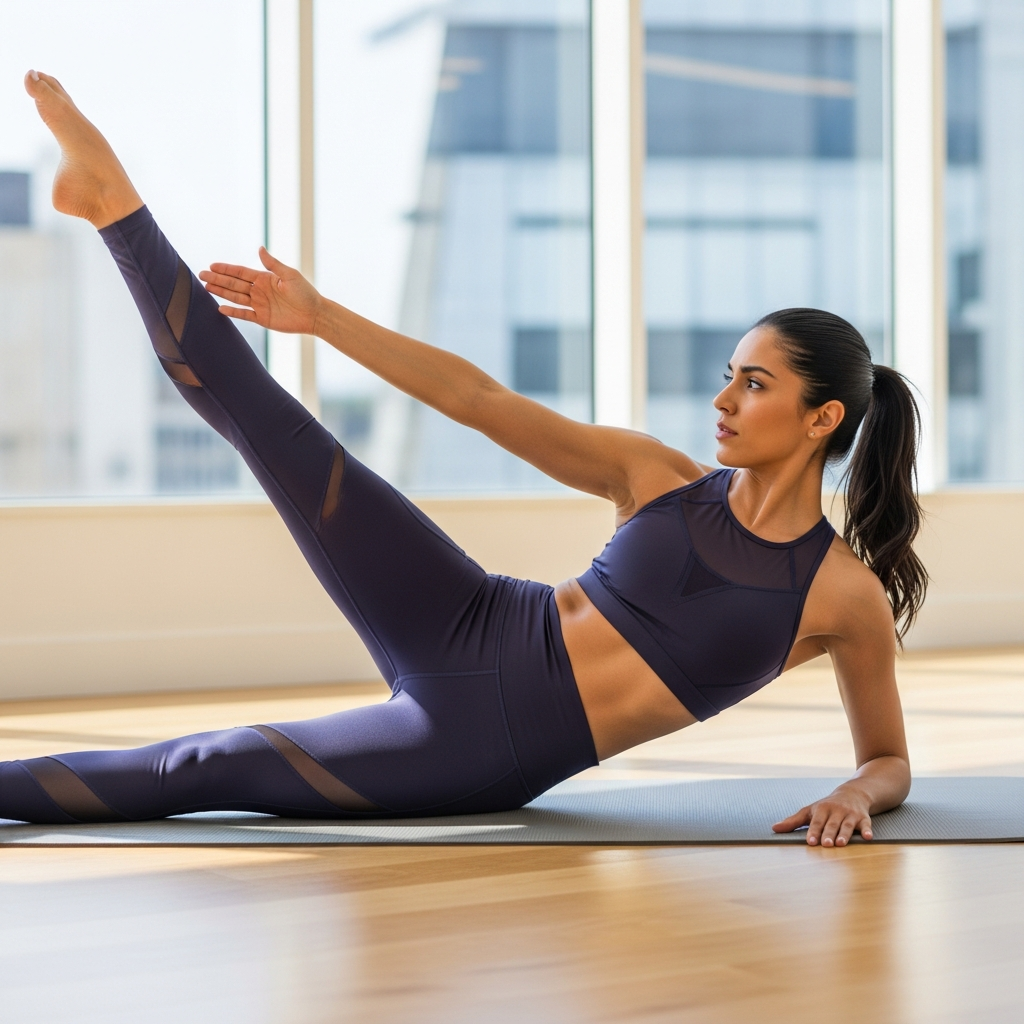
Here’s what mat Pilates actually is, in plain English: it’s a series of controlled, deliberate movements done on a mat (no fancy equipment required, which is already one point in its favor) that focuses on building strength from the inside out. We’re talking about your core, your posture, the deep stabilizing muscles that most workouts completely ignore. Joseph Pilates – the guy who developed this method back in the 1920s, which, yes, means this isn’t some trendy new thing – designed it to create what he called “the perfect balance of strength and flexibility.” And the remarkable part is that it works whether you’re twenty-five or sixty-five, whether you’ve been active your whole life or you’re just now deciding it’s time to make a change.
If you’re a beginner in Garland specifically, there’s something worth knowing. Our community skews toward people with real lives – families, demanding jobs, maybe some wear and tear on the body from years of doing all the things adults have to do. Mat Pilates meets you where you are. It doesn’t ask you to already be fit before you start getting fit. That’s a pretty rare quality in the fitness world, if we’re being honest.
Now, you might be wondering – isn’t Pilates just stretching? Or isn’t it only for dancers and people who already have six-pack abs? That’s such a common misconception, and it’s one that keeps a lot of people from trying something that could genuinely change how they feel in their own body. Mat Pilates is actual work. You’ll feel muscles you forgot you had. But it’s work that feels productive rather than punishing, if that makes sense. There’s a real difference between being sore because you pushed your body intelligently and being sore because you just survived something.
What you’re going to find in this article are eight specific, concrete benefits that mat Pilates offers to people who are just getting started – the kind of benefits that stack up quietly and then one day you realize your back doesn’t hurt anymore, or you’re standing taller, or you handled a stressful week without your body completely falling apart. Some of these benefits will probably surprise you. A few might make you think “wait, exercise can do *that*?” And at least one or two will speak directly to something you’ve been dealing with for longer than you’d like to admit.
We’ll talk about the physical stuff, obviously – core strength, flexibility, that whole world. But we’ll also get into the mental side of things, because mat Pilates has this almost sneaky way of improving how you feel emotionally and mentally, not just physically. There’s something about slow, intentional movement that does things for stress and anxiety that a sprint on a treadmill just… doesn’t.
Whether you’re someone who’s tried every other workout and burned out, or you’re coming back to movement after a long break, or you’re navigating some physical limitations and wondering if there’s something that actually works for your body – this is for you.
Garland has some genuinely wonderful options for getting started with mat Pilates, and our clinic works with beginners every single day. We’ve watched people transform their relationship with their bodies through this practice – not overnight, but in that real, lasting way that actually sticks.
So let’s talk about what mat Pilates can actually do for you. Eight benefits, all of them real, none of them exaggerated.
What Actually Happens in a Mat Pilates Class
So before we get into the good stuff, let’s make sure we’re talking about the same thing. Because “Pilates” has become one of those words that means completely different things depending on who you ask. Your neighbor might swear by her reformer classes at that fancy studio on the other side of town. Your coworker might have a dusty DVD from 2004. And you’ve probably seen those intimidating Instagram videos where people are basically doing circus acts on a spring-loaded machine.
Mat Pilates is none of that. It’s simpler – and honestly, in a lot of ways, harder.
All you need is a mat and your own body weight. That’s it. No machines, no springs, no equipment that looks like something from a medieval torture chamber. The resistance you’re working against? It’s you. Which sounds easy until about three minutes into your first class when you realize your core has been quietly coasting for years and is not happy about being called to attention.
The Joseph Pilates Origin Story (The Short Version)
Here’s a quick bit of history that actually matters for understanding why this works. Joseph Pilates developed his system in the early 20th century – originally calling it “Contrology,” which he defined as the complete coordination of body, mind, and spirit. He was sickly as a child and became obsessed with physical conditioning. By the time he was working in a British internment camp during World War I, he was teaching other detainees his exercises using hospital beds with springs attached.
That’s… kind of wild, actually.
The core philosophy he built was this: most people move through life with terrible habits – slouching, compensating, using the wrong muscles for everything. His method was designed to retrain those patterns from the inside out. Not build bulk. Not burn calories the way a spin class does. Build a body that works correctly.
The “Powerhouse” – Pilates’ Central Idea
This is where Pilates gets a little conceptually tricky, so bear with me.
In Pilates, there’s this concept called the powerhouse – roughly your entire core, from the base of your ribcage down to your hip bones, wrapping all the way around your back. Think of it like the trunk of a tree. A tree with a strong trunk can support massive branches, bend in wind, and stay rooted. A tree with a weak trunk? It falls over when something pushes it.
Most of us have been doing fitness backwards. We build the branches – stronger arms, more defined legs – while ignoring the trunk entirely. Pilates flips that. Every single exercise, even when it looks like it’s working your legs or your arms, is simultaneously asking your powerhouse to engage and stabilize.
This is also why Pilates feels weirdly different from other workouts. You might finish a session and think “did I even work that hard?” and then wake up the next morning completely unable to laugh without wincing. Your deep stabilizer muscles – the ones that never get hit during a regular gym workout – just got a wake-up call.
Why “Mat” Specifically Works for Beginners
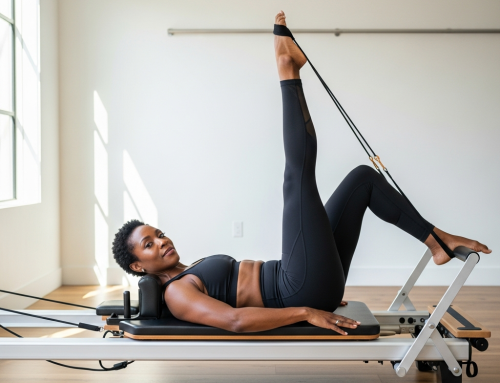
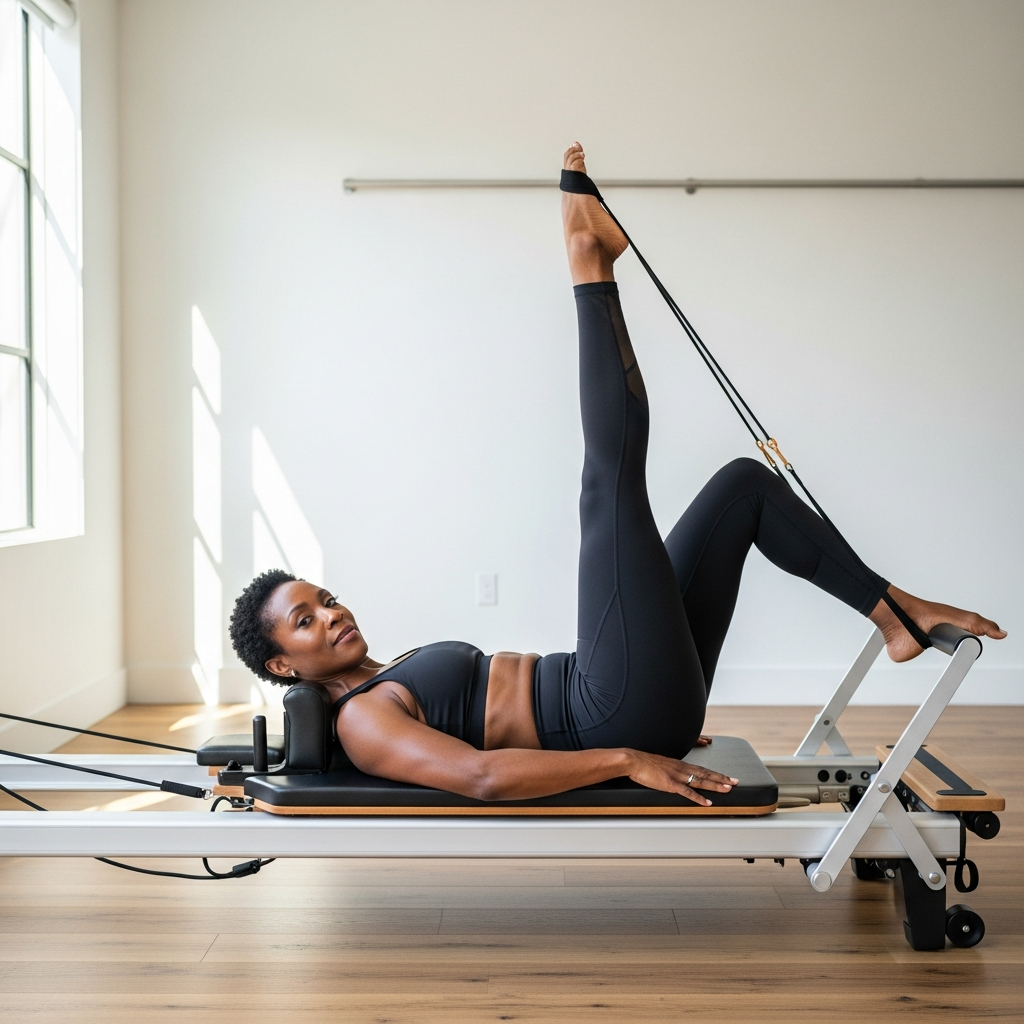
Here’s something counterintuitive: the reformer machine (that spring-loaded contraption) actually makes some exercises *easier* because it provides external feedback and assistance. The mat strips all that away. You’re working purely with gravity and your own body, which means there’s nowhere to hide.
For beginners, this is actually a gift – even if it doesn’t feel like one. You learn to feel what your body is doing. You build that mind-muscle connection that trainers always talk about but rarely explain. It’s like learning to drive in an empty parking lot before hitting the highway. The mat is your parking lot.
And practically speaking? Mat classes are more accessible. They’re typically more affordable than reformer sessions, and you don’t have to navigate complicated equipment while also trying to remember to breathe correctly. (Breathing in Pilates is its own thing, by the way – you’ll inhale through your nose, exhale through pursed lips, and feel slightly ridiculous about it at first.)
What This Has to Do with Garland Specifically
The Garland area has a pretty active, community-oriented wellness scene, and mat Pilates fits right into that. Whether you’re dealing with the physical demands of a desk job, managing some wear and tear from years of Texas-level physical activity, or just starting a health overhaul later in life – the fundamentals of this practice meet you exactly where you are.
Which is, conveniently, exactly what the benefits are designed to do.
What to Actually Expect in Your First Few Classes
Here’s the thing nobody tells you before you walk into that first mat Pilates class: you’re going to feel muscles you forgot you had. Not in a “I ran a marathon” kind of soreness – more like a deep, surprised ache that shows up the next morning and makes you think, *oh, so that’s where my obliques are.*
That’s completely normal. Embrace it.
For Garland beginners especially, the humidity here means you’ll want to bring a small towel even for indoor classes. Mat work generates more body heat than you’d expect, and slipping on your mat mid-movement is genuinely not fun. A light yoga mat works fine to start, but if you’re committing to more than a month of classes, look for one with at least 4mm of thickness – your spine will thank you later.
The “Start Slower Than You Think” Rule
This one is non-negotiable. New students almost always try to keep pace with people who’ve been doing this for months, and that’s where form breaks down and frustration creeps in. Your goal in the first four sessions isn’t to do the moves perfectly – it’s to feel where the movement is supposed to come from.
When your instructor cues you to “engage your core,” they don’t mean suck everything in like you’re squeezing into old jeans. They mean find that deep, gentle brace – almost like you’re bracing for a light tap to the stomach. Practice that sensation on the floor at home before class. Seriously, just lie on your back and find it. Five minutes, no special equipment needed.
Finding Classes That Actually Fit Your Life in Garland
A few options worth knowing about locally: many recreation centers and fitness studios near the Firewheel area offer beginner-specific mat sessions that are genuinely beginner-level, not just “gentle” versions of advanced classes. Those are two very different things. Look for classes described as “foundations” or “fundamentals” – those words signal that instructors will break down each movement rather than assuming you already know what a dead bug or a hundred is.
Mornings tend to work well for Pilates specifically, because your mind is fresher for the concentration it requires. Evening classes are great too – honestly whatever gets you there consistently beats the “optimal” time you never actually make.
Actually, that reminds me – consistency matters more here than almost any other fitness format. Missing two weeks and coming back feels harder than it would with, say, walking. The neuromuscular connection you’re building needs regular reinforcement. Even fifteen minutes at home between classes keeps the thread intact.
Setting Up a Home Practice Between Classes
You don’t need a reformer. You don’t need fancy props. You need floor space roughly the size of your mat and maybe a pillow.
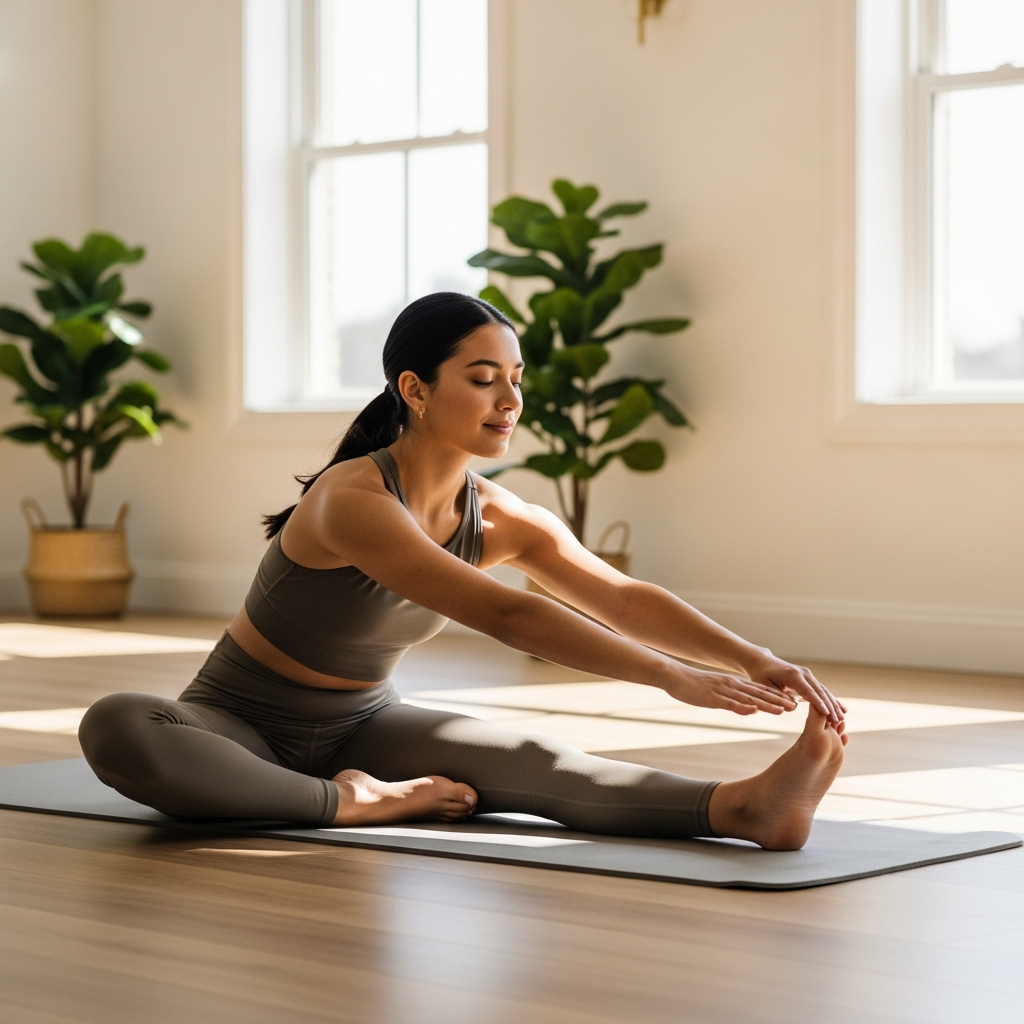
Start with just three moves practiced daily: the pelvic curl, the single leg stretch, and the spine stretch forward. Those three together address your posterior chain, hip flexors, and hamstring flexibility – basically the trifecta of what a desk job in the DFW area quietly destroys over time. Ten repetitions each, slow and intentional, takes about eight minutes. Eight minutes.
The pillow can substitute for a foam roller to support your head if neck tension is an issue – and it often is for beginners because they compensate with the neck when core strength isn’t there yet. No shame in using every modification available.
Tracking Progress Without the Scale
Here’s where Pilates surprises most people. The wins don’t always show up as pounds lost, at least not right away. Watch for other signals instead: Can you sit at your desk for longer without that lower back ache? Are you stepping out of your car differently? Is your balance just… steadier?
Keep a simple running note on your phone. After each class, write one thing that felt harder and one thing that clicked. Patterns emerge surprisingly fast – usually within six to eight weeks – and on the days when progress feels invisible, those notes remind you that something real is happening underneath the surface.
Because it is. The work is accumulating even when you can’t see it yet.
When the Floor Feels Like Your Enemy
Let’s be real for a second. That first time you lie down on a mat and the instructor says “find your neutral spine,” you’re going to have absolutely no idea what that means. None. You’ll probably just… lie there, slightly panicked, wondering if everyone else was born knowing this stuff. They weren’t. That moment of confusion? Completely universal.
The floor itself can be a challenge nobody warns you about. Hard floors are uncomfortable, your tailbone might protest, and if you’re carrying extra weight, certain positions can feel awkward or even a little embarrassing. Here’s what actually helps – a good quality mat (thicker than you think you need, honestly), a folded blanket under bony areas, and the quiet knowledge that your body is doing something new and it’s allowed to take time.
The “I Can’t Feel My Core” Problem
This is probably the most common frustration beginners hit, and it’s genuinely tricky. Mat Pilates is built around connecting to deep core muscles that most of us have essentially ignored for decades. When the instructor cues you to “engage your transverse abdominis,” you might clench everything – your jaw, your shoulders, your entire soul – and still not be sure you’re doing it right.
The solution isn’t trying harder. It’s actually trying softer. Think about gently drawing your belly button toward your spine, like you’re bracing for someone to poke your stomach. Not sucking in. Not gripping. Just a subtle, intentional engagement. It takes weeks for this to click for most people – and when it does, it genuinely feels like a lightbulb moment.
Flexibility (or the Lack of It)
Tight hamstrings. Stiff hips. A lower back that hasn’t seen a stretch since 2015. Sound familiar? A lot of beginners come to mat Pilates thinking their inflexibility disqualifies them somehow, like there’s a flexibility audition they already failed.
There isn’t. Mat Pilates actually meets you where you are. Modifications exist for essentially every movement – bent knees instead of straight legs, smaller ranges of motion, using a towel or strap for support. The goal is never to look like the instructor. The goal is to move your body through a safe range that challenges you just enough. That range will expand over time. It always does.
Comparing Yourself to Everyone Else in the Room
Oh, this one’s sneaky. You’re lying there trying to remember to breathe, and somehow you’re also watching the person next to you flow through movements like they were born on a mat. It’s discouraging. It can make you want to quit before you’ve really started.
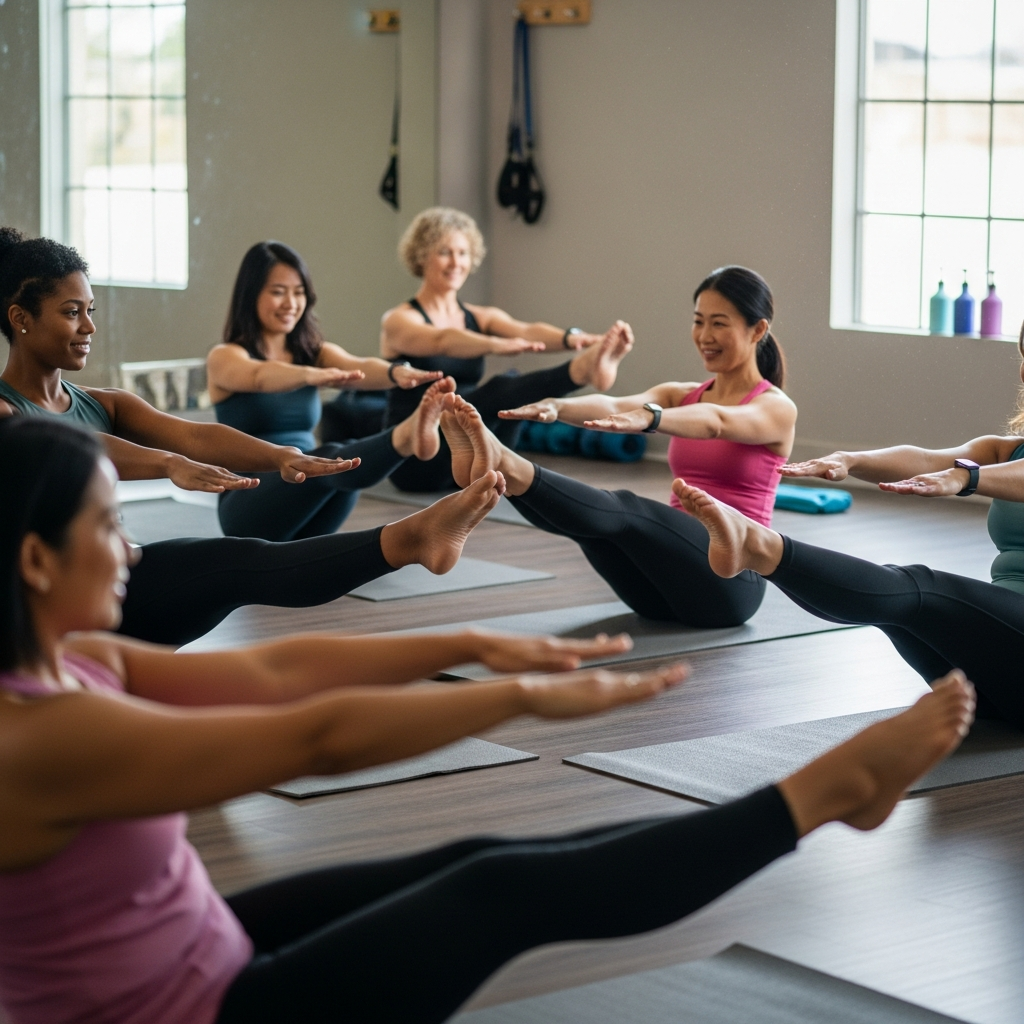
What you don’t know – and this is worth remembering – is that the person you’re admiring has probably been doing this for months. Or they’re just naturally hypermobile and actually struggle with building strength (that’s a real thing – flexibility and strength are different skills). Everyone in that room has their own invisible challenge. The effortless-looking ones might be silently furious that they can’t stabilize properly. Bodies are complicated.
When Progress Feels Invisible
This might be the hardest part of mat Pilates for beginners – the results aren’t always dramatic in the early weeks. You’re not dripping sweat. The scale might not move. And yet something is happening underneath the surface, rebuilding how your muscles communicate, how you hold yourself, how you breathe.
Keeping a simple log helps more than people expect. Not obsessive tracking – just a few notes after class. “Felt my left hip flexor today. Remembered to exhale on the hard part.” When you look back after six weeks, you’ll see a real progression that’s easy to miss when you’re living it day to day.
The Mental Fatigue Nobody Mentions
Mat Pilates is genuinely mentally demanding in a way cardio isn’t. You’re constantly thinking about breath, position, muscle engagement, and movement simultaneously. It’s exhausting in a specific, brain-tired kind of way. New students sometimes leave class feeling foggy or even frustrated because it requires so much concentration.
This actually gets better faster than the physical stuff does. Your nervous system learns the patterns, the cues start to make sense, and eventually the mental overhead drops – which is when the practice starts to feel like the meditative, satisfying thing people describe. You’re not there yet, and that’s fine. You’re building the map.
What to Actually Expect (Honest Talk)
Here’s the thing about mat Pilates – and honestly, about most forms of exercise – the results don’t arrive on the schedule we want them to. You might show up to your first three classes feeling like you’re barely keeping up, wondering if everyone else somehow already knows what a “neutral spine” means. They didn’t. They just got there before you.
The first two weeks are mostly about learning. Your brain is working overtime trying to figure out how to breathe, engage your core, and not topple sideways during a single-leg stretch all at the same time. This is completely normal. It’s not a sign you’re bad at Pilates. It’s a sign your nervous system is doing exactly what it’s supposed to do – building new patterns.
Don’t be surprised if you’re sore in places you forgot existed. Your deep stabilizing muscles – the ones that have basically been on vacation for years – are suddenly being asked to show up and work. That’s a good thing, even when it doesn’t feel like one.
The Realistic Timeline
So when will you actually *notice* something? Most beginners in Garland who stick with two to three sessions per week start feeling differences around the four to six week mark. Not dramatic before-and-after photo differences – but real ones. Standing taller without thinking about it. Less tension in your lower back after a long day. Moving through your grocery run without that familiar hip stiffness.
Visible physical changes – if that’s part of your goal – typically take longer. Somewhere in the eight to twelve week range is more realistic, and that’s assuming you’re pairing your Pilates practice with reasonable nutrition habits (which, if you’re working with a medical weight loss team, you probably already are).
The six-month mark is where things get genuinely interesting. That’s when Pilates stops feeling like a workout and starts feeling like something your body just… does. The movements become intuitive. Your posture improves in ways other people start noticing and mentioning unprompted.
What “Normal Progress” Actually Looks Like
Progress in mat Pilates isn’t linear, and that’s worth repeating. You’ll have sessions that feel incredible – where everything clicks and you nail that rollup you’ve been fighting for weeks. And then you’ll have sessions the next day where you feel stiff and clunky and like you’ve forgotten everything. Both are normal. Both are part of it.
Actually, that reminds me of something instructors say a lot – the “bad” sessions are often where the real work is happening. Your body is consolidating, adapting. Think of it like learning a new route to work. Some days you cruise through on autopilot. Others you somehow miss the turn you’ve made a hundred times.
Progress markers worth paying attention to include things like
– Breathing easier during sequences that used to leave you breathless – Holding positions longer before your muscles give out – Reduced joint discomfort during and after class – Better sleep – this one sneaks up on people – Improved mood and stress response on days you practice
Weight and measurements might shift too, especially when combined with dietary changes. But they’re honestly just one piece of a much bigger picture.
Your Next Steps as a Garland Beginner
If you’re just getting started, look for beginner-specific mat Pilates classes in the Garland area – or even online, which gives you the flexibility to practice at home while you build confidence before heading into a studio setting. Many people do both, and there’s no shame in that approach.
Talk to your medical weight loss provider before you begin, especially if you have any existing injuries, joint issues, or conditions that might affect what movements are appropriate for you. A good provider will help you fit Pilates into your overall wellness plan rather than treating it as a separate thing happening in a different corner of your life.
Start with two sessions per week. Not five. Two. Give yourself permission to ease in without burning out – because the people who go hard in January and disappear by February aren’t failing because they’re lazy, they’re failing because they skipped the sustainable part.
Consistency over intensity. Every time. The mat will be there tomorrow, and the week after that, and the slow, steady practice you build over months is worth so much more than the perfect workout you did once.
Starting something new is always a little nerve-wracking. You show up not quite knowing what to expect, maybe feeling self-conscious about whether you’ll be able to keep up, wondering if everyone else already knows what they’re doing. (Spoiler: they were all beginners once too.)
But here’s the thing about mat Pilates – it has this quiet way of surprising you. You come in thinking it’s just stretching, and then three days later you notice you stood up from your desk without that familiar ache in your lower back. Or you catch yourself breathing differently during a stressful moment. Or your pants fit just a little better, and you can’t quite explain why. These small shifts add up, and before long, you realize something has genuinely changed.
That’s what makes this practice so well-suited for beginners in Garland who are ready to do something kind for themselves without completely overhauling their lives overnight. You don’t need fancy equipment. You don’t need to already be flexible or fit or coordinated. You just need a mat, a little bit of time, and the willingness to show up.
Your Body Has Been Patient With You
Maybe it’s been a while since you moved in a way that felt intentional – not just rushing from one place to another, but actually paying attention to how your body feels. Mat Pilates gives you that back. It’s slow enough to be accessible, challenging enough to be effective, and focused enough to help you actually connect with muscles you’ve probably been ignoring for years. That deep core work, the hip stability, the posture improvements… none of it happens overnight, but all of it starts on day one.
And honestly? The mental side of it is just as valuable as the physical. There’s something about an hour where you’re genuinely focused on *your* body – not your to-do list, not your phone – that feels like a small act of reclaiming yourself. People don’t talk about that benefit enough.
You Don’t Have to Figure This Out Alone
If reading through everything here has sparked something in you – even just a small flicker of “maybe I could try this” – that’s worth paying attention to. You don’t have to have it all figured out before you take a step.
At our clinic, we work with real people who have real lives, real schedules, and sometimes complicated health histories. Whether you’re managing your weight, recovering from an injury, dealing with chronic pain, or simply ready to feel better in your own skin, we’d genuinely love to help you find a starting point that makes sense for *you* – not some idealized version of you.
Reach out whenever you’re ready. Ask us your questions, even the ones that feel silly. Tell us what’s held you back before. We’re not here to push you into anything – we’re here to help you figure out what actually fits your life and your goals.
Garland has a lot of wellness options these days, but finding the right support makes all the difference. You deserve to feel good. Not someday. Now. And we’ll be right here whenever you decide to take that first step.