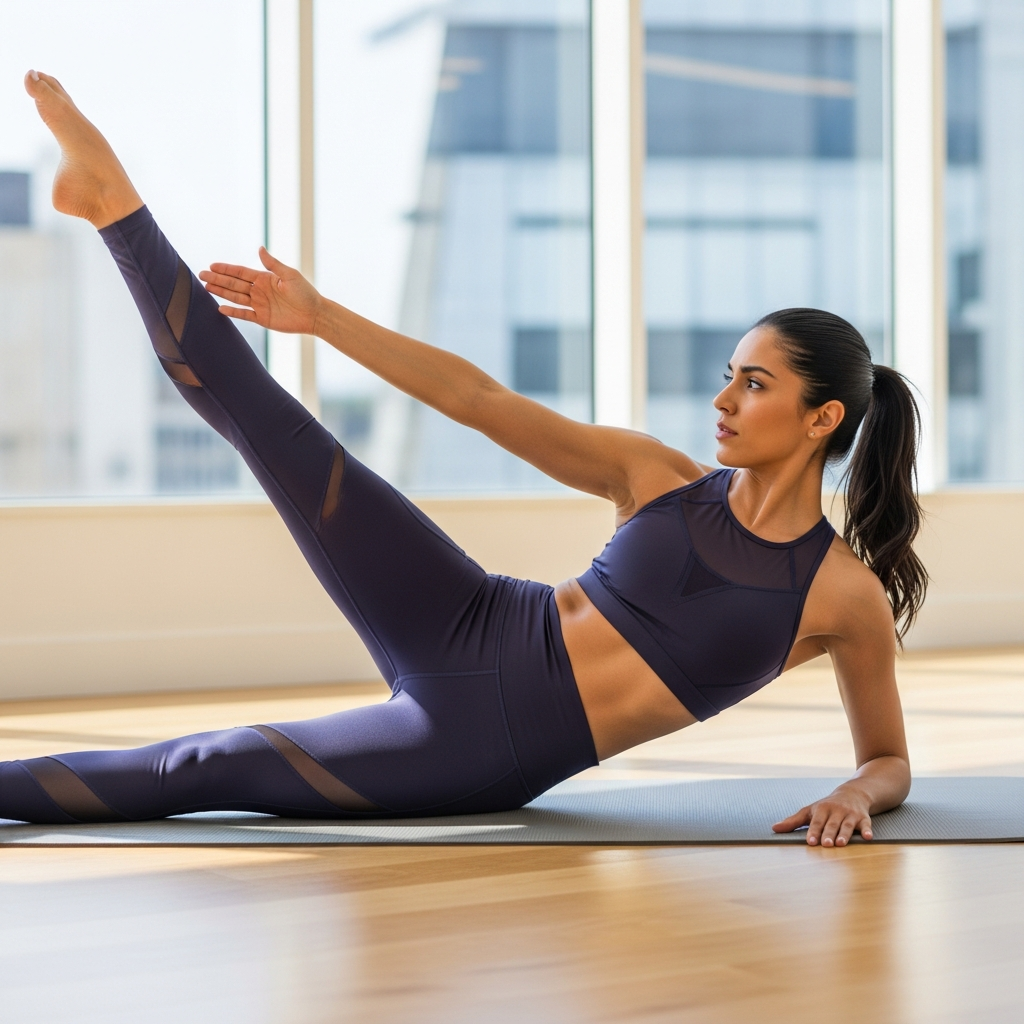
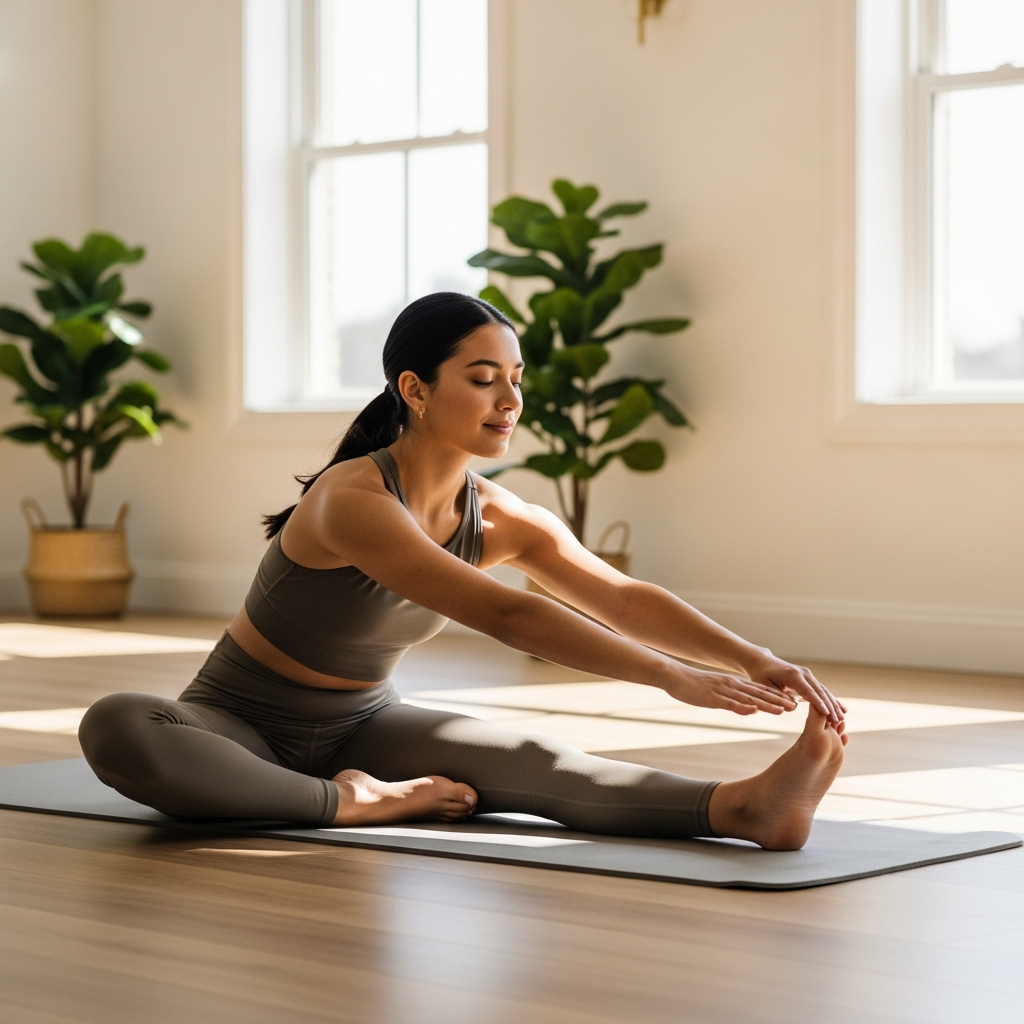
Unraveling the World of Mat Pilates: A Comprehensive Guide for Beginners
Have you ever found yourself captivated by the graceful, controlled movements of a Pilates enthusiast and wondered if you could ever partake in such a physically engaging exercise? If this question lingers in your mind, then you’re in the right place. This blog post aims to demystify mat Pilates, especially for beginners like you, who are eager to embark on this rewarding fitness journey.
Pilates, a mind-body exercise developed in the early 20th century by Joseph Pilates, has become a popular fitness routine worldwide. It focuses on core strength, flexibility, and overall body awareness. Mat Pilates, a variant of the original discipline, is typically performed on a mat rather than on specialized Pilates equipment. It primarily targets the ‘powerhouse’ muscles – the abdomen, lower back, hips, and buttocks – to create a strong foundation for the rest of the body.
In this comprehensive guide, we’ll delve into the world of mat Pilates and provide you with the essential knowledge and tools needed to commence your journey. We’ll discuss what mat Pilates entails, the basic exercises suitable for beginners, the benefits you stand to gain, and how to maintain proper form and prevent injury. Furthermore, we’ll help you understand how mat Pilates differs from other forms of Pilates and why it’s an excellent choice for beginners.
Why should this matter to you? Well, many beginners are often intimidated by complex gym equipment or high-intensity exercises that seem daunting. Mat Pilates offers a gentle introduction to fitness that emphasizes control and precision over intensity. It’s a low-impact exercise ideal for those starting their fitness journey or those recovering from injuries. Moreover, it does not require any fancy equipment or a gym membership – all you need is a mat and some dedication.
This guide will not only answer the question, ‘Is mat Pilates ok for beginners?’ but also equip you with practical tips to kick-start your mat Pilates routine. By the end of this read, you’ll understand that mat Pilates isn’t just ‘okay’ for beginners – it’s fantastic, beneficial, and absolutely doable. So, if you’re contemplating diving into the world of mat Pilates, stay hooked as we unravel all you need to know to get started.
Whether you’re a total novice to fitness routines or simply looking for a change in your workout regimen, mat Pilates is a fantastic option. With its focus on body awareness, core strength, and flexibility, it offers a holistic approach to fitness that goes beyond mere physicality. In essence, it’s about building a harmonious relationship between mind and body.
Bear in mind that starting a new exercise routine can be both exciting and overwhelming. But fear not, because this guide is designed to ease your transition into the world of mat Pilates. We’ll walk you through every step of the way – from understanding the basics to mastering your first Pilates move.
So, are you ready to discover the empowering world of mat Pilates? Then let’s dive in and start your journey towards better health, wellness, and body awareness. Get your mat ready and prepare to transform your body one stretch at a time.
Pilates, a physical fitness system developed in the early 20th century by Joseph Pilates, has become an integral part of the fitness and wellness industry. This system, originally named “Contrology,” emphasizes controlled movements, core strength, balance, and flexibility. Its effectiveness for overall body fitness and therapeutic benefits has made it popular worldwide. One of the most common forms of this exercise system is Mat Pilates, performed with a mat on the floor. But is Mat Pilates suitable for beginners? The simple answer is, yes. However, to appreciate its effectiveness and suitability for beginners, it’s essential to understand the fundamentals and framework of Pilates, particularly Mat Pilates.
Pilates operates on six fundamental principles: centering, control, concentration, precision, breath, and flow. These principles work together to create a holistic approach to fitness that ties the mind and body together in a way few other exercise systems do.
1. Centering: Pilates focuses on the center of the body, often referred to as the “powerhouse,” which includes the abdomen, lower back, hips, and buttocks. All movements in Pilates originate from this center, which improves overall strength and stability.
2. Control: Each movement in Pilates should be performed with control to maximize its effectiveness and reduce the risk of injury. This control also works to strengthen the mind-body connection.
3. Concentration: Pilates requires full attention and awareness. Each exercise is performed with complete concentration to ensure correct form and alignment.
4. Precision: In Pilates, quality outweighs quantity. Each movement should be precise and intentional, contributing to improved body awareness and alignment.
5. Breath: Proper breathing techniques are integral to Pilates. Breathing correctly can help increase blood circulation, which aids in the removal of toxins and can lead to improved concentration.
6. Flow: Flow ensures smooth, graceful movements throughout each exercise. This principle encourages efficiency and elegance in movement.
Mat Pilates is a low-impact form of exercise that focuses on these fundamental principles. It uses one’s own body weight as resistance and focuses on building strength in the core. Mat Pilates includes a series of floor exercises performed on a mat, making it less intimidating for beginners compared to other forms of Pilates that use complex equipment such as reformers.
For beginners, Mat Pilates provides an excellent introduction to the world of Pilates. It helps to familiarize newcomers with the basic movements, principles, and breathing techniques of Pilates without the added complexity of equipment. This form of exercise is also more accessible and affordable, as it requires minimal equipment – typically just a mat.
Despite its seeming simplicity, Mat Pilates can be quite challenging, even for those who are already physically fit. The exercises require precision, control, and a deep understanding of your body’s alignment and movement patterns. However, these challenges are also what make Mat Pilates so effective for beginners. They encourage you to develop a strong mind-body connection and a deep understanding of your body.
In addition, Mat Pilates is easily modifiable, making it suitable for people of all fitness levels and abilities. Beginners can start with basic exercises and gradually progress to more advanced moves as their strength and flexibility improve. Furthermore, because it’s low impact, it’s ideal for those who are rehabilitating from injuries or have conditions that make high-impact exercises difficult.
To sum up, not only is Mat Pilates ok for beginners, but it’s also an excellent place to start. Its focus on core strength, flexibility, balance, and mindfulness make it a powerful tool for overall health and wellness. However, it’s always advisable for beginners to start their Pilates journey under the guidance of a certified instructor who can ensure proper form and technique, thus maximizing the benefits while minimizing the risk of injury.
In conclusion, whether you’re a beginner looking to embark on your fitness journey, or an experienced fitness enthusiast exploring new workout regimes, Mat Pilates offers a comprehensive, approachable, and adaptable practice that will significantly contribute to your overall health and well-being.
Is Mat Pilates Suitable for Beginners? A Step-By-Step Guide
Introduction
As a beginner, the world of fitness and exercise can often seem daunting. With so many options available, it’s essential to choose a regimen that suits your current physical condition and fitness goals. One such regimen that is gaining popularity is mat Pilates. So, is mat Pilates suitable for beginners? Absolutely! It’s a versatile exercise method that can be adapted to the needs and capabilities of just about anyone, irrespective of their fitness levels or experience.
Understanding Mat Pilates
Mat Pilates is a series of exercises that are performed on a mat on the floor, using your own body weight as resistance. Unlike other forms of Pilates that use machines like the reformer, mat Pilates focuses on strengthening the core, improving flexibility and promoting body awareness without the need for specialized equipment.
Why Mat Pilates is Suitable for Beginners
1. Easy Start: Mat Pilates is a low-impact form of exercise, which means it’s gentle on your joints. It’s an excellent choice for beginners who might not have a high level of fitness.
2. Flexibility: The flexibility of Mat Pilates makes it accessible to everyone. If a particular exercise is challenging, there are modifications to accommodate different skill levels.
3. Core Strength: Mat Pilates focuses primarily on strengthening your core – the muscles in your abdomen, lower back, buttocks, and hips. This not only helps improve posture but also reduces the risk of injuries.
Step-By-Step Guide To Start Mat Pilates
1. Choose Your Mat: The first step in starting mat Pilates is getting a suitable mat. Look for one that’s thick enough to provide support and cushioning but not so dense that you can’t feel the floor beneath you.
2. Start with Basic Moves: As a beginner, it’s best to start with basic movements. These include the Pilates Hundred, the Roll-Up, and the Single-Leg Circle.
3. Take a Class or Follow a Video: For beginners, attending a class or following an instructional video is beneficial. It allows you to learn the correct form and avoid potential injuries.
4. Be Patient: Progress takes time. Don’t be discouraged if you find some movements challenging. Stay consistent and gradually increase the intensity of your workouts.
Scenarios & Actionable Advice
Scenario 1: You have never exercised before and are concerned about injuring yourself.
Actionable Advice: Start with a beginner’s class or a private session with a certified Pilates instructor. They can guide you through the basic movements, ensure you’re doing them correctly, and provide modifications if necessary.
Scenario 2: You have back problems and are worried about exacerbating them.
Actionable Advice: Mat Pilates can actually help improve back issues by strengthening your core and promoting good posture. However, it’s essential to consult with your doctor or physiotherapist before starting any new exercise regimen.
Scenario 3: You’re struggling with some of the exercises and are considering giving up.
Actionable Advice: Everyone progresses at their own pace in Pilates. If you’re finding some exercises challenging, ask your instructor for modifications. Remember, consistency is key; with time, you’ll see improvements in your strength and flexibility.
In conclusion, mat Pilates is not only suitable for beginners; it’s an excellent choice. It offers a safe, low-impact way to increase core strength, improve flexibility, and promote body awareness. So roll out your mat and get started on your Pilates journey!
Embracing Mat Pilates as a Beginner: Challenges, Solutions, and Expert Tips
Mat Pilates is a series of exercises that focuses on core strength, flexibility, balance, and body awareness. It’s an inviting fitness methodology for individuals of all fitness levels and ages, including beginners. However, like any new venture, one may encounter challenges. Let’s address these potential hurdles, provide solutions, and share expert tips to ensure your journey into mat Pilates is beneficial and enjoyable.
**Common Challenges**
1. **Finding it too challenging:** As a beginner, you might find some mat Pilates exercises difficult to execute. This perception often arises from the intricate movements involved in Pilates.
2. **Muscle soreness:** Beginners might experience soreness in muscles they didn’t even know existed! This is because Pilates targets muscles that are often neglected in other workout routines.
3. **Understanding the breathing technique:** Breathing is integral to Pilates. It can be challenging for beginners to coordinate their breath with movements.
4. **Sustaining motivation:** Like any fitness regime, it can be tough to stay motivated, especially when the results aren’t immediately noticeable.
**Solutions and Expert Tips**
1. **Start with a beginner’s class:** A beginner’s class will introduce you to the fundamentals of mat Pilates at a manageable pace. There are many online classes available as well. This ensures you grasp the techniques correctly and reduces the risk of injury.
2. **Consistency is key:** Don’t be discouraged if you find exercises challenging initially. Consistency will gradually improve your strength, flexibility, and balance. Remember, every expert was once a beginner!
3. **Easing muscle soreness:** Muscle soreness is a common side effect when you start any new exercise routine. It’s crucial to stretch before and after your workout. Hydrate well and consider taking a warm bath to relax your muscles after a session.
4. **Mastering the breathing technique:** In Pilates, you’re often required to exhale on the effort and inhale on the release. It might be tricky initially, but with practice, it will become second nature. Breathing correctly is essential as it helps activate your core and maintain body control.
5. **Stay motivated:** Set personal goals and track your progress. Celebrate small milestones to keep yourself motivated. Incorporate Pilates into your routine so that it becomes a habit rather than a chore.
**Addressing Misconceptions**
1. **Pilates is only for women:** Pilates is beneficial for everyone, regardless of gender. In fact, it was created by a man, Joseph Pilates, for men.
2. **Pilates is easy:** While it may seem like slow movements, each exercise requires precision, control, and full muscle engagement, making it a challenging yet rewarding workout.
3. **You need equipment for Pilates:** While some Pilates exercises do use equipment like reformers or stability balls, mat Pilates exercises can be done without any specialized gear.
**Best Practices**
1. **Personalize your workout:** Everyone’s body is different. Listen to yours and modify exercises to suit your level of strength and flexibility.
2. **Quality over quantity:** Pilates focuses on doing each movement with precision rather than doing numerous repetitions.
3. **Warm-up and cool-down:** Like any other exercise routine, mat Pilates should be preceded by a warm-up session and followed by a cool-down period to help prevent injuries.
4. **Maintain a balanced diet:** A balanced diet complements your Pilates routine by providing the necessary nutrients your body needs to recover and grow stronger.
In conclusion, mat Pilates is not only suitable but beneficial for beginners. It might take some time to get used to the unique techniques involved, but with consistency, patience, and the right approach, you’ll soon reap the rewards that this holistic exercise method has to offer.
Is Mat Pilates Suitable for Beginners? A Comprehensive Guide
When it comes to physical fitness, Pilates is a system that emphasizes the body’s balance through strength, flexibility, and awareness. Mat Pilates, which is a method of this system, is often overlooked as a potent fitness regime. But is Mat Pilates appropriate for beginners? The answer is an emphatic yes! Here’s what you can expect, the timelines, and next steps for starting your Mat Pilates journey.
**What to Expect**
Mat Pilates is a low-impact exercise that aims to strengthen muscles while improving postural alignment and flexibility. For beginners, it may seem less intimidating than other forms of Pilates that use equipment, but don’t be fooled. It can be quite challenging as it requires you to use your body and mind to perform exercises on a mat.
A typical mat Pilates class begins with a warm-up, proceeds through a series of body conditioning exercises, and ends with a cool-down. The movements are designed to engage your core – the area from your shoulders to your hips. These exercises involve slow, precise movements and breath control.
As a beginner, you can expect to learn the basic principles of Pilates: concentration, control, centering, flow, precision, and breathing. You will also learn various exercises that target different muscle groups. The class atmosphere is usually calm and focused, and instructors often provide modifications for beginners.
**Timelines**
The timeline for seeing results from mat Pilates varies depending on several factors like your frequency of practice, initial fitness level, diet, and whether you’re combining it with other workouts. However, with consistent practice—around two to three times per week—you can expect to see improvements in strength, flexibility, and posture within two to four weeks.
Remember that Pilates is not just about physical transformations but also about developing an awareness of your body. You might notice early changes like improved posture, better balance, and increased body awareness even before the physical results become apparent.
**Next Steps**
1. **Find the Right Class:** Start by finding a beginner’s mat Pilates class near you. Many studios offer beginner-level classes, which are perfect for those new to this form of exercise. You can also find numerous online classes if you prefer working out at home.
2. **Get the Right Gear:** You’ll need a Pilates mat, which is thicker than a standard yoga mat to cushion the spine. Wear comfortable, form-fitting clothes that allow you to move freely but also enable your instructor to check your alignment.
3. **Prepare for Your First Class:** Arrive early to familiarize yourself with the space and meet the instructor. Inform them about any existing injuries or concerns. They can provide modifications to exercises if necessary.
4. **Start Slow:** Initially, focus on learning the techniques and understanding your body better rather than trying to keep up with the class. It’s okay if you can’t perform all the exercises or repetitions. With time, your strength and stamina will improve.
5. **Consistency is Key:** As with any workout routine, consistency is crucial. Try to attend classes or practice at least twice a week for best results.
6. **Incorporate Pilates Principles into Daily Life:** The principles of Pilates—like good posture, controlled movements, and conscious breathing—can be beneficial in daily life too. Try incorporating them into your routine activities for an overall improvement in wellbeing.
To conclude, Mat Pilates is not only ok for beginners—it’s an excellent starting point. It offers an inclusive and accessible way to improve both physical strength and mental awareness. With patience and consistency, you’ll soon start to see the many benefits this practice has to offer. So, why wait? Roll out your mat and start your Pilates journey today!
In conclusion, as we have detailed throughout our discussion, mat Pilates is not only okay for beginners, it is indeed highly recommended. The key takeaways from this discussion are that mat Pilates is a low-impact exercise, it’s versatile and adaptable, it’s a full-body workout, it enhances flexibility, strength, and balance, and it comes with numerous health benefits.
Starting with the low-impact nature of mat Pilates, it’s important to note that this attribute makes it suitable for individuals at all fitness levels. This means that even if you’re just starting out on your fitness journey, mat Pilates can be an effective and gentle way to engage your muscles, particularly those in your core.
Next, the versatility and adaptability of mat Pilates cannot be overstated. As a beginner, you can modify the exercises to suit your comfort level, gradually increasing the intensity as your strength and flexibility grow. This feature makes mat Pilates a sustainable workout regimen that grows with you, ensuring you’re always challenged without being overwhelmed.
Another key takeaway from our discussion is that mat Pilates offers a comprehensive full-body workout. Although it targets the core muscles primarily, every exercise in mat Pilates engages multiple muscle groups. This means that even as a beginner, you’ll be working towards achieving total body strength and toning.
Additionally, mat Pilates works wonders in enhancing flexibility, strength, and balance. As a beginner, you might find these aspects of fitness challenging, but with consistent practice, you’ll observe significant improvements. It’s not just about the physical strength; mat Pilates also enhances mental strength by improving focus and concentration.
Lastly, the health benefits of mat Pilates are extensive. From improved posture and flexibility to better muscle tone and balance, reduced stress levels, enhanced mental well-being, boosted immune system, and increased energy levels – the list goes on. As a beginner, these benefits can significantly improve your overall quality of life.
In light of these points, it is clear that mat Pilates is a great starting point for beginners. It offers a comprehensive workout that is adaptable to individuals of all fitness levels, providing an array of health benefits that extend beyond mere physical fitness. Whether you’re seeking to improve your strength, tone your body, enhance your flexibility, or simply seeking a healthier lifestyle, mat Pilates can serve as a stepping stone to achieving your fitness goals.
However, like any other fitness regimen, it’s imperative to ensure you’re doing the exercises correctly to avoid injury and get the most out of your workouts. This is where we can help you. Our team of experienced and certified Pilates instructors can guide you through the fundamentals of mat Pilates, ensuring you have the correct form and technique. We offer beginner-friendly classes that are designed to introduce you to the world of Pilates in a supportive and encouraging environment.
So, if you’re considering starting mat Pilates as a beginner, don’t hesitate to get in touch with us. We’re here to assist you on this exciting journey towards improved fitness and wellbeing. Remember, every expert was once a beginner. Start your Pilates journey with us today, and let’s work together towards achieving your fitness goals.