Is Mat Pilates Harder Than Yoga? A Comparative Insight
Introduction:
Have you ever stood at the edge of your fitness mat, pondering whether to roll it out for a session of Yoga or Pilates? If so, you’re not alone. One of the most common questions that echo in fitness circles is ‘Is mat Pilates harder than Yoga?’ In the world of fitness and wellness, Yoga and Pilates often stand side by side, both offering a host of benefits, yet somehow creating a sense of confusion. It’s like standing at a crossroad, unsure of which path to take. One path leads to serenity combined with strength; the other path promises improved flexibility and core stability. But which one is more challenging?
In this comprehensive blog post, we aim to put an end to this dilemma and equip you with the knowledge to make an informed decision that best suits your personal fitness goals. We will delve into the intricate world of mat Pilates and Yoga, comparing them on various parameters such as intensity, focus areas, difficulty levels, and overall impact on the body. This discourse will help you understand whether mat Pilates is indeed harder than Yoga or if it’s just a myth.
This topic matters because the choice between Yoga and Pilates isn’t just about deciding which class to attend at the gym or what video to select for a home workout. It’s about understanding what each discipline offers and how it aligns with your personal fitness objectives. Are you looking to build core strength or improve your flexibility? Do you need a mental stress-buster or an intense physical challenge? The answers to these questions will guide you towards either Yoga or Pilates.
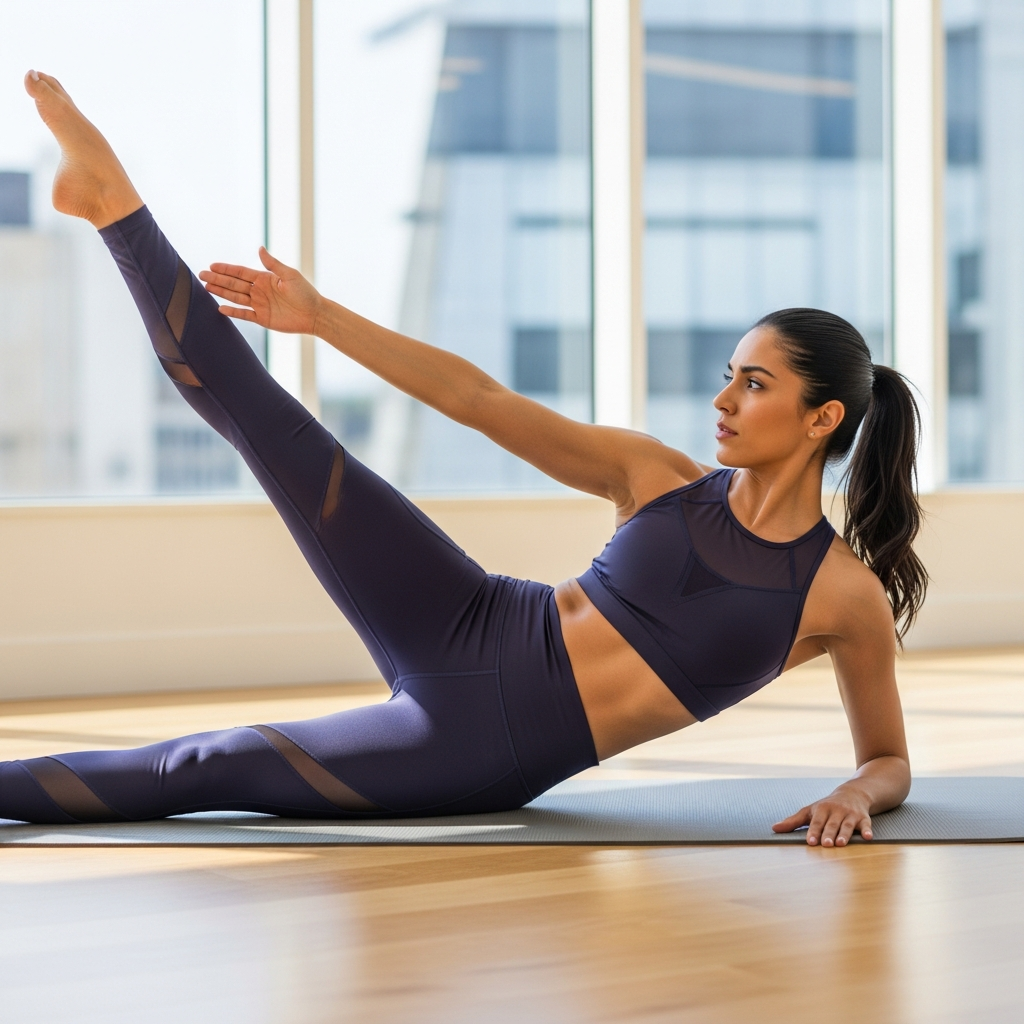
Mat Pilates, a derivative of the original Pilates method, focuses on strengthening the body’s ‘powerhouse,’ a term coined by Joseph Pilates himself that refers to the abdomen, lower back, hips, and buttocks. It offers an intense workout, aiming to balance muscular strength and flexibility, primarily targeting the core.
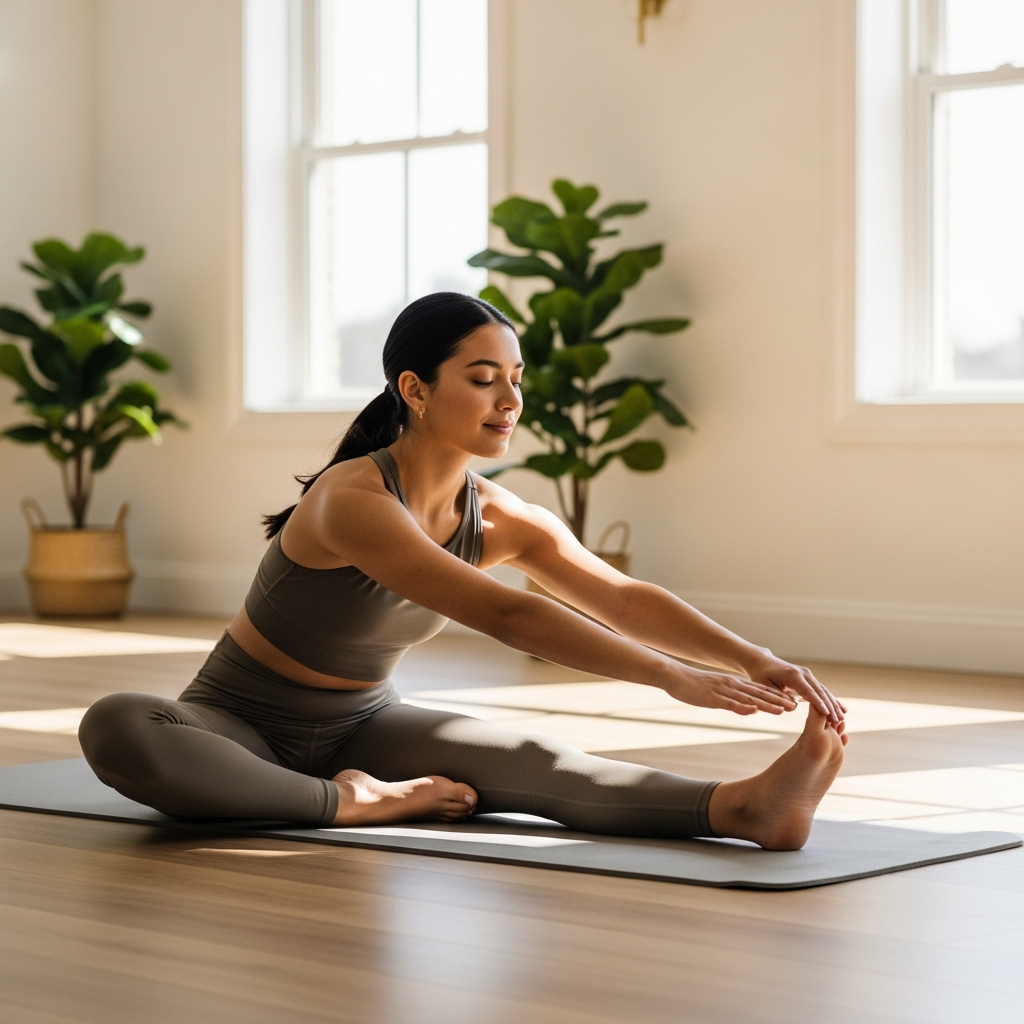
On the other hand, Yoga, an age-old practice with its roots in ancient Indian philosophy, seeks to harmonize the mind, body, and spirit. While it certainly does improve strength and flexibility, Yoga also places a significant emphasis on mental tranquility and mindfulness.
Both mat Pilates and Yoga can be modified to suit different fitness levels, but they each carry their own set of challenges. Mat Pilates can be physically demanding as it involves performing a series of exercises that require strength, balance, and endurance. Yoga, while less intense on the physical aspect, can be mentally challenging with its focus on mindfulness and meditation.
In the following sections, we will look at these aspects in more detail, compare mat Pilates and Yoga based on their techniques, benefits, and challenges. We will also provide expert insights from fitness trainers and practitioners of both disciplines to give you a well-rounded perspective.
Whether you’re a fitness novice trying to decide where to start or an experienced fitness enthusiast looking to switch things up, this blog post promises to provide valuable insights. Let’s embark on this journey together and find out if mat Pilates is harder than Yoga – not just as a generic statement, but in terms of what it means for you, personally. The answer might surprise you!
Mat Pilates Versus Yoga: A Comparative Analysis
Understanding the Fundamentals
Pilates and yoga, two fitness disciplines that have endured the test of time, continue to be popular the world over for their proven health benefits. Both practices are centered on the concept of mind-body connection and encourage the engagement of both physical and mental faculties. However, despite sharing some commonalities, pilates and yoga are inherently different. To answer the question, “Is mat pilates harder than yoga?”, we first need to delve into the fundamentals of pilates.
Pilates, named after its creator, Joseph Pilates, is a fitness system developed in the early 20th century. As a child with poor health, Joseph Pilates designed a series of exercises to improve his strength and flexibility. These exercises, which ultimately formed the basis of the Pilates method, were influenced by Western forms of exercise like boxing and gymnastics, as well as Eastern practices like yoga and martial arts.
The framework of pilates is built around six key principles: concentration, control, centering, flow, precision, and breathing. These guiding principles form an integral part of every Pilates workout and are essential to achieving the full benefits of the practice.
1. Concentration: This principle emphasizes the mind-body connection. In pilates, you must pay attention to each movement to ensure it’s performed correctly.
2. Control: Every pilates exercise requires complete muscle control. No body part is left uncontrolled; it’s about quality over quantity.
3. Centering: The physical energy exerted in pilates is believed to start from the center (core) and flow outwards to the limbs.
4. Flow: The exercises are meant to flow within and into each other in order to build strength and stamina.
5. Precision: Precision is paramount in pilates. Correct form is more important than doing more repetitions.
6. Breathing: Proper breathing is essential; it helps to execute movements with power and efficiency. In pilates, practitioners are taught to breathe fully and rhythmically.
Pilates focuses on building strength from the inside out. The core, which includes the deep abdominal muscles along with the muscles closest to the spine, is considered the “powerhouse” of the body in this discipline. Pilates exercises are designed to improve flexibility, muscle tone, body balance, spinal support, low back health, sports performance, and body-mind awareness.
Mat Pilates is one of two primary forms of Pilates practice – the other being Reformer Pilates, which utilizes a sliding platform with a stationary foot bar and adjustable springs to create variable resistance. Mat Pilates exercises are performed on a mat and primarily engage the muscles of the core. While it may seem less intense due to the absence of machines, mat pilates can be quite challenging. The difficulty arises from the necessity to use one’s body weight as resistance and the complexity of maintaining control and precision for each movement.
Comparing mat pilates to yoga is where things get interesting. Yoga is an age-old practice with roots in ancient Indian philosophy. It’s a holistic practice combining physical postures (asanas), breathing exercises (pranayama), meditation (dhyana), and ethical disciplines (yamas and niyamas). While yoga also promotes flexibility, muscle tone, and body-mind awareness, its approach and ultimate goals can be quite different from pilates.
So, is mat pilates harder than yoga? The answer is not as straightforward as it may seem. Both practices have beginner to advanced levels and can be modified to suit individual fitness levels and goals. However, the emphasis on core strengthening and the precision required for each movement can make pilates feel more challenging, especially for beginners. On the other hand, advanced yoga that involves mastery over complex poses can also be extremely challenging. It’s essential to remember that difficulty is subjective and can vary depending on personal fitness levels, flexibility, familiarity with the practice, and even the individual instructor’s approach.
In conclusion, both mat pilates and yoga offer myriad health benefits and can be a valuable addition to your fitness routine. Whether one is harder than the other depends largely on personal factors and preferences. As with any fitness regimen, the key is consistency and finding a practice that you enjoy and can sustain over time.
Is Mat Pilates Harder Than Yoga? A Comprehensive Guide
When it comes to fitness and wellness, both mat Pilates and yoga are renowned for their myriad of benefits; however, many often wonder – is mat Pilates harder than yoga? This question isn’t as straightforward as it may seem. It indeed depends on an individual’s fitness level, flexibility, goals, and personal preference. Let’s break down the intricacies of both disciplines to help you understand better.
Firstly, it’s essential to understand what mat Pilates and yoga entail. Mat Pilates is a series of exercises inspired by calisthenics, yoga, and ballet, which aim to improve flexibility, strength, balance, and body awareness. Yoga, on the other hand, is a holistic discipline with roots in ancient India that combines physical postures, breath control, meditation, and ethical principles.
When comparing the difficulty levels of mat Pilates and yoga, several factors come into play
1. Physical Intensity: Mat Pilates are generally more physically demanding than yoga. They require constant engagement of the core muscles and often involve dynamic movements. For instance, exercises like ‘the hundred,’ ‘criss-cross,’ and ‘double-leg stretch’ are challenging for beginners due to their demand for strength and endurance. On the other hand, yoga focuses more on flexibility and balance. While some yoga postures can be strenuous, many are more about holding positions and stretching.
Actionable Advice: If you’re looking for a workout that provides both strength and cardio training, mat Pilates might be your ideal choice. However, if you’re more interested in enhancing your flexibility and developing mindfulness, yoga could be a perfect fit.
2. Learning Curve: Both yoga and mat Pilates require practice to master. However, many find that Pilates has a steeper learning curve due to its precise movements and the importance of proper form. Understanding and executing Pilates exercises can be more challenging than yoga poses.
Actionable Advice: If you’re a beginner, consider starting with beginner-friendly Pilates classes or yoga sessions. These classes are tailored to help newcomers understand the basic movements and principles.
3. Equipment: Mat Pilates, as the name suggests, generally requires only a mat, making it more accessible for many. Yoga, while it can be done with just a mat, often uses equipment like blocks, straps, and wheels to assist with poses and deepen stretches.
Actionable Advice: Choose a discipline based on your comfort level and accessibility to equipment. If you’re comfortable with using aids and have them readily available, yoga could be an interesting option to explore.
4. Personal Fitness Goals: If your goal is to build strength, particularly in your core region, mat Pilates is an excellent choice. It focuses intensely on the ‘powerhouse’ region – your abs, lower back, hips, and buttocks. Yoga, however, is a holistic practice that can help improve overall flexibility, balance, and mental wellness.
Actionable Advice: Define your fitness goals clearly. If you want a strong core and lean muscles, opt for mat Pilates. If you’re looking for mental peace along with physical fitness, yoga would be more suitable.
In conclusion, whether mat Pilates is harder than yoga depends largely on your personal fitness level and what you’re looking to achieve. If you’re still unsure which one to choose, why not give both a try? Many find that practicing a combination of both disciplines provides a balanced workout routine that harnesses the benefits of each practice. Remember, the most effective workout is one that you enjoy and will stick with in the long run.
Is Mat Pilates Harder Than Yoga? Exploring Common Challenges, Solutions, and Expert Tips
One of the most common queries that fitness enthusiasts ponder over is the relative difficulty of mat Pilates versus yoga. This question, however, is not as straightforward as it appears, owing to the unique characteristics and objectives of both disciplines. Let’s debunk some misconceptions, explore common challenges, and identify solutions and expert tips related to Pilates, mat Pilates, and Pilates classes.
Firstly, it is essential to understand that both Pilates and yoga are mind-body exercises that aim to improve flexibility, strength, balance, and body awareness. However, they differ in their approach and focus areas. Yoga typically emphasizes flexibility and balance, with a spiritual element incorporated into many practices. On the other hand, Pilates focuses on core strength, body control, and stability, often with a more direct physical fitness goal in mind.
Misconception #1: Mat Pilates Is More Physically Demanding Than Yoga
While it’s true that Pilates requires a high degree of core strength and body control, classifying it as more physically demanding than yoga is an oversimplification. The challenge level in both disciplines can vary significantly based on the specific style of practice (e.g., Vinyasa yoga versus Hatha yoga or Classical Pilates versus Stott Pilates), the instructor’s approach, and an individual’s fitness level and familiarity with the discipline.
Challenge: Building Core Strength for Mat Pilates
The emphasis on core strength in Pilates can be a significant challenge for beginners. In this context, the ‘core’ refers not only to the abdominal muscles but also to the muscles around the back, pelvis, and hips.
Solution: Consistent Practice and Gradual Progression
The best approach to building core strength for Pilates is consistent practice coupled with gradual progression. Begin with basic exercises that activate the core, such as the Pilates hundred or bridge, and gradually incorporate more complex movements as your strength and control improve.
Expert Tip: Always Prioritize Form over Speed
As with any exercise, the quality of movement in Pilates is far more important than the quantity or speed. Ensure that you’re executing each movement correctly to maximize its effectiveness and minimize the risk of injury.
Misconception #2: Mat Pilates Is Less Accessible Than Yoga
While it’s true that some Pilates exercises require specialized equipment like the Reformer or Cadillac, mat Pilates can be performed with minimal equipment, similar to yoga.
Challenge: Finding the Right Class or Instructional Resource
The proliferation of Pilates classes and instructional resources can make it difficult for beginners to identify the best starting point.
Solution: Research and Experimentation
When choosing a Pilates class, consider factors like the instructor’s qualifications, class size, and style of Pilates taught. Online resources can also be a valuable tool for beginners; look for ones that offer detailed instructions and modifications for different fitness levels.
Expert Tip: Start with a Beginner-Friendly Class or Resource
For beginners, it’s advisable to start with beginner-friendly classes or resources that focus on the fundamentals of Pilates. This will help you build a solid foundation and progress safely and effectively.
In conclusion, whether mat Pilates is harder than yoga depends largely on individual factors like your current fitness level, flexibility, core strength, and personal preferences. Both disciplines provide significant physical and mental benefits when practiced consistently and correctly. Therefore, rather than focusing on which is ‘harder,’ consider which aligns better with your fitness goals and preferences. And remember, consistency is key. The ‘hardest’ discipline might just turn out to be the one you enjoy the most!
Mat Pilates vs. Yoga: What to Expect, Timelines and Next Steps
Pilates and yoga, both popular forms of exercise, come with their unique set of benefits. While Pilates emphasizes on muscle tone, flexibility, and overall fitness, yoga is rooted in spirituality and focuses on harmony between the body and mind. Often, beginners find themselves wondering whether mat Pilates is harder than yoga. The answer is not as straightforward as it seems and depends largely on individual fitness levels, goals, and personal preferences.
Mat Pilates vs. Yoga: The Basics
Mat Pilates is a series of exercises performed on a mat that primarily targets the core muscles (the abdomen and lower back). It draws upon the principles established by Joseph Pilates – concentration, control, centering, flow, precision, and breathing. These exercises are designed to build strength, improve flexibility and endurance, and promote better posture.
Yoga, on the other hand, is an ancient practice that involves a series of postures (asanas), breathing techniques (pranayama), and meditation. Yoga comes in various forms such as Hatha, Vinyasa, Ashtanga, and Bikram. It is known for promoting flexibility, strength, balance, and inner peace.
The Challenge Factor: Is Mat Pilates Harder Than Yoga?
Determining whether mat Pilates is harder than yoga can be subjective. Mat Pilates exercises can be challenging as they require controlled movements and constant engagement of the core muscles. It may seem difficult for beginners, especially those who have less strength in their core.
Yoga can also be challenging in its way. Certain yoga styles like Ashtanga or Power Yoga can be physically demanding while others like Restorative or Yin Yoga are more gentle and calming.
Practically speaking, the difficulty level depends on the complexity of the poses or exercises, the duration of the class, individual fitness levels, and the instructor’s teaching style. One might find mat Pilates harder due to its emphasis on precision and control, while another might find yoga more challenging due to the complexity of certain poses or the need for flexibility.
Timelines: Progress in Mat Pilates and Yoga
In both mat Pilates and yoga, consistent practice is key to progress. The timeline for seeing results varies from person to person based on how frequently they practice, their initial fitness level, and their commitment to the practice.
Generally, with regular practice (about 3 times a week), noticeable improvements in strength and flexibility can be seen within 4-6 weeks in both practices. However, the mental benefits such as stress reduction and improved focus can be experienced almost immediately.
Next Steps: Choosing Between Mat Pilates and Yoga
If you’re deciding between mat Pilates and yoga, consider your fitness goals. If you want to build core strength, improve posture, and enhance overall fitness, mat Pilates may be a good choice. If you’re looking for a holistic practice that combines physical postures, breathing exercises, and meditation, yoga might be more suitable.
Before starting any new fitness regimen, it’s recommended to take beginner classes or workshops to learn the basics. Both mat Pilates and yoga require proper form and alignment to avoid injury and maximize benefits.
Once you’ve chosen your preferred practice, find a qualified instructor or reputable studio. Whether you choose mat Pilates or yoga, remember that consistency is key. Practicing regularly will help you progress and reap the benefits of your chosen exercise form.
In conclusion, whether mat Pilates is harder than yoga depends largely on individual perspectives. Each has its unique challenges and benefits. Regardless of the choice you make, both practices offer excellent ways to enhance physical fitness, mental clarity, and overall well-being. Stay consistent with your practice, and remember that the journey is just as important as the destination.
In conclusion, it’s clear that both Mat Pilates and Yoga offer unique challenges and benefits that can make one seem more difficult than the other, depending on personal preferences, fitness levels, and goals.
Mat Pilates, with its emphasis on core strength, body control, precision, and fluid movement, can indeed be challenging. It requires a great deal of concentration and coordination, as well as a good understanding of your body’s mechanics. Its structured sequences and controlled movements can be difficult to master, particularly for beginners who are not yet familiar with the principles of Pilates. However, the challenge is part of what makes Mat Pilates so effective at improving strength, flexibility, and overall body awareness.
Yoga, on the other hand, with its focus on flexibility, balance and mind-body connection, can also present its own set of challenges. The various poses require strength, flexibility, and balance, particularly in styles such as Ashtanga or Vinyasa Yoga which involve complex sequences and transitions. Additionally, the emphasis on mindfulness and breath control in Yoga can be difficult for those who are new to this practice.
However, it’s important to remember that both practices are scalable to individual abilities. Both Mat Pilates and Yoga offer modifications for beginners or those with injuries or limitations. The difficulty level can be adjusted based on the individual’s capabilities and progress over time. It is also worth noting that these two practices can complement each other well. The core strength developed in Mat Pilates can enhance stability in Yoga poses, while the flexibility gained in Yoga can aid in the execution of Pilates exercises.
In essence, both Mat Pilates and Yoga are about exploring the potential of your body and mind. Whether one is harder than the other ultimately depends on your perspective and what you are hoping to achieve from your practice. It’s best not to think of them in terms of difficulty but rather in terms of their unique benefits and how they can contribute to your overall well-being.
Remember, the most important thing is to listen to your body and find what works best for you. Try both practices and see which one resonates with you more. You might find that you enjoy the challenge and benefits of both, or you might find that one suits your needs and preferences better than the other.
As you embark on this journey of self-discovery, remember that it is not a competition. It’s about finding a practice that nurtures your body, calms your mind, and uplifts your spirit. It’s about finding balance, strength, flexibility, and inner peace. It’s about creating a healthy, vibrant, and fulfilling lifestyle.
If you are still unsure about where to start or how to proceed, we are here to help. Our team of experienced instructors can guide you through the process, answer your questions, and help you find the practice that’s right for you. We offer personalized guidance and support to ensure that you have a safe, enjoyable, and beneficial experience.
So why wait? Contact us today and let us assist you on your journey towards better health, fitness, and wellness. Whether you choose Mat Pilates, Yoga, or both, we are here to support you every step of the way.