Picture this: you’re reaching for that coffee mug on the top shelf – you know, the one you shoved up there last week when you were cleaning – and suddenly your back reminds you that you’re not twenty anymore. Or maybe you’re trying to tie your shoes and realize you’re holding your breath because bending over has become… well, more complicated than it used to be.
Sound familiar? You’re definitely not alone.
Here in Irving, I see this scenario play out constantly. People come into our clinic carrying decades of desk jobs, weekend warrior injuries, and that sneaky stiffness that crept in so gradually they barely noticed… until they did. One day you’re moving through life without a second thought, and the next, you’re strategically planning how to pick up that pen you dropped without looking like you’re performing some elaborate yoga pose.
But here’s what’s interesting – and honestly, a little frustrating – about flexibility and strength. Most people think they’re separate things. Like you’re either flexible (hello, yoga enthusiasts) or strong (gym rats, we see you), but rarely both. It’s as if we’ve been forced to choose sides in some weird fitness civil war.
That’s where Pilates comes in, and why it’s become such a game-changer for our clients here in Irving. Because Pilates doesn’t make you choose. It’s like having your cake and eating it too – except the cake is a strong, flexible body that actually feels good to live in.
Now, I’ll be honest… when people first hear “Pilates,” they often picture celebrities in expensive workout clothes doing impossibly graceful movements that look more like art than exercise. Or maybe they think it’s just stretching with fancy equipment. And sure, there’s some truth to those images, but they’re missing the bigger picture.
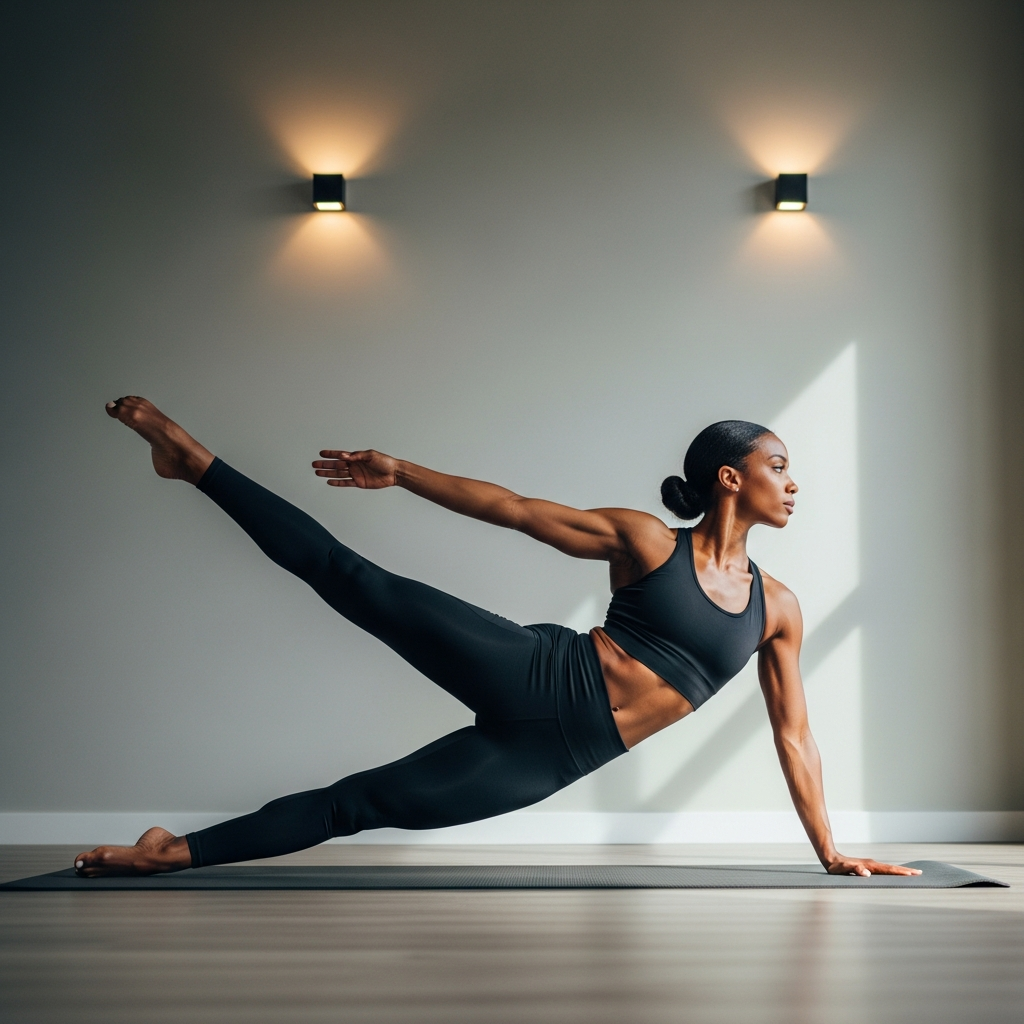
What Pilates really does – and this is where it gets exciting – is teach your body how to be both strong AND flexible at the same time. It’s like training your muscles to be Swiss Army knives instead of single-purpose tools. Your core learns to stabilize while your spine moves fluidly. Your shoulders get stronger while gaining the range of motion you thought you’d lost forever.
The Irving perspective? Well, we’re practical people here. We don’t have time for fitness trends that promise the world but deliver complicated routines that require a engineering degree to understand. We want something that works, fits into real life, and actually makes a difference in how we feel when we’re chasing grandkids around Centennial Park or hauling groceries from the car.
And that’s exactly what you’re going to discover in this article. We’ll explore why Pilates has become the secret weapon for people who want to feel strong and flexible without spending hours at the gym or contorting themselves into pretzel shapes. You’ll learn about the specific benefits that matter most when you’re dealing with the reality of daily life in Irving – from surviving Texas summer heat to managing the stress that comes with juggling work, family, and everything in between.
We’ll also dive into – sorry, let me rephrase that – we’ll also explore how Pilates addresses those nagging issues that seem to multiply after forty. You know what I’m talking about: the stiff neck from too many hours staring at screens, the tight hips from all that sitting, the lower back that protests every time you try to lift something heavier than a laptop bag.
But most importantly, you’ll discover how to actually start incorporating Pilates into your life, even if you’ve never set foot in a studio and can barely touch your toes. Because here’s the thing – flexibility and strength aren’t reserved for people who already have them. They’re skills you can develop, regardless of where you’re starting from.
Ready to find out how Pilates can help you reach that top shelf without wincing? Let’s get started.
What Exactly Is Pilates, Anyway?
You’ve probably heard the term thrown around at dinner parties or seen it listed on gym schedules, but let’s be honest – most of us have only a vague idea of what Pilates actually *is*. And that’s totally fine! I mean, until recently, I thought it was just fancy stretching with really expensive equipment.
Turns out, Pilates is more like… well, imagine if yoga and physical therapy had a baby, and that baby was raised by a very disciplined German fitness instructor. That’s essentially what happened when Joseph Pilates developed this method back in the 1920s. The guy was ahead of his time – he understood that our bodies work as integrated systems, not just a collection of random parts.
The Core Truth (And It’s Not What You Think)
Here’s where things get a bit counterintuitive. When people hear “Pilates,” they immediately think “abs.” And sure, your core gets a serious workout, but – and this is important – Pilates isn’t really about getting a six-pack.
Think of your core like the foundation of a house. You don’t build a foundation to show it off… you build it so everything else can function properly. Your core in Pilates includes not just those front abs (the “beach muscles”), but also your back muscles, pelvic floor, diaphragm, and all those deep stabilizers you can’t even see. It’s like having a really good bra – you might not notice it’s working, but everything just feels more supported.
The Mind-Body Connection (Yes, It’s Real)
This is where Pilates gets interesting, and honestly, where it differs from just hitting the weights at your local gym. Joseph Pilates called his method “Contrology” because he believed in the complete coordination of body, mind, and spirit. Sounds a bit woo-woo? Maybe. But here’s the thing – when you’re trying to balance on one leg while moving your arms in specific patterns and breathing in a particular rhythm… well, your mind can’t exactly wander to your grocery list.
It’s like learning to drive a manual transmission. At first, you’re intensely focused on every movement – clutch, shift, gas, brake. But eventually, it becomes second nature, and you’ve developed this incredible awareness of how all the parts work together. That’s what happens with Pilates and your body.
Flexibility vs. Mobility (They’re Not Twins)
Okay, this might blow your mind a little, but flexibility and mobility aren’t the same thing. I know, I know – it’s confusing. Think of it this way: flexibility is like having a really stretchy rubber band. Mobility is like having a well-oiled door hinge that moves smoothly through its full range.
You could have incredibly flexible hamstrings (you can touch your toes easily), but if your hip joints are stiff and your glutes are weak, you might still move like the Tin Man before Dorothy found the oil can. Pilates works on both – lengthening those tight spots while teaching your joints to move efficiently and your muscles to support that movement.
The Strength Surprise
Here’s something that catches a lot of people off guard – Pilates will make you stronger. But not in the “grunt and lift heavy things” way. More like… have you ever tried to hold a plank for two minutes while breathing normally and keeping your shoulders relaxed? Yeah, that’s harder than you’d think.
Pilates strength is functional strength. It’s the kind that helps you carry all your groceries in one trip (we’ve all been there), pick up your kid without throwing out your back, or simply sit at your desk all day without feeling like a pretzel.
The Equipment Question
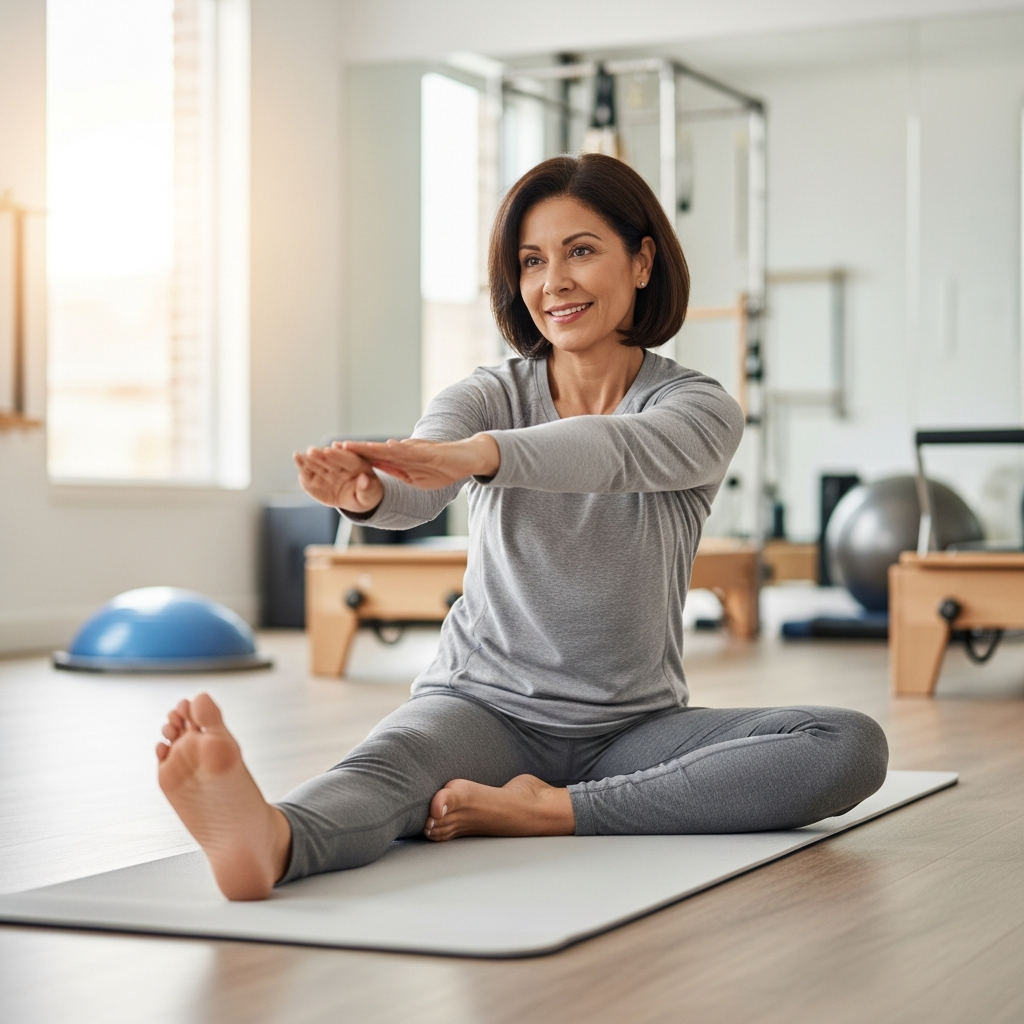
You might be wondering about all that intimidating-looking equipment you see in Pilates studios. The Reformer, the Cadillac (yes, that’s really what it’s called), those spring-loaded contraptions that look like medieval torture devices…
Actually, that reminds me – Joseph Pilates first developed his exercises using hospital beds and springs during World War I. Pretty resourceful, right? The equipment isn’t meant to be intimidating – it’s designed to provide resistance and support where you need it. Think of it as training wheels that can be adjusted as you get stronger and more coordinated.
But here’s the beautiful thing – you can absolutely do Pilates with just your body and maybe a mat. The principles remain the same whether you’re on a $50,000 Reformer or your living room floor.
Getting Started Without Feeling Like a Pretzel
Look, I’ll be honest – walking into your first Pilates class can feel intimidating. Everyone seems to know exactly where to place their shoulder blades (wherever those are supposed to go), and you’re wondering if that modified plank is actually supposed to make your entire core feel like it’s on fire.
Here’s what I wish someone had told me: start with three basic moves at home before you even think about a studio. The hundred, single-leg stretch, and roll-up. Master these – and I mean really get comfortable with the breathing patterns – and you’ll walk into any class with confidence.
And here’s a secret most instructors won’t tell you… those super flexible people you see? Half of them started out stiffer than a board. Flexibility in Pilates isn’t about touching your toes on day one – it’s about consistent, mindful movement over time.
The Equipment Maze – What You Actually Need
Let me save you some money here. You don’t need a $3,000 reformer in your living room (though if you’ve got the space and budget, hey, live your dreams). Start with a quality mat – and I mean quality. That $15 thin mat from the big box store will have you feeling every vertebra against the floor.
A resistance band, small Pilates ball, and foam roller will cover about 80% of what you can do in a fancy studio. Actually, that reminds me – Irving has some great spots for secondhand equipment if you’re budget-conscious. Check out the local Facebook marketplace… you’d be surprised how many people sell barely-used Pilates gear after their New Year’s resolutions fade.
Reading Your Body’s Daily Report Card
This is where Pilates gets really interesting – and where most people miss the point entirely. Your body’s going to feel different every single day. Monday morning after a weekend of yard work? Your hip flexors might be screaming. Wednesday after sitting in meetings all day? Your thoracic spine probably feels like concrete.
Instead of fighting against these daily changes, use them as information. If your hamstrings are tight, spend extra time on leg circles. If your shoulders are hunched from stress, focus on arm movements that open your chest. It’s like having a conversation with your body – some days it’s chatty, other days it’s giving you the silent treatment.
The Breathing Thing Everyone Gets Wrong
Okay, this drives me crazy because everyone talks about Pilates breathing like it’s some mystical art form. It’s not rocket science, but it is specific. You’re not just taking deep breaths – you’re using your breath to support your movements and engage your deep core muscles.
Here’s the trick: place one hand on your chest, one on your ribs. When you inhale, only the ribs should expand sideways (imagine your ribcage is an accordion). The chest hand stays put. Exhale like you’re blowing out birthday candles through a straw – controlled and purposeful. Practice this while you’re stuck in traffic on 635… actually makes the commute more bearable.
Making It Stick When Life Gets Crazy
We’ve all been there – you’re on a roll with your Pilates routine, then work explodes, kids get sick, life happens. Instead of the all-or-nothing approach (which, let’s face it, usually ends in nothing), think modular.
Ten minutes of morning stretches while your coffee brews. Five-minute core work during lunch break. Even doing Pilates breathing exercises in your car counts. I know it sounds almost too simple, but consistency trumps intensity every single time.
And here’s something specific to our Irving climate – those hot summer months can zap your energy. Don’t fight it. Modify your routine instead of abandoning it. Early morning sessions before the heat kicks in, or gentle evening flows when the temperature drops.
When to Push and When to Back Off
This might be the most important thing you learn: the difference between productive discomfort and actual pain. Pilates should challenge you – that shaky feeling in your muscles during teaser? That’s your body getting stronger. Sharp pain in your lower back during roll-ups? That’s your body asking you to slow down and modify.
Listen, I’ve seen too many people push through pain because they think that’s what “committed” looks like. Real commitment is showing up consistently, respecting your limits, and gradually expanding what’s possible. Your future self will thank you for taking the long view on this one.
“I’m Too Stiff to Start Pilates”
Here’s the thing nobody tells you – showing up to your first Pilates class feeling like the Tin Man from Wizard of Oz is completely normal. Actually, it’s kind of the point.
I can’t tell you how many people walk into our Irving clinic convinced they need to be flexible *before* they can do Pilates. It’s like saying you need to be clean before you can take a shower. The whole reason you’re here is because your hamstrings feel like guitar strings and your shoulders live somewhere around your ears.
Start with modified everything. That fancy teaser pose you see on Instagram? Forget it exists for now. Work on simply rolling through your spine one vertebra at a time. Use props – they’re not training wheels, they’re tools. A foam roller under your knees during the hundred, a pillow behind your back during roll-ups… whatever gets you moving without wincing.
The breakthrough usually happens around week three or four. One day you’ll reach for something and think, “Huh, that didn’t hurt.” Trust the process, even when it feels glacially slow.
When Your Core Feels Like Jell-O
Let’s be honest about core strength – or the complete lack thereof. You know that moment when the instructor says “engage your core” and you’re genuinely not sure what muscle they’re talking about? Yeah, we’ve all been there.
The problem isn’t that you don’t have core muscles (spoiler alert: everyone does). It’s that they’ve been on vacation for… well, possibly years. Think of it like trying to wake up a teenager on Saturday morning – it’s going to take some persistent, gentle coaxing.
Start ridiculously small. I’m talking about exercises so basic they feel almost silly. Lying on your back, just trying to press your lower ribs into the mat while breathing normally. That’s it. No crunches, no planks, just finding those deep stabilizing muscles that have been playing hide and seek.
Most people try to muscle through with their hip flexors or clamp down with their backs. Instead, imagine you’re wearing a really wide belt that’s gently hugging your entire midsection – that’s your core working properly.
The Coordination Catastrophe
Here in Irving, I see this constantly – people who are perfectly capable athletes suddenly feeling like they have two left feet when asked to move their arms one way while their legs go another.
Pilates has this sneaky way of making you feel completely uncoordinated, even if you’re usually pretty athletic. It’s asking your brain to run multiple programs simultaneously, and frankly, most of us are used to doing one thing at a time.
The secret? Stop trying to be perfect and embrace the wobble. Seriously. That shaky, uncertain feeling isn’t failure – it’s your nervous system learning something new. When you’re trembling through a simple leg circle, that’s actually your body figuring out how to stabilize in a completely new way.
Break everything down into tiny pieces. Learn the arm pattern first, then add the legs. Or vice versa. There’s no Pilates police coming to arrest you for simplifying things.
“Everyone Else Looks Like They Know What They’re Doing”
Oh, this one hits hard, doesn’t it? Walking into a class where everyone seems to flow effortlessly through movements while you’re still trying to figure out which way is up.
Here’s what’s really happening – those “naturally graceful” people have probably been coming for months (or years). They’ve already gone through their awkward phase, their muscle-shaking phase, and their what-the-heck-is-happening phase. You’re just seeing the highlight reel.
Also, and this might surprise you – half the people in that class are still figuring things out too. They’ve just gotten better at making their confusion look elegant.
Focus on your own mat. Literally. Pick a spot on the floor and keep your eyes there. The woman next to you who’s flowing like a dancer? She started exactly where you are now.
The Plateau Problem
After a few weeks, you might hit this weird wall where everything feels… the same. Not harder, not easier, just blah. This is actually a sign that your body has adapted, which is good news disguised as boredom.
This is when you level up – not by doing more reps, but by doing the same exercises with more precision, more control, more awareness. It’s the difference between mindlessly going through the motions and truly engaging with each movement.
Your instructor should be helping you find these subtle progressions, but don’t be afraid to speak up if you’re feeling stuck. Sometimes it’s as simple as changing your breathing pattern or adjusting your focus.
The plateau isn’t a stop sign – it’s a rest stop before the next breakthrough.
What to Expect in Your First Few Weeks
Let’s be honest – you’re not going to walk out of your first Pilates class feeling like a graceful swan. More like… a slightly confused flamingo? And that’s completely normal.
Your first session might leave you wondering if you’ve been using your core muscles at all for the past decade (spoiler alert: probably not as much as you thought). Don’t worry if you can barely hold a plank for ten seconds or if the instructor’s directions sound like they’re speaking in code. “Engage your powerhouse while lengthening through the crown of your head” – what does that even mean, right?
Most people start noticing subtle changes around the 3-4 week mark. You might find yourself standing a bit taller at your desk, or maybe those stairs at work don’t leave you quite as winded. The flexibility gains? Those take a bit longer – we’re talking 6-8 weeks before you really start feeling like your hamstrings aren’t made of concrete.
Actually, that reminds me… flexibility is like that stubborn jar lid in your kitchen. You can’t force it open all at once – you need consistent, gentle pressure over time. Push too hard, too fast, and something’s going to give (and it won’t be in a good way).
The Reality Check on Strength Building
Here’s something your Instagram feed won’t tell you: building functional strength through Pilates is more like growing a garden than constructing a building. It’s gradual, sometimes messy, and requires patience.
In those first few weeks, you’ll probably feel muscles you forgot existed. That weird ache between your shoulder blades? The slight soreness in your inner thighs? Welcome to your deep stabilizing muscles waking up from their long nap.
Most Irving residents I work with start seeing real strength improvements around the 8-10 week mark. But here’s the thing – it’s not the kind of strength that makes you want to flex in the mirror. It’s the kind that has you effortlessly carrying all your groceries in one trip, or getting up from the couch without that little “oof” sound we all make after 35.
The beauty of Pilates strength is that it’s sneaky. One day you’ll realize you’ve been sitting at your computer for hours without that familiar lower back ache, or you’ll bend down to pick something up and think, “Huh, that felt… easy.”
Creating Your Personal Timeline
Every body is different – and I can’t stress this enough. Your timeline won’t look exactly like your workout buddy’s, your neighbor’s, or that person on YouTube who claims they transformed their entire life in three weeks (side note: be very suspicious of those claims).
If you’re coming to Pilates with a fairly sedentary lifestyle, give yourself 2-3 months to really feel the full benefits. Been active but new to this type of movement? You might see changes sooner, maybe 6-8 weeks. Have some previous dance or yoga experience? Lucky you – your body might remember some of these movement patterns faster.
Age plays a role too, though not as much as you might think. I’ve seen 60-year-olds progress faster than 30-year-olds simply because they were more consistent and listened to their bodies better.
Building Your Support System
Here’s where living in Irving gives you a real advantage. Our community has embraced this whole wellness thing, and you’ll find studios and instructors who actually care about your progress – not just your monthly membership fee.
Look for instructors who take time to learn your name, remember your limitations, and celebrate your small wins. Good teachers will modify exercises without making you feel like you’re failing. They’ll push you just enough to grow but won’t let their ego override your safety.
Consider buddy-ing up with someone at your fitness level. Having a Pilates partner makes those “I don’t want to go today” moments a lot easier to overcome. Plus, you’ll have someone to commiserate with about how hard it is to roll up gracefully from that hundred exercise.
Trust the Process (Yes, It’s Cliché, But True)
The hardest part about Pilates isn’t the physical work – it’s trusting that these small, controlled movements are actually doing something. Unlike high-intensity workouts that leave you drenched in sweat, Pilates works more subtly.
Some days you’ll leave class feeling energized and aligned. Other days? You might feel like you barely moved. Both are normal, both are valuable, and both are building the foundation for long-term strength and flexibility.
Your body is constantly adapting, even when your brain can’t see the changes yet.
You know what’s really beautiful about all this? It’s that you’ve already taken the most important step just by learning about how Pilates can transform both your flexibility and strength. That curiosity – that little spark that made you wonder “could this work for me?” – that’s where everything starts.
Finding Your Own Path Forward
Here in Irving, we’re lucky to have such a supportive fitness community. Whether you’re dealing with tight hips from too many hours at your desk (hello, fellow desk warriors!), or you’re trying to rebuild strength after an injury… there’s something almost magical about how Pilates meets you exactly where you are. Not where you think you should be, not where Instagram tells you to be – but right where you are today.
I’ve watched so many people start this practice thinking they needed to be more flexible first, or stronger first, or somehow “better” before they could begin. But that’s like saying you need to be clean before you can take a shower, you know? The flexibility comes from doing the work. The strength builds as you show up. The confidence? Well, that sneaks up on you when you’re not looking.
The Ripple Effect
What really gets me excited is how the changes ripple out beyond the studio. Sure, you’ll notice your back doesn’t ache when you get out of bed, or that reaching for something on a high shelf doesn’t feel like an Olympic event anymore. But then there are the unexpected gifts – better sleep, more energy for weekend adventures with the kids, feeling more grounded when life gets chaotic.
And let’s be honest about something else… this journey isn’t always linear. Some days your body will feel amazing, flowing through movements like you’re dancing. Other days? You might feel like the Tin Man before Dorothy found the oil can. Both are completely normal. Both are part of the process.
You Don’t Have to Figure This Out Alone
If you’re sitting there thinking “this sounds great, but where do I even start?” – I get it. The wellness world can feel overwhelming sometimes, especially when you’re already managing weight loss goals or dealing with health concerns. You don’t need to become a Pilates expert overnight or invest in a whole new wardrobe (though those cute leggings are tempting…).
What you need is someone who understands that your body has its own story, its own timeline, its own needs. Someone who gets that flexibility and strength aren’t just physical concepts – they’re about creating space for the life you want to live.
That’s exactly what we’re here for. Our team loves helping people discover how movement can support their wellness goals, whether you’re just starting out or looking to add something new to your routine. We’re not here to push you into anything – we’re here to listen, to understand what you’re hoping for, and to help you figure out if Pilates might be a good fit for your life right now.
Why don’t you give us a call? Let’s chat about what you’re dealing with, what you’re hoping for, and how we might be able to help. No pressure, no sales pitch – just real conversation about real possibilities.