Arlington Heights Mat Pilates: What Makes It Effective?
You know that moment when you’re halfway through a workout class, secretly convinced you’re doing absolutely nothing useful? Your muscles aren’t screaming, you’re not drenched in sweat, there’s no dramatic huffing and puffing… and some part of your brain starts whispering, *this can’t possibly be working.*
If you’ve ever felt that way in a mat Pilates class – you’re not alone. Honestly, it’s probably the most common thing we hear from people who try it for the first time, or the second time, or the fifth time before something finally *clicks*.
Here’s the thing though. That quiet burn you feel the next morning? The way your lower back stopped aching after a few weeks? The fact that you suddenly noticed you’re standing taller without even thinking about it? That’s not coincidence. That’s mat Pilates doing exactly what it’s supposed to do – working in ways that don’t always look impressive from the outside but are genuinely transforming what’s happening underneath.
And in Arlington Heights specifically, we’re seeing more and more people – from busy parents and desk-bound professionals to older adults and people working through weight loss – turning to mat Pilates not as a “soft” alternative to real exercise, but as a foundational piece of their health. Which makes sense, because this community has always been pretty good at separating what actually works from what just *looks* like it works.
Why This Question Actually Matters
So why does effectiveness matter so much here? Because your time is finite. Your energy has limits. And if you’re going to show up – roll out a mat, get down on the floor, and work through a class – you deserve to understand *why* it’s worth doing. Not just “because your instructor said so” or because it’s trending. You deserve the actual reasoning.
There’s also this – a lot of people in and around Arlington Heights are dealing with real, complicated health situations. Maybe you’re managing your weight and your doctor has started talking about things like metabolic health or joint stress. Maybe you’ve got a history of back problems and every high-impact option feels like a gamble. Maybe you’re just… tired. And you need something that meets you where you are without wrecking you in the process.
Mat Pilates has a surprisingly strong answer for all of those situations. But “it just works” isn’t good enough, is it? You want to understand the mechanism. The *why*.
What You’ll Actually Learn Here
This article is going to walk you through the real science and practical reality behind why mat Pilates is effective – not in a textbook way, but in the way a good friend who happens to know a lot about exercise physiology might explain it over coffee.
We’ll talk about what’s actually happening in your body during those slow, controlled movements (spoiler: a lot more than it looks like). We’ll get into the specific benefits that make it particularly valuable for people managing their weight or working with a medical team on their overall health. We’ll look at why the “mat” part – no reformer, no fancy equipment – is genuinely valuable rather than just a budget compromise.
Actually, that reminds me – one of the most interesting things we’ll cover is how mat Pilates engages your core in a completely different way than, say, crunches or planks. It’s not just about abs. It never was. The original system Joseph Pilates developed – he called it “Contrology,” which is a wonderfully confident name when you think about it – was always about the relationship between the mind, the breath, and the entire body working as one integrated system.
And that integration? That’s where the real magic is for people who are working on long-term health changes.
Whether you’re brand new to Pilates, you’ve been curious about classes in Arlington Heights but haven’t taken the plunge yet, or you’ve been going for a while and just want to understand what’s happening beneath the surface… this is for you.
Because you deserve to feel confident about the choices you’re making for your body. And understanding why something works is the first step to actually sticking with it.
Let’s get into it.
The Basics Aren’t Actually Basic
Here’s the thing about Pilates that surprises most people when they first start – it’s not about doing a lot. It’s about doing things *precisely*. If you’ve ever watched someone do a Pilates class and thought “that doesn’t look that hard,” you’ve experienced the same optical illusion that fools almost everyone. Thirty seconds into your first proper hundred exercise, you’ll understand. Your abs will have a lot to say.
Mat Pilates specifically is the original form – developed by Joseph Pilates in the early 20th century, first used (interestingly enough) to rehabilitate injured dancers and soldiers. The man was ahead of his time in ways that are still kind of wild to think about. He understood that the body works as a connected system long before that became a trendy wellness talking point.
The “mat” part just means you’re working on the floor, without the reformer machines you might have seen in studios. Which sounds simpler. It’s… not simpler, exactly. Different.
What “Core” Actually Means Here
Everyone talks about core. It’s become such an overused word that it barely means anything anymore. But in Pilates, the concept is genuinely specific – and honestly a little counterintuitive at first.
They call it the “powerhouse.” It’s not just your six-pack muscles. We’re talking about a deep cylinder of muscles wrapping around your midsection – your transverse abdominis, your pelvic floor, your multifidus (a set of small muscles running along your spine), and your diaphragm. Think of it like the structural foundation of a building. The fancy stuff on the outside – the visible abs, the arms, the legs – those are your walls and windows. The powerhouse is the foundation everything else sits on.
When that foundation is shaky, other muscles compensate. Your lower back picks up the slack. Your hip flexors work overtime. Things start to hurt in places that seem weirdly unrelated to the actual problem. Sound familiar? Yeah. It does to a lot of people sitting in our clinic.
The Breathing Thing (Which Feels Weird at First)
Okay, so this is the part where people get a little frustrated. Pilates has a specific breathing pattern – and it’s the opposite of what most of us do instinctively during exercise. You exhale on the exertion, the hard part. You breathe into the sides and back of your ribcage, not your belly.
It feels awkward. It takes practice. And for probably the first two or three classes, you’ll be so focused on it that you’ll forget what your legs are supposed to be doing. That’s completely normal, and honestly, don’t stress about it too much in the beginning.
The reason it matters is that breathing is directly tied to how your deep core muscles activate. Your diaphragm and pelvic floor actually move together – inhale, pelvic floor drops; exhale, it lifts. Once you feel that connection, the whole system starts to make more sense. It’s like suddenly understanding how a manual transmission works. Confusing until it clicks, then you can’t unsee it.
Why Mat Work Is Particularly Demanding
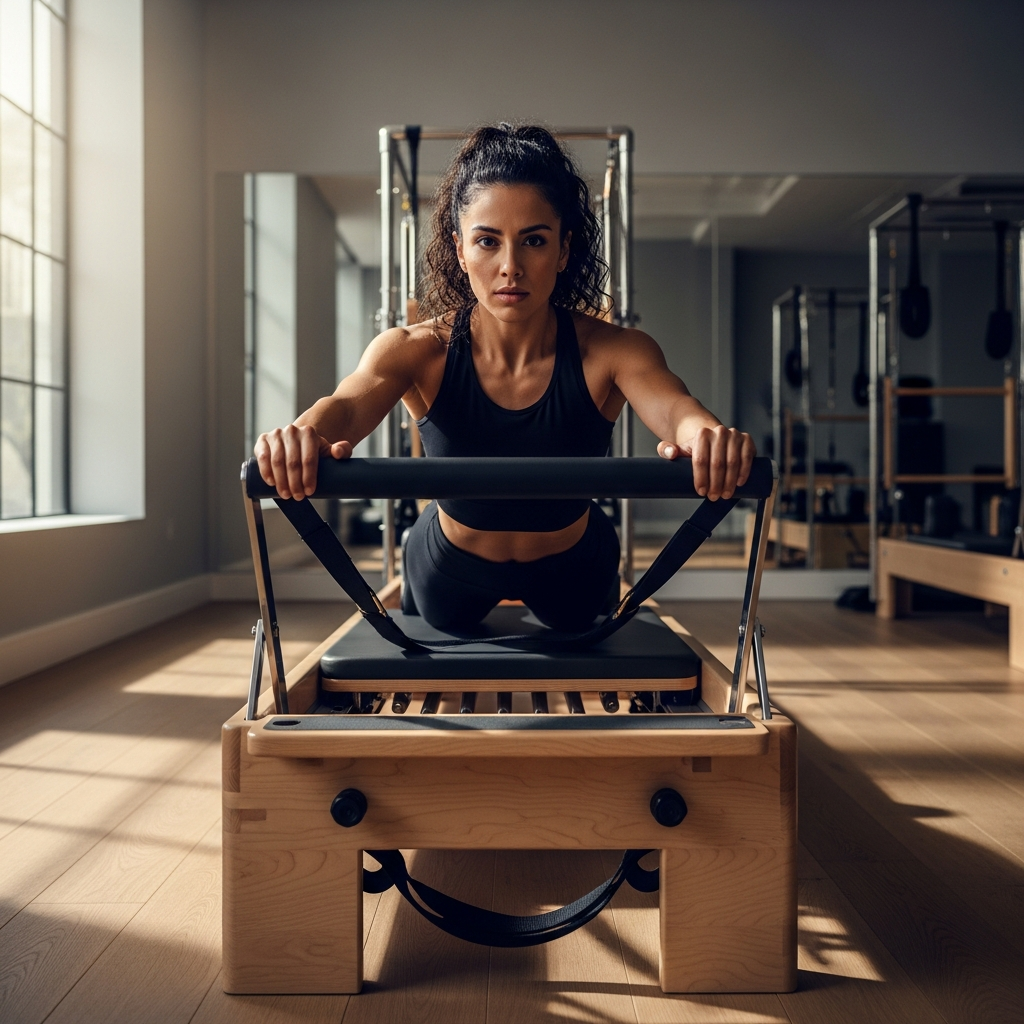
The reformer – that spring-loaded machine – actually assists your movements in some ways. The springs create feedback and support. On the mat, you’ve got gravity and your own bodyweight. That’s it. Which means your stabilizing muscles have to do all the work of controlling movement without any help.
This is actually why mat Pilates translates so well into real life. You’re training your body to move efficiently in the conditions it actually lives in. Not supported by springs or machines – just moving through the world, picking things up, carrying groceries, sitting at a desk for eight hours without your back screaming at you by 3pm.
The Neuromuscular Connection
Here’s something that gets glossed over but is genuinely fascinating – Pilates is as much about how your nervous system talks to your muscles as it is about the muscles themselves. A lot of chronic pain and movement dysfunction isn’t because muscles are weak, exactly. It’s because they’ve forgotten how to fire in the right sequence.
Mat Pilates essentially re-teaches those patterns. Slow, deliberate movement with serious attention to form. It’s retraining, really – like reformatting a hard drive that’s gotten cluttered with bad habits over years of sitting, slouching, and compensating. Not the most glamorous analogy, but… pretty accurate.
What to Actually Look for in a Class (This Matters More Than You Think)
Not all mat Pilates classes are created equal – and honestly, this is where most people go wrong. They sign up for whatever’s convenient, show up three times, don’t feel much, and quietly decide Pilates “isn’t for them.” Sound familiar?
The instructor credential you’re looking for is a comprehensive certification (think STOTT, Peak Pilates, or Balanced Body) – not just a weekend workshop. There’s a real difference between someone who spent 450+ hours learning the method and someone who learned it between Friday night and Sunday afternoon. Ask directly. A good instructor won’t be offended.
Class size is a sneaky factor too. If there are 25 people in that room, your instructor physically cannot watch your form. For mat work especially – where you don’t have the reformer’s built-in feedback mechanism – cuing and correction is everything. Look for classes capped around 10-12 people, at least while you’re learning.
The Form Fundamentals Nobody Warns You About
Here’s the thing about mat Pilates that catches people off guard: it’s harder to do correctly than it looks. The reformer holds you in position. The mat does not. You are the machine.
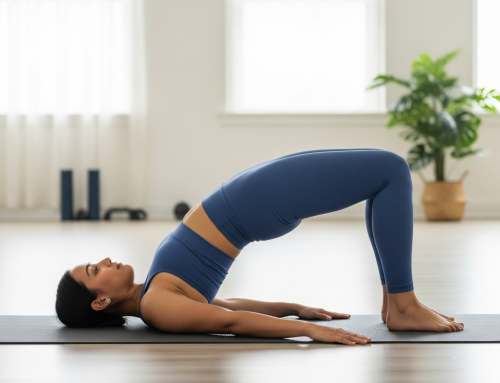
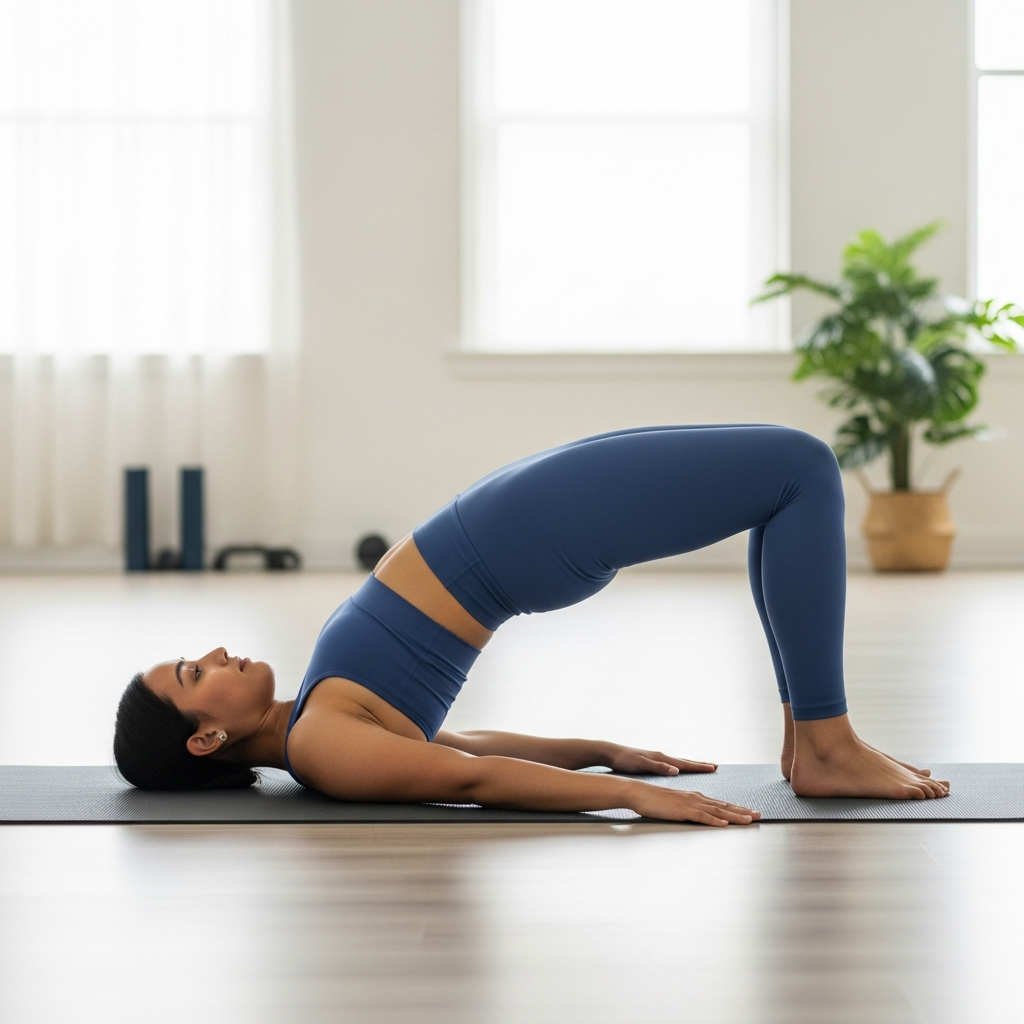
So when your instructor says “neutral spine,” they mean it. Don’t just flatten your back into the mat or crank it into an arch. There should be a small, natural curve – enough to slip two fingers under your lower back. That’s your neutral. Everything builds from there.
The breath trips people up constantly. Pilates uses lateral thoracic breathing – you’re expanding the ribcage sideways, not puffing your belly out. Try this right now, actually: put your hands on either side of your ribcage and breathe like you’re trying to push your hands apart. That’s it. Do that during every exercise and you’ll be miles ahead of half the class.
One more thing – and this is the secret that changes everything – slow down. People rush through reps trying to feel a burn. Pilates isn’t about burning through reps. A single perfectly controlled roll-up, where you feel every vertebra peel off the mat, does more than ten sloppy ones. Every. Single. Time.
Building a Realistic Arlington Heights Practice
Here’s some genuinely useful local context. The Chicago suburbs have a solid Pilates scene, which means you actually have options – and that’s good, because finding the right fit matters for consistency.
Two days a week is the minimum to see real change. Three is where most people notice something shifting – posture, core connection, that feeling of being “held together” differently. Don’t make the mistake of doing seven days and burning out in week three. Sustainable beats intense every time.
If you’re brand new, do yourself a favor and book a private or semi-private session before jumping into group classes. Even one session. An instructor can identify your specific compensation patterns – maybe you hike your right hip, maybe you grip your neck when your core fatigues – and give you cues that are actually relevant to *your* body. That’s worth more than a month of generic group instruction.
Pairing Mat Pilates With Your Weight Loss Goals
This is where it gets interesting, especially if you’re working with a medical weight loss program. Mat Pilates isn’t a high-calorie burn on its own – let’s just be honest about that. But it does something that cardio and calorie restriction can’t always touch: it rebuilds your relationship with your body.
People who stick with Pilates tend to move more overall. They stand differently. They’re less likely to injure themselves doing other exercise. They sleep better – and if you’ve been through any kind of metabolic health work, you know how critical sleep is for weight regulation.
Use mat Pilates as your foundation, not your entire strategy. Pair it with walking (genuinely underrated, especially around the trails near Nickol Knoll or on the Meadows), whatever cardiovascular work you enjoy, and whatever nutritional guidance you’re working with. The Pilates holds it all together structurally.
Track What Actually Changes
Skip the scale for measuring Pilates progress – it’ll mislead you. Instead, notice: Can you do a full roll-up without your feet lifting? Does your lower back ache after sitting all day like it used to? Are you breathing differently under stress?
Those changes are real. And they compound quietly, the way good things usually do.
The Learning Curve Is Real (And Nobody Warns You About It)
Here’s something most studios won’t tell you upfront: mat Pilates is genuinely hard to learn. Not hard like running a marathon – hard in this subtle, frustrating way where your brain knows what it wants your body to do, and your body just… doesn’t cooperate. You’ll watch an instructor demonstrate a perfect Hundred, and it looks almost effortless. Then you try it and your neck is screaming, your legs are shaking, and you’re pretty sure you’re doing something completely wrong.
You probably are. And that’s completely normal.
The mind-muscle connection that Pilates demands takes time to develop. Most people spend the first four to six classes just trying to find their deep core muscles – those transverse abdominals that everyone talks about like they’re obvious to locate. They’re not. For a lot of people, especially those who’ve spent years sitting at desks or compensating for old injuries, these muscles have essentially gone quiet. Waking them up feels strange, sometimes barely perceptible at first.
The solution isn’t to push harder. It’s actually to slow way down. Find an Arlington Heights studio that offers beginner-specific classes or foundations workshops where instructors can give you individual cueing. Those first few weeks of proper instruction are worth more than months of struggling through intermediate classes guessing at the form.
When Your Body Has Its Own Opinions
Tight hamstrings, an old back injury, a shoulder that clicks – these things don’t disappear just because you’ve decided to start Pilates. And for a lot of people, this is where discouragement sneaks in. You modify an exercise, you can’t do what the person next to you is doing, and suddenly you’re wondering if this is even worth it.
Here’s the honest truth: modifications aren’t a consolation prize. They’re often where the actual work happens. A properly modified roll-up, where you’re working within your genuine range of motion, builds more functional strength than a sloppy full version ever could.
That said, chronic pain and injury do require some navigation. If you have a herniated disc, certain spinal flexion exercises need to be approached carefully – or sometimes avoided entirely until you’ve built more stability. This is where working with an instructor who asks about your history (before class, not as an afterthought) makes a real difference. Don’t be shy about flagging your limitations. A good teacher will adapt. That’s literally their job.
Consistency – The Thing We All Struggle With
Two or three classes and then… life happens. Sound familiar? This is probably the most common challenge people face, and it’s not a willpower problem so much as a logistics problem. Pilates, unlike some fitness approaches, doesn’t really show its full benefits from sporadic sessions. The neuromuscular patterning you’re building needs repetition.
What actually works – and this is a bit boring but true – is treating your classes like appointments you’d cancel only for something genuinely important. Pre-booking a week or two ahead at your Arlington Heights studio creates a different psychological relationship with attendance than deciding day-of. It shifts Pilates from “something I want to do” to “something I’ve already committed to doing.”
Actually, that reminds me of something a lot of people find helpful: pairing Pilates with something already anchored in your routine. Morning class before work? Right after your Saturday grocery run? Habits attach more easily when they’re tethered to existing ones.
The Plateau That Makes You Question Everything
Around the three to four month mark, a lot of people hit a wall. Progress feels invisible. The exercises feel manageable but not challenging. This is actually a sign that something worked – your baseline has shifted. But it doesn’t feel like success, it feels like stagnation.
This is the moment to level up, not to quit. Talk to your instructor about introducing more advanced variations. Add a session per week temporarily. Try a different class format. Sometimes the plateau is really just a signal that your body has adapted and is ready for a new stimulus.
The people who push through this phase – with genuine curiosity rather than frustration – are typically the ones who come back months later talking about the unexpected changes: better posture, less back pain, a kind of quiet strength they didn’t anticipate. That’s not a guarantee, of course. But it’s not nothing either.
What to Actually Expect (And When)
Let’s be honest with each other for a second. If you’ve been scrolling through fitness content lately, you’ve probably seen some version of “I did Pilates for 30 days and completely transformed my body!” And maybe that happened for that person. But walking into your first mat Pilates class in Arlington Heights with those expectations? That’s a recipe for frustration.
Here’s a more realistic picture – and honestly, it’s still a pretty good one.
The First Few Weeks Feel Humbling
Most people are surprised by two things in their first two to three weeks. First, how much they’re sweating during something that “doesn’t look that hard.” Second, how sore they are in muscles they forgot they had. Your deep core stabilizers, the muscles around your shoulder blades, the inner thighs… these aren’t muscles most of us use intentionally in daily life. They’ve basically been freeloading while your bigger muscle groups do all the work.
Don’t mistake that initial soreness and awkwardness for failure. It’s actually the opposite. You’re establishing a neuromuscular connection – basically teaching your brain to talk to muscles it’s been ignoring. That process takes a little time, but it’s happening even when it doesn’t feel like it.
When You’ll Start Noticing Real Changes
Around weeks three through six, most people start noticing something shift. Not necessarily dramatic physical changes – but functional ones. You stand up from your desk and realize you’re not doing that little “oof” grunt. You carry groceries up the stairs without gripping the railing. You wake up and your lower back just… doesn’t hurt the way it usually does.
These “quiet wins” often come before the visible ones, and they’re worth paying attention to. They’re signs that your body is genuinely changing how it operates.
For visible changes in muscle tone and posture – the stuff you’d actually see in a mirror – give it two to three months of consistent practice. And by consistent, we mean two to three sessions per week. One class every ten days isn’t really going to move the needle, even though it feels better than nothing (and to be fair, it is better than nothing).
Mat Pilates and Weight Management – Let’s Be Real
This is where we need to have a frank conversation, because mat Pilates is sometimes marketed as a weight loss solution, and that framing isn’t quite right. It burns calories – a solid mat class can burn between 175 and 250 calories depending on intensity and your body weight – but it’s not primarily a calorie-torching modality the way cycling or running is.
What it *does* do is build lean muscle mass over time, which supports your metabolism. It also tends to reduce chronic stress and improve sleep, both of which have real downstream effects on how your body manages weight. And honestly? When people feel strong and capable in their bodies, they often start making better choices across the board. Not because they’re forcing themselves to, but because the relationship with their body shifts.
If weight loss is a specific goal for you, Pilates works best as part of a broader strategy – ideally one that includes some cardio, attention to nutrition, and if needed, support from a medical weight loss provider who can look at the full picture. It’s a powerful piece of the puzzle. Just not the whole puzzle.
Setting Yourself Up for the Long Haul
A few practical things that genuinely help
Find a class time that fits your actual life, not your aspirational life. The 6am class sounds great at 10pm on Sunday. At 5:45am on Wednesday, not so much.
Tell your instructor about any injuries or limitations before class starts – even minor ones. A good instructor will offer modifications, and that matters more than you’d think when you’re just starting out.
Give it at least six weeks before you decide if it’s for you. The first few sessions are genuinely awkward for almost everyone. You’re learning a movement vocabulary from scratch. That discomfort isn’t permanent.
The people who get the most out of mat Pilates in Arlington Heights – or anywhere, really – aren’t the ones who came in with perfect bodies or prior experience. They’re the ones who showed up consistently, stayed curious, and stopped comparing their week two to someone else’s year two.
That’s the whole secret, honestly.
So here’s the thing about mat Pilates that doesn’t always make it into the brochures – it’s one of those rare forms of movement that actually meets you where you are. Whether you walked in barely able to touch your knees or you’ve been quietly building strength for months, the work you do on that mat has a way of compounding over time in ways you don’t always notice until suddenly… you do. You reach for something on a high shelf and realize your core engaged automatically. You sit through a long meeting and your posture doesn’t crumble. Small things. Big wins.
The effectiveness isn’t magic – it’s mechanics. Thoughtful, intentional movement that teaches your body to work the way it was actually designed to work. And for a lot of people here in Arlington Heights, that’s been genuinely life-changing, not in a dramatic infomercial way, but in that quiet, sustainable way that actually sticks.
It’s Not Just About the Mat
What tends to surprise people is how much the mental piece matters. You show up, you get out of your head for an hour, and you focus on something as simple as breathing and alignment. That kind of presence is almost meditative – and in a world where we’re all operating at about 110% capacity, that matters. A lot.
There’s also something to be said for how mat Pilates fits into a broader picture of health. It’s not a punishment. It’s not something you white-knuckle through. It supports your other goals – whether that’s managing your weight, recovering from an injury, reducing stress, or just wanting to feel a little more like yourself again. Actually, that last one might be the most underrated benefit of all.
You Don’t Have to Figure This Out Alone
If you’ve been circling around the idea of starting – or maybe you tried it once and weren’t sure if you were doing it “right” – that uncertainty is completely normal. Most people don’t walk in feeling confident. They walk in feeling a little curious and a little nervous, which is honestly the perfect starting point.
And if you’re dealing with something more complex – chronic pain, significant weight to lose, a health condition that makes you hesitant – this is exactly when having professional guidance matters most. You deserve more than a YouTube video and a prayer. You deserve a real conversation with someone who can look at your whole picture and help you build something that works for your body and your life.
Our team at the clinic genuinely loves these conversations. Not the “here’s a plan, good luck” kind – the real kind, where we actually listen. Where we ask about what you’ve tried before, what felt hard, what you’re hoping for. We work alongside you, adjusting as you go, celebrating the small stuff because honestly? The small stuff is everything.
So if something in this has resonated with you – even a little flicker of *maybe this could work for me* – reach out. Come in for a chat. There’s no pressure, no sales pitch waiting at the door. Just people who care about helping you feel better, move better, and live with a little more ease.
You’ve got more strength in you than you realize. Sometimes you just need the right support to find it.