Pilates Near Me: Why Mesquite Studios Focus on Form and Control
You’ve probably been there. Standing in the back row of some fitness class, watching everyone else seem to know exactly what they’re doing while you’re just… trying not to fall over. Or maybe you’ve pushed through a workout that felt more like punishment than progress, waking up the next morning wondering if that sharp twinge in your lower back means you overdid it again.
Here’s the thing about exercise culture – we’ve been sold this idea that more is always better. More reps, more weight, more sweat, more intensity. Push through the pain. No days off. Go harder. And sure, that might look great on a motivational poster, but for a lot of us? It’s actually working against us.
That’s where Pilates tends to stop people in their tracks – and not in the way they expect.
Most people walk into their first Pilates session thinking it’ll be easy. It’s just stretching, right? Some gentle floor work, maybe a little core stuff… how hard could it be? Then about ten minutes in, they’re shaking through a move that looks completely effortless on the instructor, wondering why their body feels like it’s been asked to solve a math problem it’s never seen before. That’s not a sign you’re doing it wrong, by the way. That’s your nervous system waking up. That’s intentional movement doing its job.
Here in Mesquite, a handful of studios have built their entire approach around something that runs counter to mainstream fitness culture – the radical idea that how you move matters infinitely more than how much you move. Form and control aren’t just technical details to worry about once you’re advanced. They’re the whole point. They’re where the real results live.
And this matters to you personally, especially if you’ve been navigating weight loss, recovery, chronic pain, or just that frustrating plateau where nothing seems to be working anymore. Because here’s what most people don’t realize: moving incorrectly – even with the best intentions – can quietly reinforce the very imbalances and tension patterns that are holding your progress back. You could be exercising consistently for months and still be working around a problem rather than through it.
Actually, that reminds me of something a physical therapist once said, which stuck with me. She described a lot of conventional fitness as “loading dysfunction.” Meaning – if your body already has compensations, poor alignment, or weak stabilizing muscles, adding more load and intensity just makes you better at those compensations. You get stronger, sure. But stronger in all the wrong patterns.
Pilates – particularly the kind taught with a serious emphasis on form and control – breaks that cycle. It asks you to slow down long enough to actually feel what’s happening. Which muscles are firing. Which ones are sitting out entirely. Where you’re gripping, bracing, holding your breath, or collapsing without even knowing it.
That kind of awareness is genuinely transformative, and it’s not just about fitness. It shows up in how you carry yourself through a regular Tuesday. How you sit at your desk, lift your groceries, sleep without waking up stiff, move through the world without bracing against it.
In the pages ahead, we’re going to dig into why the Mesquite studios that center their teaching philosophy on form and control are producing results that more aggressive fitness approaches often can’t touch. We’ll talk about what real Pilates instruction actually looks like versus what gets loosely labeled as Pilates these days (there’s a difference, and it matters). We’ll look at who benefits most – whether you’re brand new to movement, returning after an injury, or you’re already fairly active and just feel like something is missing.
We’ll also address the practical stuff, because it’s real – things like what to expect in your first few sessions, how this fits into a broader weight loss or wellness plan, and why the community aspect of local Mesquite studios tends to make this kind of training stick in a way that solo gym visits often don’t.
No hype. No promises of overnight transformation. Just an honest look at a method that’s been around for over a century because, quietly, genuinely – it works.
And maybe, just maybe, it’s exactly what your body has been asking for.
What Pilates Actually Is (And Isn’t)
Here’s the thing that trips most people up when they first start researching Pilates – it looks deceptively simple on the surface. You see someone lying on a mat, doing what appears to be a very slow crunch, and you think… that’s it? But that’s a bit like watching a master carpenter sand a piece of wood and thinking “I could do that.” The technique underneath the motion is everything.
Joseph Pilates developed this method in the early 20th century, originally calling it “Contrology” – which, honestly, tells you everything you need to know about what he was going for. Control was the whole point. Not intensity. Not volume. Control. He believed that coordinating the mind and body was the missing piece in most fitness approaches, and he spent decades refining a system built around that idea.
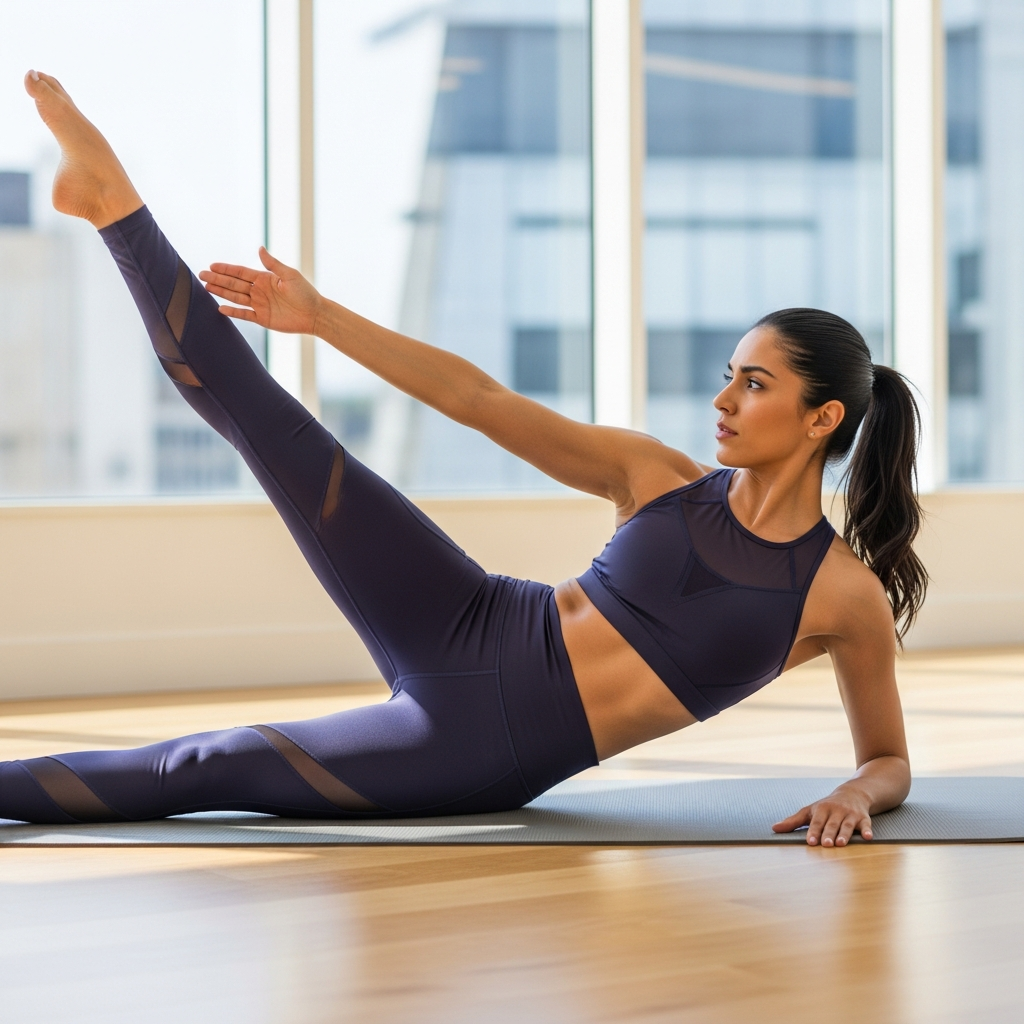
So what does that look like in practice? At its core, Pilates is a low-impact exercise method that emphasizes precise movement, proper alignment, and something called the “powerhouse” – which is basically a fancy term for your deep core muscles, including your pelvic floor, lower abdominals, and the muscles surrounding your spine. Think of your powerhouse as the foundation of a house. Everything else – your arms, legs, the movements you see from the outside – those are the walls and the roof. If the foundation is shaky, the whole structure is compromised.
The Form-First Philosophy (And Why It Feels Counterintuitive)
This is where Pilates starts to feel genuinely strange to people who come from a traditional gym background. We’re wired to think that more effort equals more results. Push harder. Add weight. Burn more. Pilates asks you to… slow down and pay attention instead.
That can feel almost frustrating at first. You’re doing ten repetitions instead of thirty, moving through each one so deliberately that you’re actually thinking about which muscle is firing and why. It feels like you’re not working hard enough. But here’s the analogy that might help: imagine you’re learning to type. You could bang away at the keyboard as fast as possible and technically hit all the letters – or you could slow down, position your hands correctly, and build muscle memory that makes you genuinely faster and more efficient over time. Pilates is the second approach.
Form-first training means that every repetition is intentional. Studios in Mesquite that emphasize this approach aren’t being precious about it – there’s real science behind why sloppy movement creates sloppy results, and sometimes injury. Your nervous system learns patterns. Practice a movement incorrectly a hundred times and you’ve essentially taught your body the wrong lesson.
The Six Principles Worth Knowing
Joseph Pilates outlined six core principles, and they’re worth at least a passing familiarity because you’ll hear these terms thrown around in class. They are: concentration, control, centering, flow, precision, and breathing.
Concentration means you’re mentally present in each movement – not mentally drafting your grocery list. Control means no momentum, no flopping around between reps. Centering brings everything back to that powerhouse foundation. Flow is about smooth, connected movement rather than jerky transitions. Precision is really just another word for “do it right, not just fast.” And breathing – actually, breathing in Pilates is its own weird world. You typically exhale on exertion, which is the opposite of what many people do instinctively, and the breath pattern actively engages your core muscles when done correctly.
Don’t worry if that all sounds like a lot to hold in your head simultaneously. It is. Beginners usually focus on one or two principles at a time, and that’s completely normal.
Mat vs. Reformer – A Quick Clarification
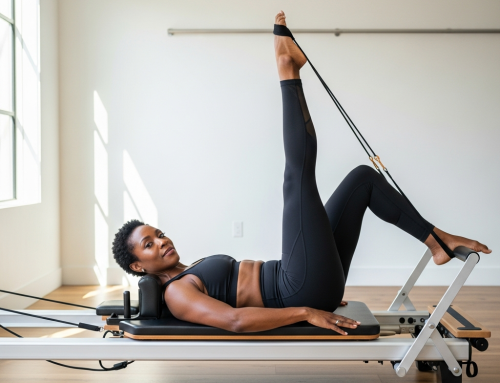
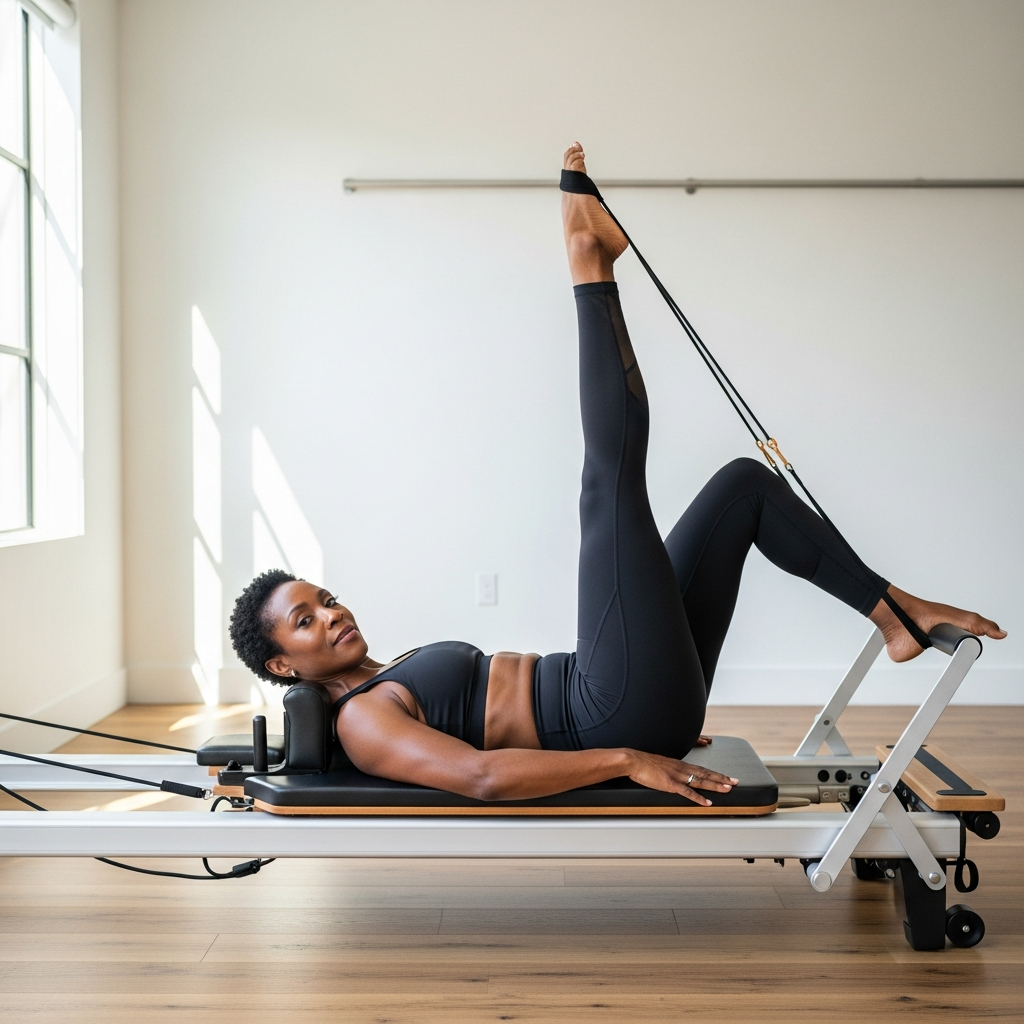
You’ll see Mesquite studios offering both mat classes and reformer sessions, and people often assume the reformer – that sliding bed-like machine with springs and straps – is the “advanced” version. It’s actually more nuanced than that. The reformer provides resistance and support simultaneously, which can actually make certain movements more accessible for beginners while also allowing for much greater challenge for experienced practitioners. Mat work strips away all that support, which requires your stabilizing muscles to work harder on their own.
Neither is superior. They’re just different tools – kind of like how a cast iron skillet and a nonstick pan both have their place in your kitchen depending on what you’re making.
What to Actually Look For When You Walk In the Door
Here’s something most people don’t tell you: the quality of a Pilates studio has almost nothing to do with how fancy it looks. A spotless reception area and mood lighting mean exactly nothing if the instructor can’t tell the difference between a posterior pelvic tilt and a neutral spine. So before you commit to any studio in Mesquite, take a good look around during your first visit.
Watch what happens when someone’s doing an exercise incorrectly. Does the instructor actually stop and correct them – with specific, anatomical language – or do they just smile and keep counting repetitions? That’s your answer right there.
Ask about instructor certifications, too. There’s a big difference between a weekend workshop certificate and a comprehensive training program through BASI, Stott, or the Pilates Method Alliance. It’s not about being a snob. It’s about knowing whether the person guiding your body through loaded movement actually understands what they’re looking at.
The First Class Tells You Everything
Your very first session should feel almost uncomfortably focused on the basics. If an instructor jumps you straight into fancy footwork or advanced reformer sequences without spending real time on your breath, your neutral spine, and your deep abdominal connection… that’s a red flag waving pretty hard.
Good form-focused studios will often do a private intake session before you ever set foot in a group class. It might feel like overkill – you might even feel slightly impatient, honestly – but that’s exactly where the magic happens. They’re mapping your movement patterns, your imbalances, your history. The instructor who knows that your right hip flexor is chronically tight is going to give you a completely different experience than one who’s just running through a playlist.
Make Scapular Stability Your New Obsession
Okay, here’s one of those insider things. Ask any serious Pilates instructor what they see going wrong most often with beginners, and nine times out of ten they’ll mention the shoulder girdle. People dump into their upper traps, their shoulders creep up toward their ears, and suddenly an exercise meant to target the deep core is just… creating neck tension.
So pay attention to your scapulae – your shoulder blades. In almost every Pilates movement, they should be drawing gently down and together before you initiate anything else. Not clenched, not forced. Just set. That one cue alone will change how every single exercise feels. Seriously. Try it right now, sitting wherever you are. Shoulders down, lightly connected to your back pockets. Different, right?
How to Get More Out of Every Session
A few things that genuinely make a difference
Arrive five minutes early and mentally run through the cues you’re trying to internalize. Not to warm up physically – just to prime your nervous system. Athletes do this constantly.
Talk less, feel more during class. It sounds simple but most people are spending half their mental energy keeping up with the sequence rather than actually noticing what their body is doing. Slower is usually better. If you feel nothing in your glutes during a bridge, you’re probably compensating somewhere.
Take notes after class – even a voice memo on your phone. “Today I finally felt my lats engage on the long stretch.” That kind of thing. It sounds obsessive but your body learns faster when your brain is paying attention.
And don’t skip the stretching portions at the end because you need to get to your car. That’s where a lot of the neuromuscular repatterning actually consolidates. It’s not filler.
How This Connects to Weight Loss (Because That Matters Here)
At a medical weight loss clinic, we see this all the time – people underestimate Pilates because it doesn’t feel like a calorie-torching workout in the traditional sense. But here’s what the research actually shows: the postural improvements, the functional strength, and the body awareness you develop through proper Pilates practice make every other form of movement more efficient. Your walks get more purposeful. Your strength training improves. You stop moving in ways that lead to injury and derail progress.
Form and control aren’t just Pilates philosophy. They’re the foundation that makes sustainable movement possible – which, if you’re working toward a healthier weight, is exactly what you need more of.
When Your Body Just Won’t Do What Your Brain Is Telling It To
This happens to literally everyone. You’re lying on the reformer, the instructor says “engage your core without holding your breath,” and your brain kind of… short-circuits. You either grip everything so hard you forget to breathe, or you breathe fine but your core goes completely offline. Doing both simultaneously feels, at first, like trying to pat your head and rub your stomach.
The solution isn’t to try harder. It’s to slow down more than you think is necessary. Ask your instructor to let you practice just the breathing pattern before adding any movement. Mesquite studios that emphasize form over pace will give you that space – and if yours doesn’t, speak up. You’re paying for this.
The Flexibility Gap (And Why It’s Not What You Think)
A lot of people avoid Pilates because they think they’re “not flexible enough.” Which is a little like avoiding swimming lessons because you don’t know how to swim yet. The real issue is that inflexibility in Pilates tends to show up in unexpected places – tight hip flexors that hijack your lower back, for instance, or limited thoracic mobility that makes spinal articulation feel like trying to bend a wooden plank.
Here’s what actually helps: tell your instructor exactly where you feel restricted. A good instructor will modify the movement so you’re working within your actual range – not some idealized range you don’t have yet. Those modifications aren’t the “easy version.” They’re often where the most important work happens.
Neutral Spine – The Concept That Confuses Almost Everybody
Ask ten beginners to find neutral spine and you’ll get ten different interpretations, most of them wrong. Some people flatten their backs completely into the mat (that’s an imprint, not neutral). Others exaggerate the arch until they’re basically doing a mini backbend. Neutral is that subtle, natural curve – and finding it consistently is genuinely tricky in the beginning.
A trick that actually works: lie on your back and imagine a small glass of water balanced on your lower abdomen. Neutral is the position where that imaginary glass wouldn’t spill either direction. Silly mental image, but it works. Your instructor can also place a hand under your lower back briefly to help you feel where neutral actually lives. Don’t be shy about asking.
Reformer Springs – The Learning Curve Nobody Warns You About
The reformer looks intimidating. It kind of is, for about two sessions. What trips people up isn’t the movements themselves but understanding spring resistance – specifically, that lighter springs are often harder, not easier. Less resistance means your muscles have to do more stabilizing work with less support. Many beginners request heavier springs thinking it’ll be simpler, then wonder why their form is falling apart.
Trust your instructor’s spring recommendations even when they feel counterintuitive. And if you’re taking classes at multiple Mesquite studios, know that spring tension isn’t universal – different reformer brands have different resistance levels, so what felt like “medium” one place might be quite different somewhere else.
The Comparison Trap
You’re in class. The person on the reformer next to you is doing some impossible-looking variation with perfect form, and suddenly you feel like you wandered into the wrong room. This is almost universal – and it’s almost universally counterproductive.
Pilates has a way of humbling people who are strong in other disciplines. Runners discover they have no lateral stability. Weightlifters find out their core is compensating in ways they never noticed. So that person next to you? They probably have their own version of something they’re quietly struggling with.
Focus on what you feel, not what you look like doing it.
When Progress Feels Invisible
This one’s real, and it deserves honesty. Pilates progress is often internal before it’s visible. You’ll feel it in your posture during a long work meeting, or notice you picked something up off the floor without that familiar lower back twinge. These aren’t dramatic moments. They don’t make great before-and-after photos.
But they accumulate. And somewhere around weeks six to eight – for most people, anyway – something clicks. A movement that felt completely foreign suddenly makes sense in your body. That’s the shift worth waiting for.
What to Actually Expect in the First Few Weeks
Let’s be honest for a second. If you walk into your first Pilates class expecting to feel graceful and in control… that’s probably not what’s going to happen. And that’s completely fine. Most people spend the first couple of sessions just trying to figure out where their ribcage is supposed to be and why their instructor keeps saying “engage your core” when they thought they *were* engaging it.
That’s normal. That’s the process.
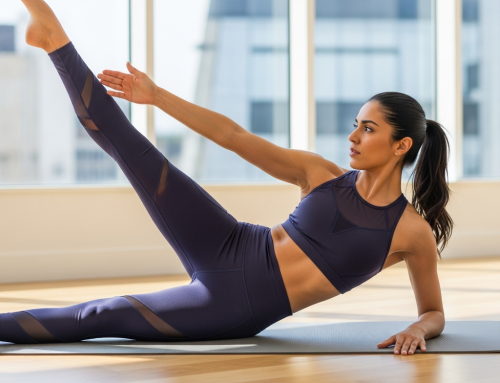
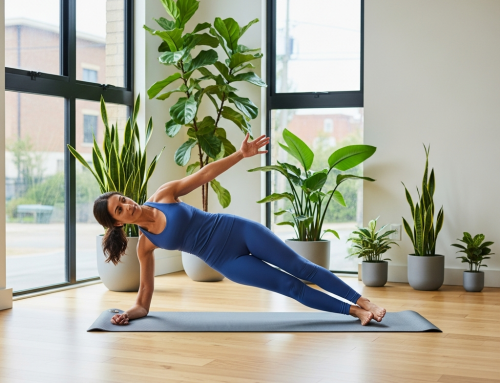
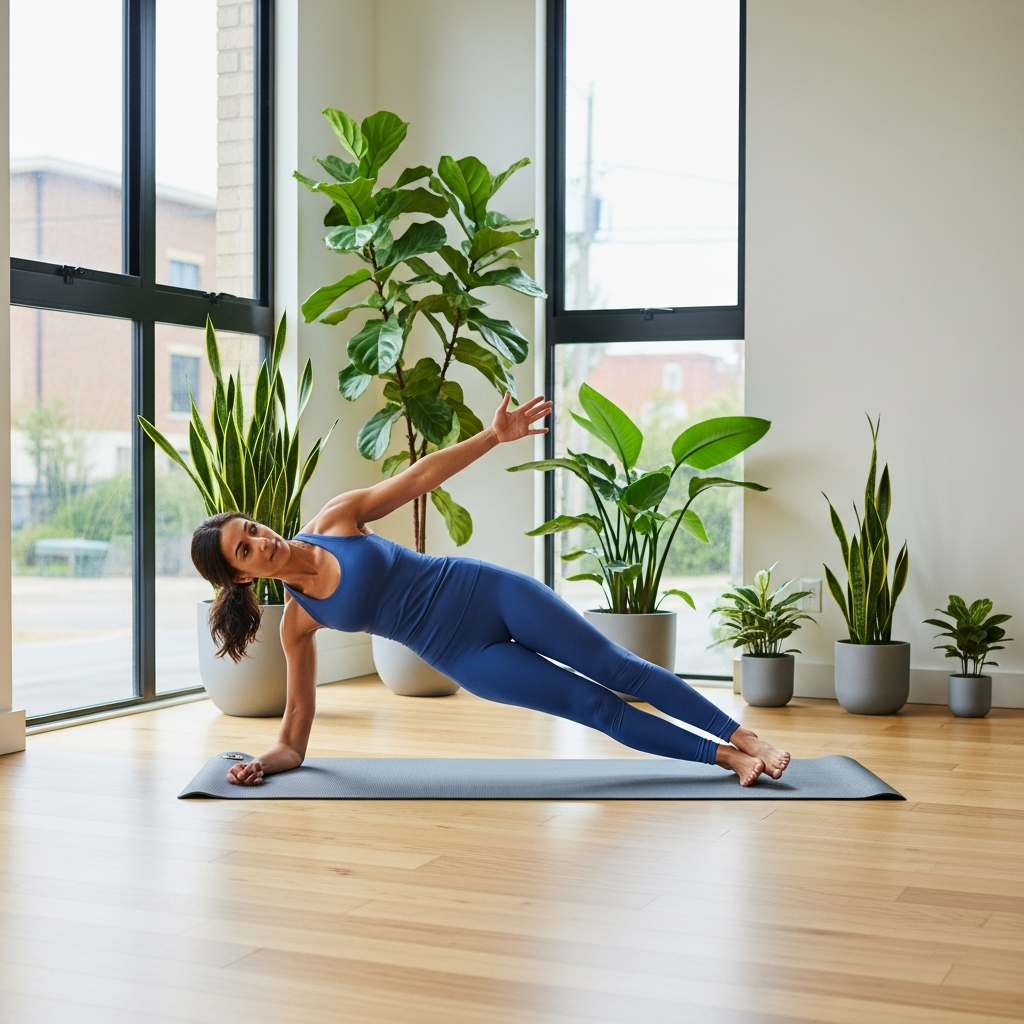
The first two to four weeks are really about learning a new language – the language of your own body. You’ll be introduced to movements that look deceptively simple from the outside. A leg circle. A single-leg stretch. A simple plank variation. And you’ll realize pretty quickly that “simple” doesn’t mean easy, especially when someone’s actually watching your form and asking you to *slow down*.
Don’t get discouraged if you leave those early sessions feeling a little mentally foggy, like your brain worked as hard as your muscles. It did.
When You Might Start Noticing Changes
Here’s where we want to be real with you, because nobody benefits from inflated promises.
Most people start noticing small shifts somewhere around weeks three to six. Not dramatic transformations – more like… you stood at the kitchen counter and realized your posture felt different. Or you got up from your desk without that familiar tightness in your lower back. These are the quiet wins, and they’re actually significant because they mean the movement patterns are starting to stick.
Visible physical changes take longer. Typically eight to twelve weeks of consistent practice before most people see meaningful differences in muscle tone and body composition – and that timeline assumes you’re showing up regularly (think two to three sessions per week) and pairing your movement with reasonable nutrition habits. Anyone telling you otherwise is overselling it.
Actually, that’s worth repeating. Consistency matters far more than intensity in Pilates. Two solid sessions per week over three months will do more for you than six frantic sessions in two weeks followed by a long break.
Finding a Studio That Actually Fits Your Life
This is the practical stuff people don’t always think about until they’ve already signed up somewhere. When you’re searching for Pilates near you in the Mesquite area, it’s worth asking a few questions before committing to anything.
What’s the class size? Smaller group classes – usually eight to twelve people max – mean your instructor can actually see you and correct your form. That matters a lot, especially early on. A packed room of twenty-five people where the instructor is mostly watching from the front isn’t going to give you the same experience.
Do they offer beginner-specific classes or at least foundations sessions? Jumping straight into an intermediate class can be frustrating and, honestly, counterproductive if you’re building bad habits from the start because the pace is too fast to focus on form.
And – this one’s important – do you feel comfortable there? The vibe of a studio matters more than people admit. If you dread going, you won’t go.
Your Next Practical Steps
If you’re thinking about getting started, here’s a simple way to approach it without overthinking.
Look for studios that offer a trial class or introductory package. Most reputable Pilates studios do, and it lets you get a feel for the teaching style and space before you commit to anything longer-term. Go to that first class with zero expectations about performance. Just show up, listen, and notice how your body responds.
Tell your instructor about any injuries or physical limitations before class starts – a knee that gives you trouble, a history of back pain, whatever it is. Good instructors modify. That’s part of the job.
Then give it six weeks before you decide if it’s working. Not two sessions. Six weeks. That’s enough time to move past the awkward learning curve and start feeling whether it’s something that genuinely suits you.
Pilates isn’t a quick fix – and the studios in Mesquite that focus on form and control aren’t going to pretend it is. What it is, though, is a sustainable, low-impact practice that tends to earn real loyalty from people who stick with it long enough to feel the difference. That’s not nothing.
Finding a movement practice that actually *sticks* – one that you look forward to instead of dreading – is honestly one of the best things you can do for your long-term health. And if what you’ve read here resonates with you, there’s a good chance Pilates might be that thing for you.
Here’s what we love most about the studios and instructors doing this work right here in Mesquite: they’re not trying to break you down. They’re trying to build you up. Slowly, deliberately, with real attention to how your body moves. That’s… rare, actually. In a fitness world full of “go harder, push through, no pain no gain,” finding a space that says “let’s slow down and get this right” can feel almost revolutionary.
And the form-and-control emphasis isn’t just about being careful. It’s about being effective. Think of it like learning to drive – you could technically mash the gas and figure things out as you go, but learning the fundamentals first means you’ll go farther, safer, with way less chance of something going sideways. Your body deserves that same thoughtfulness.
This Is for Real People, Not Just “Fitness People”
If you’ve been sitting on the sidelines of your own health – maybe after an injury, maybe after years of feeling like traditional workouts just weren’t made for your body – Pilates has a way of meeting you exactly where you are. That’s not marketing fluff. That’s what the controlled, low-impact nature of the practice actually allows for. Your pace. Your range of motion. Your starting point.
And you don’t have to have it all figured out before you walk through the door.
What Comes Next Is Up to You
Maybe you’re already ready to find a local studio and get on the mat. Maybe you’re still a little unsure – wondering if it’ll be too hard, or too easy, or whether your body will cooperate. That’s completely normal. Most people feel some version of that before trying something new.
What we’d gently encourage you to do is just… ask. Reach out. Whether that’s calling a studio to ask a few questions before committing, or connecting with a wellness provider who can help you think through what kind of movement makes sense for where your health is right now – you don’t have to figure this out alone.
At our clinic, we work with people every day who are navigating exactly these kinds of questions. We’re not here to push you toward anything that doesn’t fit your life. We’re here to help you think it through – and if Pilates turns out to be a great complement to your wellness plan, we’d love to help you get there in a way that actually supports your goals.
So if you’ve got questions – about movement, about where to start, about how something like Pilates fits into a bigger picture of feeling better – our door is open. Genuinely. No pressure, no sales pitch. Just a real conversation with people who care about helping you feel good in your body.
Because that’s what all of this is really about. Not perfect form for form’s sake. Not fitness as punishment. Just feeling stronger, more capable, and more at home in yourself.
That’s worth showing up for.