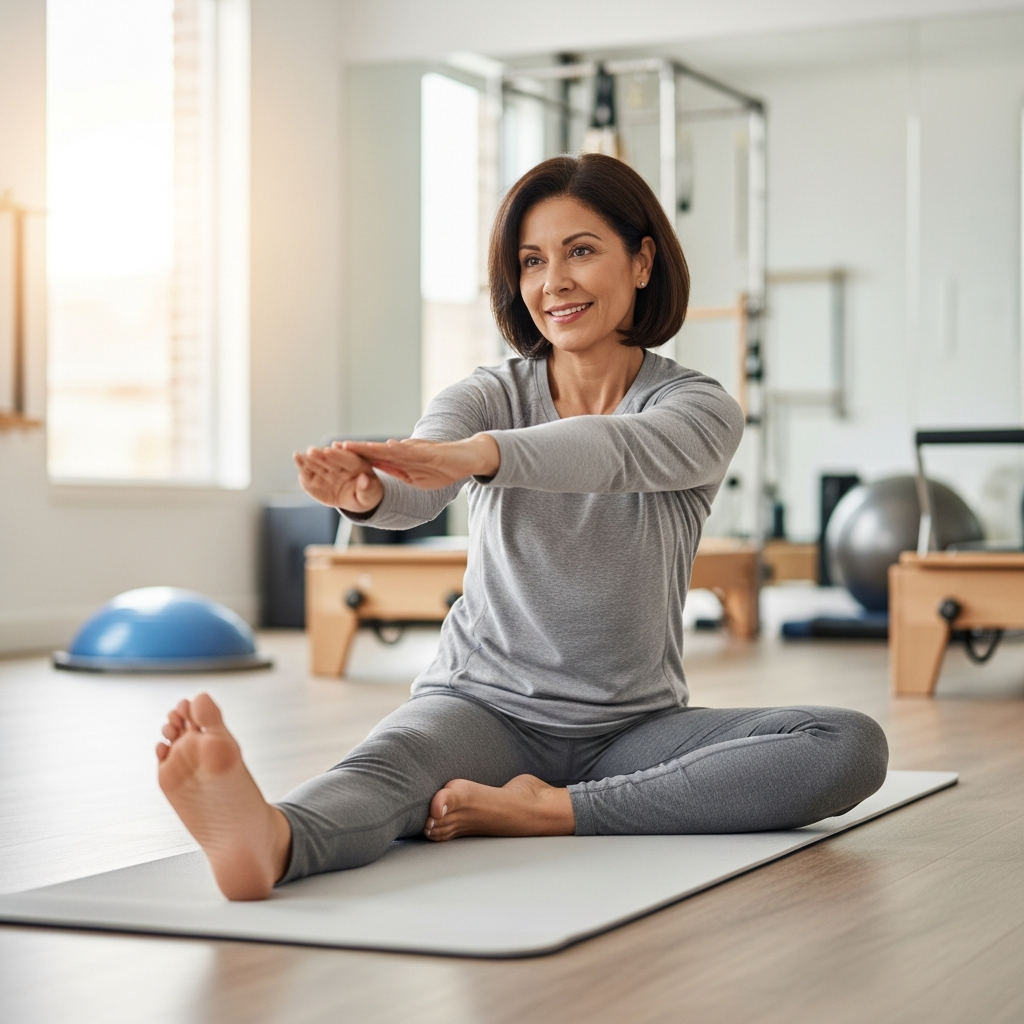
How Pilates Studios in Grand Prairie Create a Community Feel
Picture this: You walk into a gym for the first time, you’re already a little nervous, and within about thirty seconds you realize that everyone seems to know exactly what they’re doing except you. The equipment looks like it was designed by someone who hates beginners. Nobody makes eye contact. You find a treadmill in the corner, put your headphones in, stare at the wall for forty minutes, and then drive home feeling… honestly, kind of lonely. Sound familiar?
Most of us have been there. And a lot of us quietly gave up on fitness because of it.
Here’s the thing that doesn’t get talked about enough – the *reason* you show up consistently to anything isn’t really about the workout itself. It’s about how that place makes you feel when you walk through the door. Whether you feel seen, welcomed, known. Whether someone notices if you’re not there. That’s the invisible engine behind real, lasting lifestyle change, and it’s something that the best Pilates studios in Grand Prairie seem to have figured out in a way that traditional gyms just… haven’t.
Grand Prairie has this interesting quality to it. It’s a city that genuinely feels like a community – neighbors actually wave at each other, local businesses remember your name, there’s a real sense of place here that a lot of sprawling Texas suburbs have lost. So maybe it shouldn’t be surprising that the Pilates studios rooted here have absorbed some of that same energy. They’ve built something that goes well beyond a place to work your core.
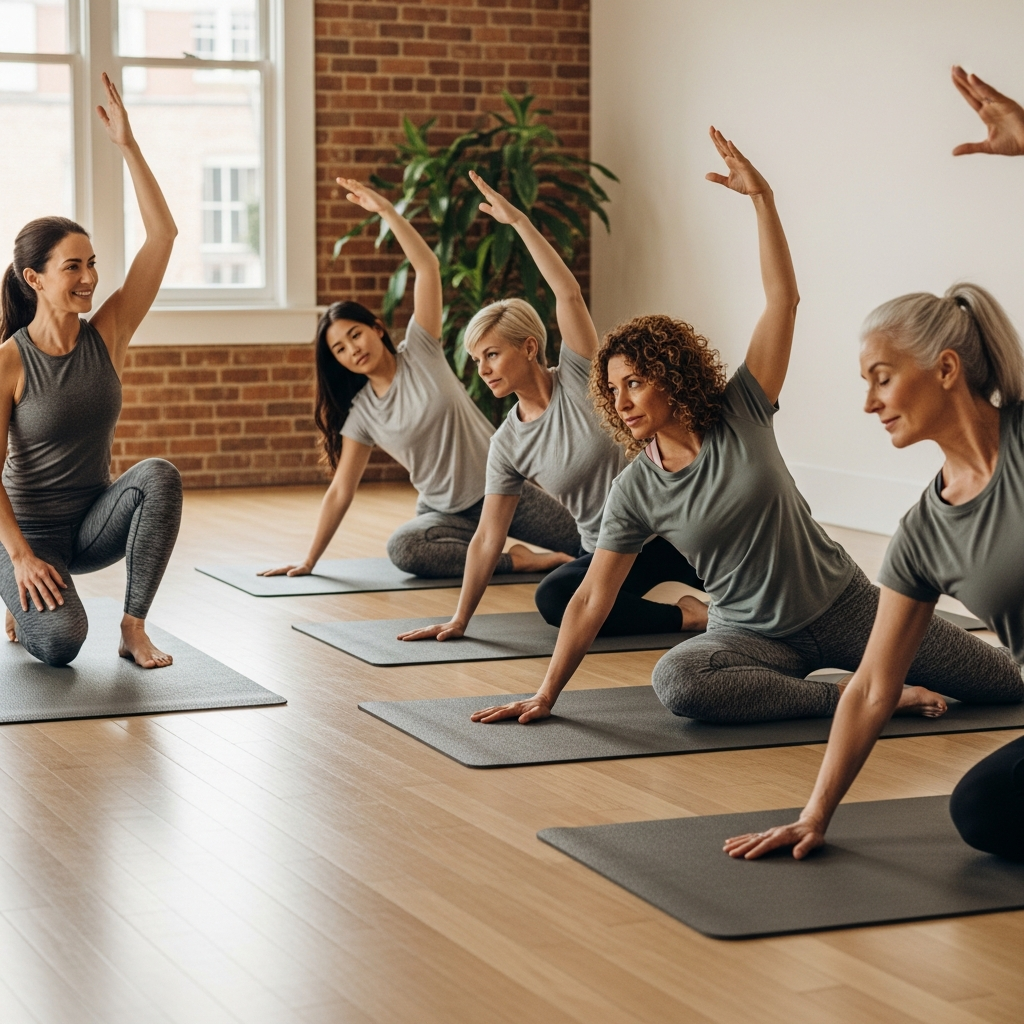
Actually, that reminds me of something worth saying upfront: Pilates, by its very nature, sets the stage for connection in ways that solo gym workouts don’t. The classes are smaller. The movements require a certain amount of vulnerability – you’re focusing, breathing out loud, occasionally wobbling on the reformer in front of strangers. That shared experience of trying something genuinely challenging? It’s a bonding mechanism. Before you’ve even said a word to the person next to you, you’ve already been through something together.
But studios don’t accidentally become communities. Someone chooses to make them that way. Instructors who learn your name *and* your goals. Class formats that invite conversation rather than shut it down. Little rituals – a check-in question before class, a quick celebration when someone nails a movement they’ve been working on for weeks – that add up to something much larger than the sum of their parts. The difference between a studio that feels like a community and one that just feels like a room full of people doing the same exercise is entirely intentional.
And here’s why this matters specifically to you, not just in some abstract “wellness is important” way. Research consistently shows that social connection is one of the strongest predictors of whether someone sticks with an exercise routine long-term. Not motivation. Not willpower. Not even how much you enjoy the workout itself. Connection. When you have people expecting to see you on Tuesday morning, when you’re genuinely looking forward to chatting with your instructor before class – suddenly fitness isn’t a chore you have to white-knuckle through. It becomes a part of your life you actually protect.
For anyone in Grand Prairie who’s tried and struggled to make exercise a consistent habit – and let’s be honest, most of us have – understanding what makes certain studios feel different could genuinely change things. Not because Pilates is magic (though your core will absolutely disagree after your first session), but because belonging somewhere is powerful. Really, genuinely powerful.
So in what follows, we’re going to pull back the curtain on how Pilates studios in Grand Prairie build that community feel from the ground up. We’ll look at the instructor relationships that keep people coming back, the class structures designed to connect rather than isolate, the events and rituals that turn regular clients into something closer to friends, and what all of this means for your own health goals. Whether you’re completely new to Pilates, curious about trying something different, or just wondering why your friend hasn’t stopped talking about her studio – you’re in the right place.
Pull up a chair. This is a good one.
What Makes a Studio Feel Like Home (And Why It Matters)
Here’s something that might seem obvious once you hear it but isn’t really talked about enough – a Pilates studio isn’t just a room with reformers in it. I mean, technically it is. But the difference between a space where you show up, sweat, and leave versus one where you actually *want* to be… that’s something else entirely.
Think of it like your favorite local coffee shop versus a corporate chain. The coffee might be similar. The chairs are probably comparable. But one of them knows your order, asks about your kids, and makes you feel like a regular. The other hands you a cup with your name spelled wrong. Same product, completely different experience.
That’s essentially what we’re talking about when we say “community feel.”
The Weird Science Behind Group Movement
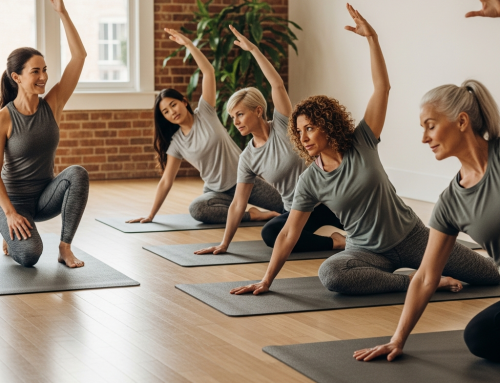
Here’s something genuinely fascinating – and a little counterintuitive. You might assume that working out around strangers would feel awkward or distracting. And honestly? At first, it often does. But researchers who study social behavior have found that moving in synchrony with other people actually creates a sense of bonding. There’s even a term for it: synchrony-induced bonding.
When you’re breathing together, moving together, shaking through that ab series together… your brain starts registering those people as *your people*. It’s the same reason soldiers march in step, why we clap along at concerts, why dancing with someone feels more intimate than just standing next to them. Pilates – with its precise, flowing movements and shared breathing cues – is almost accidentally perfect for this.
Grand Prairie studios seem to understand this intuitively, even if their instructors couldn’t necessarily cite the research paper.
Small Class Sizes Are Doing More Work Than You Think
One of the structural reasons Pilates studios tend to feel cozier than, say, a big-box gym is pure math. Most reformer Pilates classes cap out somewhere between 8 and 14 people. Compare that to a spin class with 40 cyclists or a gym floor where hundreds of strangers orbit each other without ever making eye contact.
Smaller numbers mean your instructor actually learns your name. They notice when you’ve been gone two weeks. They remember that your left hip is tighter than your right. That’s not a small thing – that’s the difference between feeling like a customer and feeling like a member of something.
Actually, that reminds me of something worth mentioning here. A lot of people who walk into a Pilates studio for the first time come from big gym backgrounds where anonymity was the default. The transition to being *seen* can feel a little uncomfortable at first. That’s normal. Give it a few sessions.
The Instructor as Community Anchor
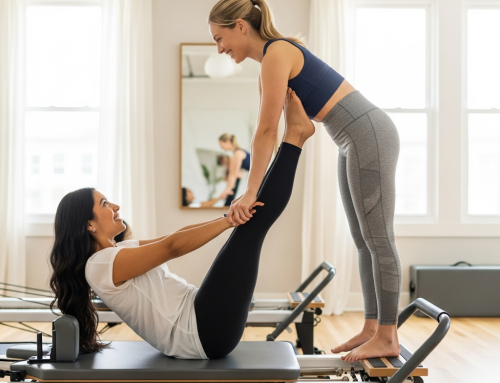
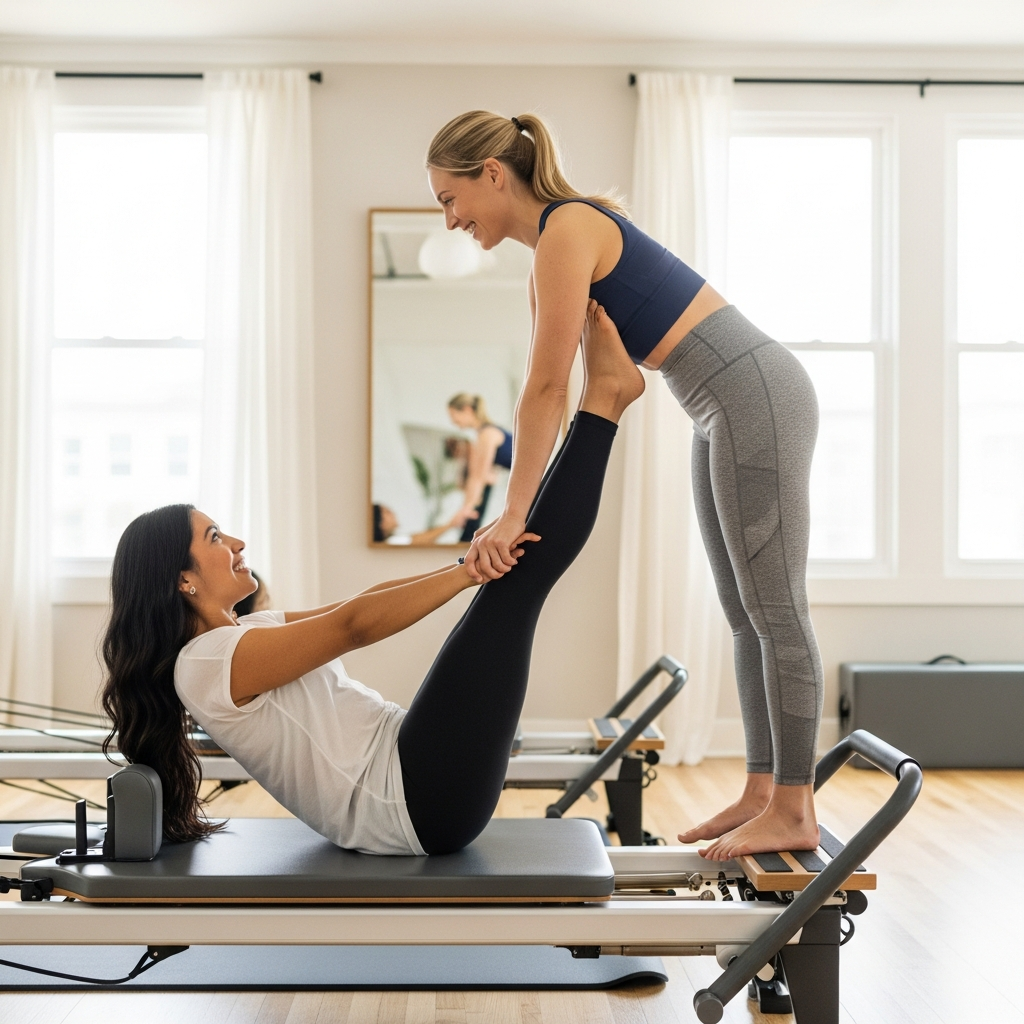
If the studio is a neighborhood, the instructor is basically the mayor – or maybe more like a really good bartender who also knows a lot about your lumbar spine. They set the tone for everything. The way they greet people at the door, how they handle a newcomer fumbling with the footbar, whether they create space for a quick laugh between exercises… all of it trickles down into how clients treat each other.
It’s worth noting that Pilates instruction itself is more relational than a lot of fitness modalities. Because the work is so detail-oriented – small adjustments, subtle cues, tactile corrections – there’s an inherent intimacy built into the teaching. You’re not just following someone doing jumping jacks at the front of the room. Your instructor is watching *you*, adjusting *you*, talking to *you* specifically.
Why Grand Prairie Is Its Own Thing
There’s something specific about communities like Grand Prairie that shapes how local studios operate, too. It’s a city with real neighborhood identity – people tend to stay, to know each other, to care about the local businesses they support. Studios here aren’t really competing with faceless corporate wellness brands. They’re weaving themselves into the fabric of a place where people already feel a sense of connection.
That context matters. A Pilates studio in Grand Prairie isn’t just selling fitness. It’s offering a place to belong, which – if we’re being honest about what most of us are actually looking for when we sign up for that first class – might be the whole point.
Look for Studios That Actually Remember Your Name
This sounds obvious, but it’s worth saying out loud – a lot of fitness spaces *claim* community while running a completely transactional operation. Walk in, sweat, walk out, repeat. That’s not community. That’s a gym membership with extra steps.
When you’re checking out Pilates studios in Grand Prairie, visit during a class transition time – that awkward 10-15 minutes when one class is leaving and the next is arriving. Watch how the instructor behaves. Are they scrolling their phone? Or are they talking to people, asking about someone’s back, remembering that one student had a job interview last week? That 10-minute window tells you everything about the culture that a polished website never will.
Ask About Their New Member Process Specifically
Here’s something most people don’t think to ask: “What happens after I sign up?” A studio serious about community doesn’t just hand you a schedule and wish you luck. They pair you with someone. They check in after your first few sessions. They have a name for their onboarding – something intentional, not accidental.
Studios like the better ones you’ll find around the Grand Prairie area often run introductory small-group sessions specifically designed to help newer clients get comfortable before jumping into mixed-level classes. That’s not just good pedagogy – it’s relationship-building built into the structure. Ask for it by name if you don’t see it advertised.
Get Into a Consistent Class Time and Protect It
This is the actual secret to feeling like you belong somewhere. Not trying every class. Not being flexible with your schedule. Picking one time slot and showing up week after week like it’s a standing appointment with people who matter.
You know how you recognize the regulars at your favorite coffee shop? How there’s a whole unspoken familiarity that builds over months? Pilates classes work exactly the same way. The Wednesday 9am crowd becomes *your* Wednesday 9am crowd. You know who always grabs the reformer by the window. You notice when someone’s been gone for two weeks. That consistency – honestly, it’s irreplaceable.
Participate in the Awkward Stuff
Most community events feel a little awkward at first. The holiday workshops. The “bring a friend” open houses. The informal post-class stretching sessions where someone inevitably starts chatting. Go anyway.
Grand Prairie studios that are genuinely invested in building something real will host these touchpoints regularly – not just around January when everyone’s motivated. Look for studios that run community events in March and September too, when there’s no cultural pressure to be fitness-focused. That’s when you know it’s genuine.
And here’s something nobody tells you – showing up to these events feeling slightly uncomfortable is actually proof you’re doing it right. Belonging takes a little time to earn, and that’s not a flaw in the system.
Use the Studio’s Social Spaces Intentionally
A lot of studios have a lobby or common area that’s essentially being wasted. People scroll their phones, avoid eye contact, wait for class to start. Don’t be that person. Actually, use that space.
Introduce yourself to whoever’s sitting near you before class. Ask the instructor one specific question after – not a vague “great class!” but something real, like “I noticed you cued that exercise differently today, what were you targeting?” Instructors who care about their students *light up* for questions like that. You become memorable in the best possible way.
Don’t Overlook the Smaller Studios
There’s a temptation to gravitate toward the biggest, flashiest option – the one with the most equipment, the most Instagram presence. But in Grand Prairie’s Pilates scene, some of the tightest communities exist in smaller boutique spaces with 8-10 reformers max. Smaller class sizes mean instructors learn your movement patterns, your limitations, your goals. They notice your progress in a way that’s genuinely personal.
When a class is capped at eight people, the instructor knows by Tuesday if you didn’t come Monday. That kind of accountability? That *is* community. It’s built right into the math.
Be Patient With Yourself Here
Finding your people in a new fitness space takes about 6-8 consistent weeks before it starts feeling natural – not two visits. Give it real time before you decide whether a studio fits. The connections that make Pilates feel like something you genuinely want to show up for rather than something you’re forcing yourself to do… they’re worth waiting a few weeks for.
When the “Community Feel” Doesn’t Feel That Way at First
Let’s be honest about something: walking into a Pilates studio for the first time – especially one where everyone seems to know each other – can feel genuinely intimidating. You’re not imagining it. There’s a whole social ecosystem already in place, and you’re the new person trying to figure out where you fit. That’s real, and it’s worth talking about.
Most people expect to walk in, feel instantly welcomed, and leave with three new friends. Sometimes that happens! But more often, it takes a few weeks before the studio starts to feel like *yours*. And if you quit before that happens, you’ll never get there.
The Timing Problem Nobody Talks About
Here’s something that trips people up constantly: they come in right as class starts, squeeze through a workout, and bolt for the door the second it ends. And then they wonder why they don’t know anyone.
Community happens in the margins. It’s the five minutes before class when someone complains about parking. It’s the casual “how’d that modification feel?” conversation after. If you’re treating the studio like a drive-through – in and out, transaction complete – you’re going to feel like an outsider indefinitely.
The fix is almost embarrassingly simple. Arrive ten minutes early. Linger five minutes after. That’s it. You don’t have to be a social butterfly. You just have to be… present. Give the connections a chance to form on their own.
Feeling Like Everyone Else Is More Advanced
Oh, this one. This is probably the most common silent struggle in any Pilates studio, honestly. You’re watching the person next to you flow through a teaser like it’s breathing, and you’re just trying not to fall off the reformer. It feels like everyone has some secret you don’t have access to yet.
Here’s what’s actually true: every single person in that room had a first class. Many of them were terrified. A good portion of them *still* feel uncertain about certain exercises, they’ve just gotten better at hiding it.
Grand Prairie studios that genuinely prioritize community make a point of celebrating beginner milestones – sometimes publicly, sometimes just in a quiet instructor-to-student moment. Don’t be too proud to accept that acknowledgment when it comes your way. And don’t be afraid to tell your instructor you’re struggling. That honesty is actually what opens doors to connection, because suddenly you’re not performing competence. You’re just being a person.
Group Class Anxiety vs. Private Session Isolation
This is a real tension. Some people do better starting with private sessions – they need to learn the equipment, understand the vocabulary, build some confidence before they’re ready to be in a room full of people. That’s completely valid. But here’s the catch: if you stay in private sessions indefinitely, you miss the community aspect almost entirely.
The sweet spot most Grand Prairie studios recommend is a handful of private sessions to get your bearings, then transitioning into small group classes where the instructor-to-student ratio is still pretty intimate. It’s a gentler on-ramp than jumping straight into a packed reformer class. Actually, many studios offer new member intro packages specifically designed for this transition – worth asking about if you’re on the fence.
When Your Schedule Makes Consistency Feel Impossible
Irregular schedules are the enemy of community-building, full stop. If you’re bouncing between Tuesday morning one week and Saturday afternoon the next, you’re essentially meeting a new group of people every single time. It’s hard to build anything when the cast of characters keeps changing.
This isn’t about willpower – it’s about strategy. Try to anchor yourself to one or two recurring class times, even if your week is chaotic otherwise. Booking in advance helps, too. When you’ve already committed the slot, you’re far more likely to show up. And showing up consistently – to the same class, with the same instructor, alongside the same regulars – is genuinely the fastest way to stop feeling like a stranger.
The Quiet Person’s Dilemma
Not everyone is naturally chatty. Some people are introverted, some are exhausted, some just aren’t “small talk people.” And that’s perfectly fine – good Pilates studios don’t require you to perform extroversion.
But even quiet people can make eye contact. Smile at the person next to you. Give a genuine “that looked great” nod. Community doesn’t require words so much as consistent, small acts of acknowledgment. Over time, those tiny moments add up to something that actually feels warm and real.
What to Actually Expect When You Walk Through the Door
Let’s be honest about something most fitness marketing glosses over: the first few weeks at a new Pilates studio can feel a little awkward. You’re learning names, figuring out where to put your stuff, trying to remember if you’re supposed to bring your own grip socks (yes, usually – just check with your specific studio). The community feeling that everyone talks about? It doesn’t always hit immediately, and that’s completely normal.
Think of it like starting a new job. On day one, you’re mostly just trying not to look lost. By week three, you know where the good parking spots are. By month two, you actually look forward to seeing the same faces. Community works on that kind of timeline – not a single class timeline.
So give yourself some grace during that initial adjustment period.
The First Month: Getting Your Bearings
Your first four weeks are really just about showing up consistently. That’s it. Don’t put pressure on yourself to know everyone’s name or feel like you belong yet. Focus on learning the reformer (or the mat work, or the tower – whatever equipment your studio uses), getting familiar with how classes flow, and just… being present.
Most Grand Prairie studios offer some version of an intro package or beginner series, and there’s a reason for that. Pilates has its own language – neutral spine, imprinting, the hundred – and it takes a minute to get fluent. The instructors aren’t going to judge you for asking what “scoop your abs” actually means. Actually, they love that question. It means you’re paying attention.
You might chat with one or two people after class. You might not. Both are fine.
Months Two and Three: When It Starts to Click
Here’s where things usually start to shift. You’ve got a regular class or two that fits your schedule, you recognize the instructor’s cues before they finish saying them, and someone’s saved you a reformer near theirs. Small things – but they add up.
This is also around the time you might start noticing your body responding differently. More core stability, better posture when you’re sitting at your desk, maybe less lower back tension. The physical and the social tend to develop on similar timelines, weirdly enough.
If you’re interested in going deeper into the community side of things, this is a good window to look into workshops or specialty classes your studio might offer. Grand Prairie studios often host things like prenatal Pilates sessions, reformer fundamentals workshops, or even the occasional social mixer. These smaller, more focused settings tend to accelerate the connection-building in ways that regular classes sometimes can’t.
Setting Realistic Goals – For Both Fitness and Connection
It’s worth having a little internal conversation with yourself about what you’re actually hoping to get out of this. Are you primarily coming for the physical benefits? The social element? Both? Neither – maybe you just need somewhere structured to decompress twice a week, which is completely valid.
The studios that create genuine community do so because their members have some sense of intention about being there. You don’t need a grand plan. But knowing whether you want to stay mostly in your own world during class or whether you’re hoping to eventually become a “regular” in the fuller sense – that shapes how you might approach the experience.
And look, if you try one studio and it doesn’t feel right? That’s useful information, not failure. Studios have personalities. Some are quieter and more focused. Some are chatty from the moment you walk in. Grand Prairie has enough options that finding your fit is genuinely possible – it might just take sampling a couple of places.
Your Next Practical Steps
If you haven’t already, most local studios will let you try a class or do a brief intro session before committing to anything. Take them up on it. Come a few minutes early so you’re not rushed. Tell the instructor it’s your first time or that you’re newer to Pilates – they’ll appreciate the heads up and can keep an eye on your form.
After that first class, notice how you feel. Not just physically, but in the room. Did it feel like somewhere you could see yourself returning to? That gut instinct matters more than any feature list or price comparison.
The community is already there. You’re just deciding whether to step into it.
There’s something quietly powerful about what happens inside a good Pilates studio. It’s not just the reformers, the carefully curated playlists, or even the instructors who somehow remember exactly which modification your lower back needs. It’s the person next to you who gives you a nod when you finally nail that teaser. It’s the group text that forms after a Thursday morning class. It’s the weird, wonderful realization that you actually *look forward* to showing up – not because you have to, but because people are expecting you.
That’s community. And in Grand Prairie’s studios, they seem to have figured out how to build it intentionally.
It doesn’t happen by accident, either. The studios that get this right are doing a hundred small things – remembering names, celebrating milestones that might seem small to an outsider but feel enormous to the person living them, creating spaces where a 60-year-old and a 30-year-old can sweat through the same class and leave feeling like they belong to the same tribe. There’s real craft in that. Real care.
And here’s the thing nobody tells you when you’re standing outside a studio for the first time, a little nervous, maybe wondering if you’re “fit enough” to even walk in… the people inside were exactly where you are. Every single one of them. The woman who moves like she was born on a reformer? She showed up for the first time not knowing what a footbar was. The guy who seems completely at ease? He Googled “what to wear to Pilates” the night before his first class. Community starts the moment you walk through the door – it just takes a few visits to feel it.
What makes Grand Prairie’s Pilates scene particularly special is that it reflects the city itself – diverse, unpretentious, genuinely welcoming. These aren’t studios designed to intimidate. They’re designed to include.
And if you’ve been reading this thinking *”that sounds nice, but I don’t know where to start”* – that’s actually the most normal feeling in the world. Starting something new is uncomfortable. It just is. But you don’t have to figure it out alone.
Ready When You Are
If you’re curious about how Pilates might fit into where you are right now – whether you’re managing your weight, recovering from something, dealing with stress, or just ready to feel stronger in your own body – we’d genuinely love to talk. No pressure, no sales pitch. Just a real conversation about what you’re hoping for and whether we might be able to help.
Reach out whenever you’re ready. You can call us, fill out our contact form, or even just send a message with a question. We’ve talked to people at every stage – the ones who are totally ready, the ones who are completely on the fence, and the ones who just needed someone to tell them they were asking the right questions.
Because here’s what we know for certain: the hardest part isn’t the hundred-rep series or the footwork sequence. It’s walking in the first time.
After that? You’ve got a whole community waiting to do the hard parts with you.