Unraveling the Power of Mat Pilates Exercises: A Comprehensive Guide
As the dawn breaks and the hustle and bustle of life begin, you find yourself seeking an oasis of calm and tranquility within your whirlwind of daily activities. You long for a fitness routine that not only tones your body but also calms your mind. You yearn for something more holistic, gentler yet challenging, and mat Pilates exercises might just be the answer.
Welcome to our comprehensive guide on mat Pilates exercises! If you’re a fitness enthusiast who’s ever wondered about the buzz surrounding Pilates, or a curious beginner seeking a new way to enhance your physical and mental health, then this is the perfect place for you.
Pilates is more than just a workout. It’s a mind-body intervention that enhances physical strength, flexibility, balance, and mental awareness. Mat Pilates specifically focuses on controlled breathing during bodyweight resisted movement to build core strength. It’s an effective, adaptable, and approachable practice that is suitable for all ages and fitness levels.
In the following sections of this guide, we’ll take a deep dive into the world of mat Pilates exercises. We’ll shed light on what exactly Pilates is, its origins, and its fundamental principles. We will then take you on a journey through the realm of mat Pilates, exploring its unique elements, benefits, and why it has become such a popular choice among fitness enthusiasts worldwide.
We’ll delve into the different types of mat Pilates classes available, ensuring you have the necessary information to choose what suits you best. From group classes in your local gym or studio to virtual classes that you can follow from the comfort of your own home, we’ve got you covered.
Moreover, we’ll guide you through some key mat Pilates exercises that you can incorporate into your daily routine. Whether you’re a novice or a seasoned practitioner, you’ll find exercises that challenge and inspire you to reach new fitness heights.
We will also discuss how mat Pilates can complement other forms of exercise and how it can be modified to accommodate various physical conditions and limitations. This includes insight into how Pilates has been used in physical therapy and rehabilitation, proving its versatility and adaptability.
Why does this matter to you? Well, in our fast-paced world, maintaining physical health and mental well-being has never been more critical. Mat Pilates offers a holistic approach to fitness that not only caters to your physical needs but also enhances mental clarity and resilience.
By understanding the principles and benefits of mat Pilates, you can make informed decisions about your health and wellness journey. And by learning about the different exercises and classes available, you can find a routine that’s enjoyable, sustainable, and beneficial for your specific needs.
So, whether you’re looking to strengthen your core, improve your flexibility, enhance your mind-body connection or simply seeking a workout routine that fits seamlessly into your lifestyle – mat Pilates could be the perfect fit for you.
Step onto your mat with us as we unravel the transformative power of mat Pilates exercises together. Let’s embark on this exciting journey towards enhanced physical strength, mental clarity, and overall well-being. Stay tuned!
Mat Pilates is a popular form of exercise that has been adored by fitness enthusiasts for decades. Named after its inventor, Joseph Pilates, this regimen leverages gravity and your own body weight to create resistance, making it an effective and versatile workout that can be tailored to suit anyone, regardless of age or fitness level.
The Basics of Mat Pilates
Mat Pilates is performed on a padded mat, either in a class setting or at home using a video or app for guidance. Unlike reformer Pilates which uses a machine, mat work allows you to engage with the Pilates method more directly, focusing on the quality of movements rather than the quantity. Mat Pilates involves various exercises that target different muscle groups but primarily focuses on building core strength.
Core strength is not just about having a flat stomach or six-pack abs. It is about strengthening the deep torso muscles that stabilize your body and maintain proper posture. Core muscles include the pelvic floor muscles, transversus abdominis, multifidus, internal and external obliques, rectus abdominis, erector spinae, and the diaphragm. By strengthening these essential muscles, you’ll not only boost your overall fitness level but also improve your balance, stability, and flexibility.
Pilates Principles
Joseph Pilates developed his method around six key principles: Centering, Concentration, Control, Precision, Breath, and Flow. These principles are the framework of Mat Pilates exercises.
1. Centering: This principle refers to bringing the focus to the center of the body – the powerhouse area which spans from the bottom of the ribs to the pubic bone. Every Pilates exercise begins from this powerhouse and flows outward to the limbs.
2. Concentration: As Joseph Pilates said, “Pilates is not about mindless repetition.” It requires full engagement of both mind and body to ensure each movement is performed with maximum benefit.
3. Control: Every Pilates movement should be performed with control to ensure accuracy and effectiveness. This is not about speed, but about how well you can control your body and muscles during each exercise.
4. Precision: In Pilates, attention to detail is crucial. Each movement should be done with precision to ensure the correct muscle groups are being targeted and worked.
5. Breath: Proper breathing is essential in Pilates. Participants are taught to breathe deeply into the back and sides of their rib cage. When exhaling, they are instructed to engage their diaphragm and contract their core muscles, enabling them to perform exercises with maximum power and efficiency.
6. Flow: This principle is about creating a smooth transition from one exercise to the next, making the workout seem fluid and graceful.
Mat Pilates Exercises
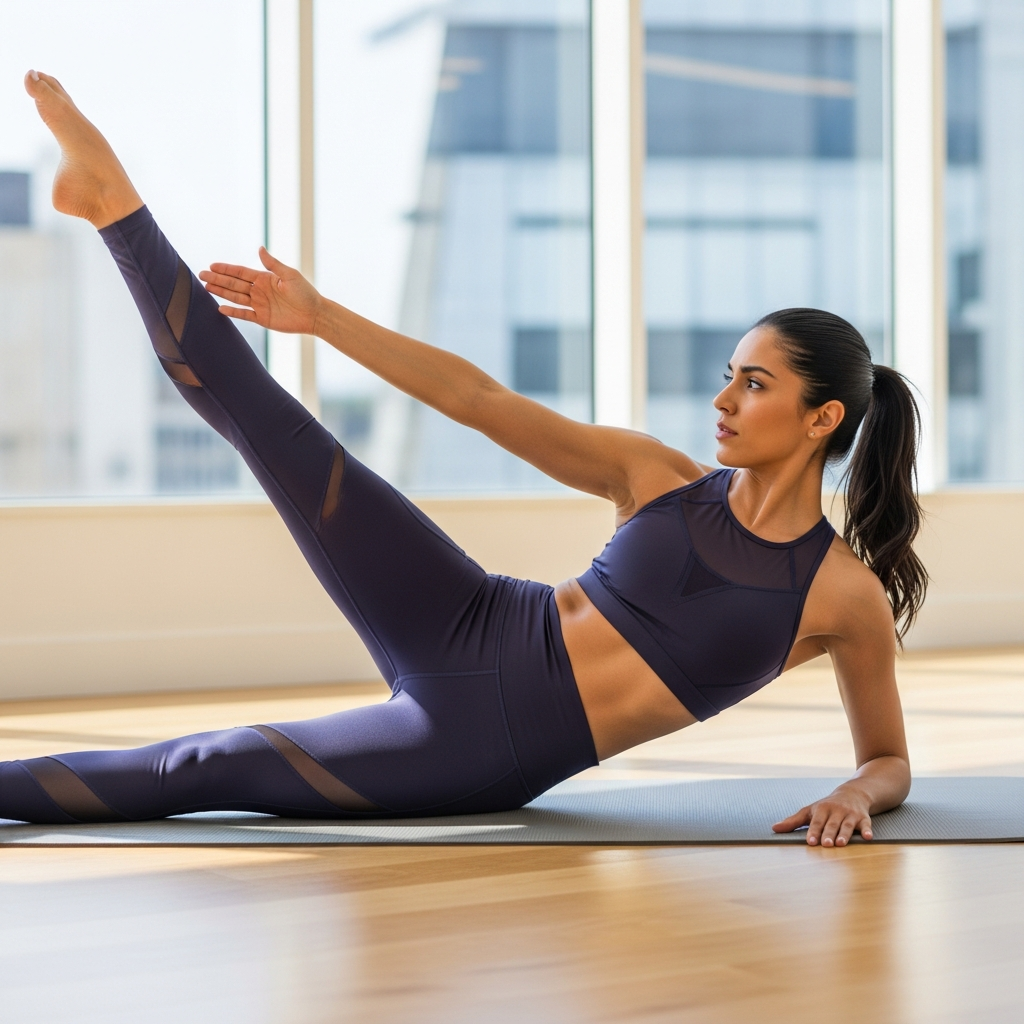
Mat Pilates exercises range from simple to complex, each with modifications for different skill levels. Some popular exercises include the Hundred (a breathing exercise that targets core strength and stability), the Roll-Up (a slow, precise move that stretches the spine and the back of the body), the Swan (an exercise that targets the back muscles) and the Criss-Cross (which targets the obliques).
Benefits of Mat Pilates
Regularly performing Mat Pilates has numerous benefits. It strengthens your core, improves your flexibility and posture, reduces back pain, boosts your mental health by relieving stress, aids in injury recovery, improves athletic performance, and enhances body awareness.
In Conclusion
Mat Pilates is a versatile workout that can be adapted to suit anyone from beginners to advanced athletes. Its focus on core strength, precise movements, and breath control makes it a holistic workout that benefits both the body and mind. Whether you’re looking to boost your overall fitness level, improve your posture or recover from an injury, Mat Pilates can be an effective solution. Remember, as with any new exercise routine, it’s best to start slow and gradually increase intensity as your strength and endurance improve.
By understanding the fundamentals of Mat Pilates, you are better equipped to engage in this exercise method and enjoy its myriad benefits. It’s not just about physical fitness but also about developing an intrinsic understanding of your body’s capabilities and limitations, fostering a sense of well-being that extends well beyond the mat.
Mat Pilates: A Comprehensive Guide to Full-Body Fitness
Mat Pilates is a strength and flexibility training exercise regimen that targets the core, although it also works other areas of the body. It’s a low-impact workout, suitable for individuals of all fitness levels. Whether you’re a seasoned Pilates enthusiast or a beginner looking to get started, this step-by-step guide will help you understand and execute Mat Pilates exercises effectively.
1. **Getting Started with Mat Pilates**
Before you dive into the exercises, it’s important to understand the six key principles of Pilates: Centering, Concentration, Control, Precision, Breath, and Flow. Each exercise should include all these principles for maximum effectiveness.
Choose a quiet space for your workout where you can lay your mat and have enough room to extend your arms and legs in all directions. The mat should be thick enough to protect your spine during the exercises.
2. **Pilates Warm-up**
Start with a warm-up to prepare your body for the session. This could be a brisk 5-minute walk or a series of mobility exercises like arm circles, leg swings, or torso twists.
3. **The Hundred**
This classic Pilates mat exercise targets your core and helps improve stamina. Begin by lying on your back on the mat. Raise both legs in the air, bending at the knees to form a tabletop position. Lift your head, neck, and shoulders off the mat while extending your arms by your sides. Pump your arms up and down while inhaling for five counts and exhaling for five counts, for a total of 100 counts.
4. **Roll Up**
The roll-up is designed to strengthen the abdominal muscles and spinal flexibility. Start by lying flat on your back with your arms extended overhead. Inhale as you lift your arms towards the ceiling. Exhale as you peel your spine off the mat, vertebra by vertebra, reaching your arms towards your toes. Inhale as you start rolling back down, and exhale as you return to the starting position. Repeat this 6-8 times.
5. **Single Leg Circles**
This exercise enhances hip mobility and leg strength. Lie on your back and extend one leg towards the ceiling, keeping the other flat on the mat. Circle the raised leg as if you were drawing a circle on the ceiling. Make sure the movement comes from your hip joint, not your knee or ankle. Do five circles in each direction, then switch legs.
6. **Swan Dive**
A great exercise for strengthening your back muscles. Begin by lying face down on your mat with your palms flat next to your shoulders. Using your back muscles, lift your upper body off the mat into a swan-like pose, keeping your neck long and hips grounded. Hold for a few seconds, then lower with control. Repeat 5-6 times.
7. **Cool Down & Stretch**
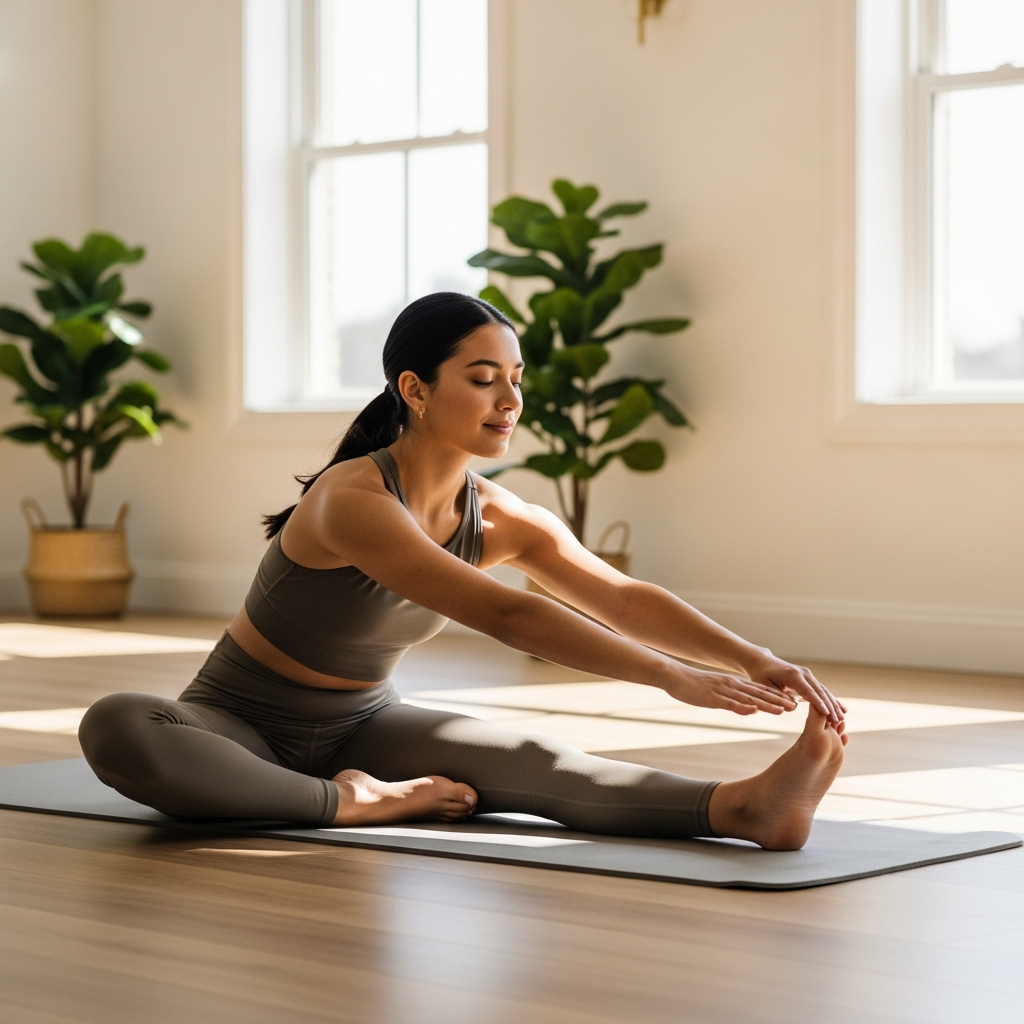
After completing your Mat Pilates exercises, it’s important to cool down and stretch to help prevent muscle soreness and maintain flexibility. Pilate’s specific stretches include the spine stretch forward, saw stretch, and mermaid stretch.
Incorporating Mat Pilates into your routine can be a game-changer for your fitness journey. Remember, consistency is key in experiencing the benefits of Pilates.
Finally, while Pilates is generally safe for most people, it’s always wise to consult with a healthcare professional or certified Pilates instructor before starting a new exercise program. This is especially true if you have any health concerns or medical conditions.
From improving posture and core strength to enhancing flexibility and balance, Mat Pilates offers a myriad of benefits that can contribute to your overall health and wellness. So roll out your mat and get started today!
Untangling Mat Pilates: Challenges, Solutions, and Expert Tips
Mat Pilates is a systematic and comprehensive exercise method that focuses on body balance, core strength, flexibility, and mind-body awareness. It is a popular fitness regimen that can be performed at home or in a studio, using minimal equipment – primarily just a mat. However, like any other form of exercise, it presents its unique challenges. Here we discuss common challenges, solutions and expert tips associated with Mat Pilates.
1. Common Challenges
A. Lack of Body Awareness: Mat Pilates requires a high level of body awareness, including understanding the alignment of your spine, engaging your core muscles and coordination between breath and movements.
B. Difficulty in Performing Complex Moves: Some Pilates exercises require a certain degree of flexibility and strength which can be challenging for beginners.
C. Progressing too Quickly: Many beginners rush through the initial levels to get to the advanced moves and end up with poor form, which can lead to injury.
D. Misconception about Core Engagement: Many people struggle with the concept of engaging the core in Pilates. It’s not just about doing a thousand crunches; it’s about maintaining control and stability in all movements.
2. Solutions
A. Develop Body Awareness: Start with basic exercises and gradually move to more complex ones. Take the time to understand your body’s movement and alignment. A trained instructor can provide valuable feedback and guide you in this process.
B. Master Basic Moves: Focus on mastering basic moves before moving on to complex ones. Patience and perseverance are key here.
C. Take it Slow: Remember that Pilates is not about how fast you can progress through levels but about mastering the form and technique at each level.
D. Core Engagement: Learn the correct way to engage your core. It’s about drawing your abdominals inward and upward, not just squeezing them tight.
3. Expert Tips
A. Consistency is Key: Like any other form of exercise, consistency is key in Pilates. Regular practice will help you develop the necessary body awareness, flexibility, and strength.
B. Use Props: Props like Pilates balls, bands, and rings can be useful, especially for beginners. They can assist in maintaining alignment, provide resistance and add variety to your workout.
C. Mindful Breathing: Pilates emphasizes the connection between breath and movement. Concentrate on your breath, and it will guide your movements, contributing to a more effective workout.
D. Listen to Your Body: Each body is different, and it’s important to listen to yours. If a move doesn’t feel right or causes pain, modify it or try a different one.
E. Work with a Qualified Instructor: While there are numerous online resources available, working with a qualified instructor, at least in the beginning, can be incredibly beneficial. They can correct any misalignments and ensure you’re performing exercises correctly.
Mat Pilates is an excellent method for developing strength, flexibility, and body awareness. It’s suitable for people of all fitness levels but does require time and patience to master. Don’t rush the process – instead, focus on understanding your body and the mechanics of each movement. With consistent practice and guidance from a qualified instructor, you’ll soon reap the benefits of this powerful workout.
Remember, Pilates is not just about physical fitness; it’s a holistic approach to wellness that integrates mind, body, and spirit. So, roll out your mat and get started with Mat Pilates today!
Mat Pilates exercises are a fantastic way to strengthen your core, improve your flexibility, and enhance your overall fitness. Whether you’re a beginner or an experienced practitioner, Mat Pilates offers a range of exercises that can be modified to suit your skill level and specific physical needs. Here’s what you can expect, along with some timelines and next steps when it comes to Mat Pilates exercises.
Mat Pilates is a series of exercises from within the larger Pilates methodology designed to be performed on a mat. Unlike reformer Pilates which utilizes a machine, mat Pilates can be done anywhere with just a simple mat, making it incredibly accessible. The exercises focus on strengthening the body’s powerhouse – the abdomen, lower back, and hips, often referred to as the body’s “powerhouse”.
In terms of what to expect in a Mat Pilates class, the session will typically start with breathing exercises before moving onto a series of movements designed to engage your core and improve your strength and flexibility. These may include exercises such as the hundred, roll-up, single leg circles, rolling like a ball, and many others. Expect to be guided through each motion by a professional instructor who will ensure you’re performing each exercise correctly and safely.
As a beginner, it’s normal for some movements to feel challenging as they require strength and flexibility that you’ll build over time. Some exercises might be modified to accommodate beginners but rest assured, each exercise is designed to help you progress and improve at your own pace.
When it comes to timelines, this varies greatly from person to person. Factors such as your current fitness level, how often you practice, your diet, and even your mental approach can all affect how quickly you see changes. However, many people begin to notice improvements in their strength, flexibility, and overall sense of well-being within just a few weeks of regular practice.
If you practice Mat Pilates 2-3 times a week, after a couple of months, you should start to notice significant improvements in your core strength and stability. You might find that your posture has improved, and you may even see changes in your body shape as your muscles become leaner and stronger.
As for the next steps, once you’ve mastered the basic Mat Pilates exercises, you can start to add more challenging variations to your routine. Advanced Pilates exercises often incorporate props like balls, bands, and Pilates rings to add resistance and challenge.
In terms of practical guidance, it’s crucial to ensure that you’re performing each exercise with correct form and alignment to prevent injury and maximize benefits. It’s highly recommended to attend a class or work with a certified instructor initially, who can provide personalized feedback and modifications when necessary.
Remember that consistency is key. Try to make Mat Pilates a regular part of your fitness routine, whether that’s attending a class a few times a week or practicing at home. Also, listen to your body. If something doesn’t feel right, adjust the exercise or seek advice from a professional.
Lastly, don’t forget about the importance of a balanced diet and adequate hydration, as well as getting enough rest between workouts for recovery. All these factors will contribute to your progress in Mat Pilates.
In conclusion, Mat Pilates is a flexible and accessible form of exercise that can offer numerous benefits for both beginners and advanced practitioners. With regular practice and commitment, you can expect to see improvements in your strength, flexibility, and overall fitness level. Remember to focus on proper form, maintain consistency, listen to your body, and most importantly, have fun with it!
In conclusion, Mat Pilates is a powerful and versatile exercise regimen that can benefit individuals of all fitness levels. It is a mind-body intervention that fosters a deep connection between the physical and mental self, promoting overall well-being and a more balanced lifestyle.
From the various Mat Pilates exercises discussed, it is evident that they offer a wide array of benefits. From improved flexibility, increased muscle strength and tone, particularly of your abdominal muscles, lower back, hips and buttocks (the ‘core muscles’ of your body), balanced muscular strength on both sides of your body, and enhanced muscular control of your back and limbs, the advantages are myriad. Moreover, the focus on breathing techniques in Mat Pilates exercises not only improves lung function but also promotes relaxation, reducing stress levels and enhancing your overall mood.
The versatility of Mat Pilates exercises is another key takeaway. Whether you’re a seasoned athlete looking to diversify your workout routine, a beginner seeking to kick-start your fitness journey, or someone recovering from injury or dealing with chronic pain, Mat Pilates can be tailored to meet your unique needs and goals. Additionally, these exercises can be done anywhere—be it at a studio under the guidance of a certified instructor or in the comfort of your own home. This flexibility makes Mat Pilates an accessible choice for many.
However, it is important to remember that while Mat Pilates has numerous benefits, proper form and technique are crucial to reap these benefits and prevent potential injuries. This is where professional guidance becomes invaluable. A certified Pilates instructor can provide personalized feedback and modifications to ensure that you are performing each exercise correctly and safely. They can also help you create a customized workout plan that aligns with your fitness level, needs, and goals.
In addition, consistent practice is key when it comes to Mat Pilates. Like any other form of exercise, results won’t appear overnight. It requires commitment and dedication. But with time, you’ll notice improvements in your strength, flexibility, balance and overall well-being.
To conclude, Mat Pilates is more than just a set of exercises—it’s a holistic approach to health and wellness that enhances both the body and mind. By integrating these exercises into your regular workout routine, you can enjoy a healthier, stronger and more balanced life.
If you’re interested in beginning your Mat Pilates journey or if you’re looking for guidance to enhance your current practice, don’t hesitate to reach out to us. Our team of certified Pilates instructors is here to provide the support you need. Whether you’re interested in one-on-one sessions or group classes, we can help you create a Pilates regimen that’s tailored to your unique needs and goals. So why wait? Contact us today and let’s begin your journey towards a healthier and more balanced life through the power of Mat Pilates.